

Make Kitchen Cleanup So Much Easier With Julia Child's Simple Tip
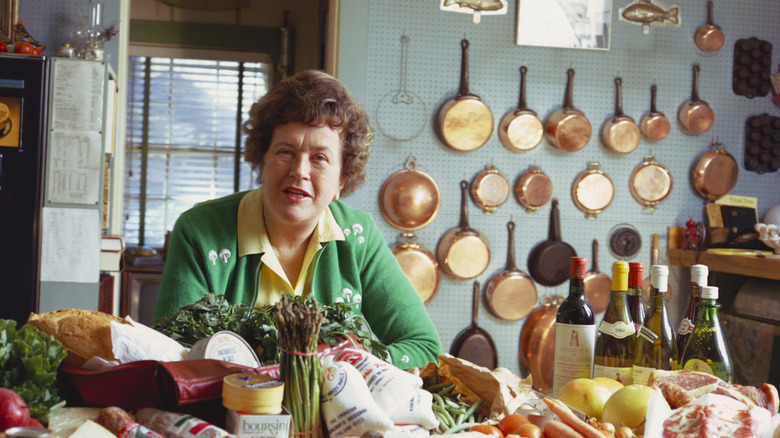
We may receive a commission on purchases made from links.
Julia Child had plenty of nuggets of wisdom, from the idea that no one is born a great cook to explaining why you should never cook with cheap wine, and her belief that people who love to eat are always the best kind of people. Not every Julia Child tip has aged quite as well — such as her infamous recommendation of baking a baguette on asbestos tile — but you'll find countless enduring culinary insights in her iconic cookbook, "Mastering the Art of French Cooking," which, in simple terms, revolutionized American home cooking by demystifying what once felt like intimidating barriers in the kitchen. One particularly useful tidbit found inside the book is a simple yet hugely effective tip: soaking your dirty dishes.
Child noted that when you're cooking, "Use all the pans, bowls, and equipment you need, but soak them in water as soon as you are through with them" (per "Mastering the Art of French Cooking"). This advice carries a double meaning. First, she encouraged cooks to work freely and properly, without cutting corners simply to avoid washing up. In her own words, "A pot saver is a self-hampering cook," and any home cook knows that some of the best meals also happen to be the messiest ones.
At the same time, soaking your dishes as soon as you're finished with them is a genius cleaning hack. Soaking prevents food from drying out and sticking to surfaces, which can make your pans far more difficult to clean later. While the dishes still need to be washed with soap and a sponge, there's often little need for aggressive elbow grease, so you can ditch the scouring pad!
More Julia Child cleaning wisdom

Soaking your dishes is a game-changer, and for the best results, make sure to use hot water (boiling is best) with a bit of dish soap. For especially stubborn, baked-on residue, add a spoonful of baking soda to the soak. It's no secret that baking soda is a must-have for cleaning kitchens. Its mild abrasiveness and alkaline properties help to loosen sticky residue without damaging surfaces. For extra power, as well as preventing foul odors, incorporate acidic, fresh-smelling additions like lemon juice. Pair this with another one of Julia Child's cleaning tricks, and you'll be guaranteed to have a spotless kitchen, no matter how much daily traffic it sees.
One of Child's most fundamental cleaning rules, which still reverberates today from home kitchens to top Michelin-starred restaurants, is cleaning as you go. Like many of her tips, it's simple yet remarkably effective. At its core, cleaning on the go is about mindfulness, which is being intentional about keeping things tidy as you cook. This practice can take many forms. If you've been making your own pasta, for example, clean up the excess flour before moving on to the next step. Or, instead of letting dishes and utensils pile up in the sink, load the dishwasher as soon as you've finished using an item. To keep your cleaning on the go more streamlined, she always recommended having a surface cleaning product within arm's reach to get rid of spills or splashes fast. Over time, you'll notice that by the time the meal is done, the kitchen is nearly clean as well, allowing you to skip the dreaded post-meal cleanup.