

The Rare Vintage Kitchen Find You Should Never Pass Up When Thrifting
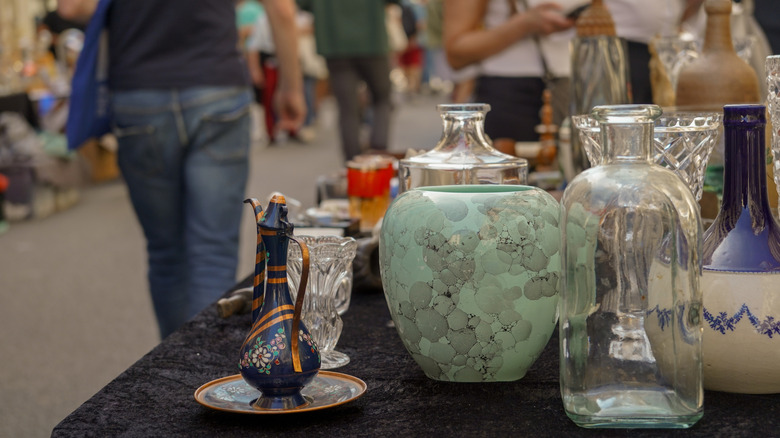
If you're a thrifter, you may sometimes run across old-school kitchenware and wonder if it's worth taking home. There are various must-have vintage kitchen finds you should look out for, but it's not always easy to spot the gems among the junk. For guidance on which vintage finds you should never pass up, Food Republic spoke with Jennifer Prince, owner of it's FOUND vintage.
Of the various cooking cast-offs Prince is excited to find when secondhand browsing, one stands out as a favorite. "One thing that I love picking up are vintage cast-iron pans," she shared. "I've tried modern ones, but the food either sticks or I'm concerned about unhealthy ingredients leeching into it." Antique cast-iron pieces, however, were built to last and are great finds, even if it may take some work to restore them to usable condition. "Even if a piece looks rough, it can typically be revived," Prince shared. And doing so isn't necessarily as hard as people think. "If someone didn't know how to properly care for a cast-iron pan, they may donate it and leave the problem to someone else. Fortunately, iron can be restored and reseasoned easily. Plus, specific brands, such as Griswold, Lodge, and Wagner, can be worth money," she explained.
While antique cast-iron cookware is exciting to find, that's not to say every piece you run across should be taken home. If a pan is deeply pockmarked, you should pass it up — those pits can't be filled in, and they will cause uneven heat distribution when you cook. Problems like rust or scorched-on food, however, can be remedied with some good old-fashioned scrubbing, followed by proper seasoning using the right kind of oil.
Restoring and caring for cast iron
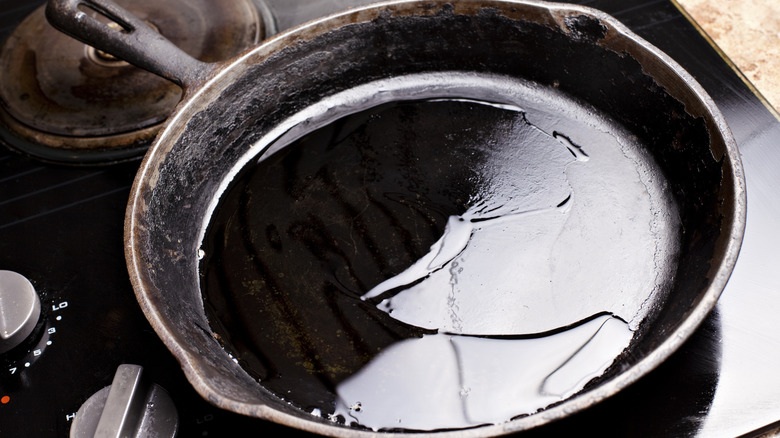
To restore a vintage cast-iron piece, various pantry staples are a big help in cleaning off rust and other build-up. A combination of white vinegar and water can work wonders, for instance, and tougher residue can be tackled with a water-and-baking-soda paste along with steel wool or a stiff-bristled brush.
Once the pan is clean, seasoning is needed and involves a process of lightly coating with oil or fat (wiping off the excess, as too much oil results in a sticky pan) and then polymerizing (when molecules combine into larger molecules) in a high-temp oven. This creates a protective layer that will not only help keep the skillet from re-rusting but gives it nonstick qualities.
For ongoing maintenance, once your pan is usable, is it okay to clean cast-iron skillets with soap? You may have heard that washing with soap and water is a no-no, but that notion harks back to the days when soap was made with harsh ingredients like lye, which could strip off the seasoning layer. Gentler dish soaps available today are just fine. That said, cast iron doesn't always need to be soaped up like other types of cookware — simply wiping it out is often enough. When it does need a thorough washing, a light scrub with a cloth or sponge does the job, or a stiff brush, chain-mail scrubber, or scraping with a spatula under hot water works for tougher jobs. Using dishwashers, however, is a no-no, and Jennifer Prince warned that such a "high-heat, high-detergent environment that bathes pans in water [is] a trifecta that can cause cast iron to rust."
After washing, cast-iron pans should be dried thoroughly. It's then a good idea to lightly re-season by rubbing with a bit of oil — again, wiping off the excess.
Other vintage kitchen finds to watch for
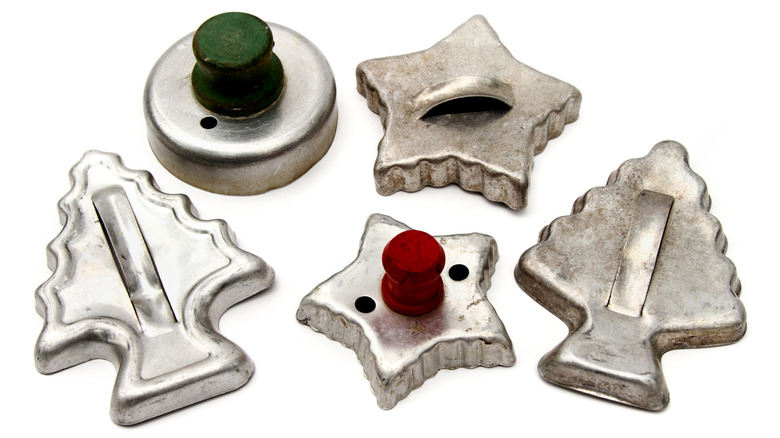
In addition to cast-iron treasures, Jennifer Prince shared some other favorite vintage items she likes to watch out for when thrifting. "I'm also a sucker for vintage cookie cutters, as long as they're in good condition," she detailed. "Older ones often have colored, wooden handles (typically red or green). Not only are they useful, but they also look cute displayed in a small bowl or glass jar on a countertop." Such antique kitchen items not only bring homey ambience to a space, but they can be extremely serviceable. "Long ago, people bought items to last, meaning that the quality would stand the test of time. Often, those vintage pieces can continue to be workhorses in the kitchen," she explained.
Vintage flour sifters are another item Prince likes to find, lending old-fashioned flair to a culinary space as well as being "a powerhouse for an avid baker," she said. "These tend to be very clean and in good condition, but my favorite part is the outside. Many feature designs like flowers or apples, and they're another piece that looks cute when displayed."
Decorative appearance isn't the only criteria to measure a vintage item by, though. Prince cautioned that it's important to pay attention to condition, unless an item is going to be a display piece only. If you intend to use it functionally in your kitchen, you should inspect it carefully before purchasing, including scanning cookware for pitting, rust, or other signs of wear and deterioration. "Make sure glassware doesn't have any broken parts or cracks forming (do not use your finger to do this, as I cut myself several times before I learned that scanning by eye is best!)," she advised.