

The Bizarre Fine Dining Eating Rule To Know
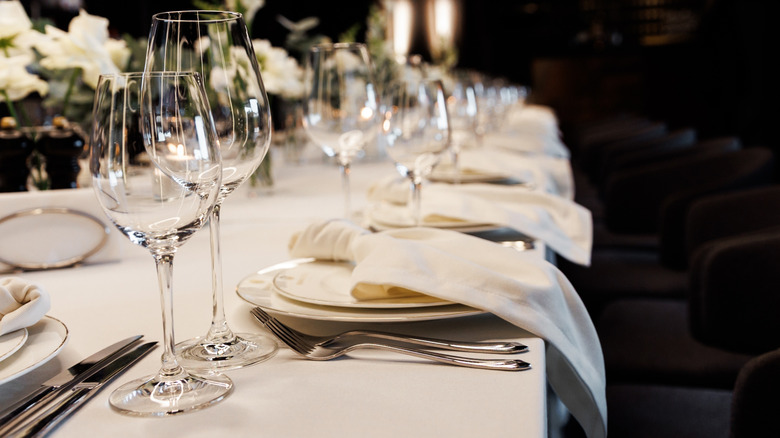
Fine dining occupies a peculiar status in culinary culture. The style of eating is artistic, conceptual, and — by way of a steep price tag — largely inaccessible, typically enjoyed infrequently. Such food-centric high-stakes make the restaurant category demanding of both the staff and diners, with many fine-dining etiquette rules expected of patrons. For instance, one decorum that particularly confuses customers is the meal's slow pacing.
To help explain the typical fine dining rhythm, Food Republic is lucky to have the guidance of Daniel Perez Rueda, the executive chef at the Seaside Palms Resort. According to him, a common surprise is that "you shouldn't rush a fine dining experience or ask for courses to come faster." Opposed to a standard restaurant — where slow food delivery is often deemed as an annoyance – the experiential nature of fine dining functions with a different set of rules.
"The pacing of a meal is part of the chef's narrative," Rueda noted. Fine dining can entail anywhere from five to a dozen courses, spread over three to four hours of eating time. Subsequently, longer increments between dishes are intentional, designed to maximize the experience. Plus, wait staff will come by frequently, whether to clean, refill drinks, or chat. Ultimately, though, coursing is "designed to build flavors and rhythm over time," Rueda explained. So go into a fine dining restaurant ready for an elongated yet enjoyable experience.
Fine dining rules have turned less rigid over time
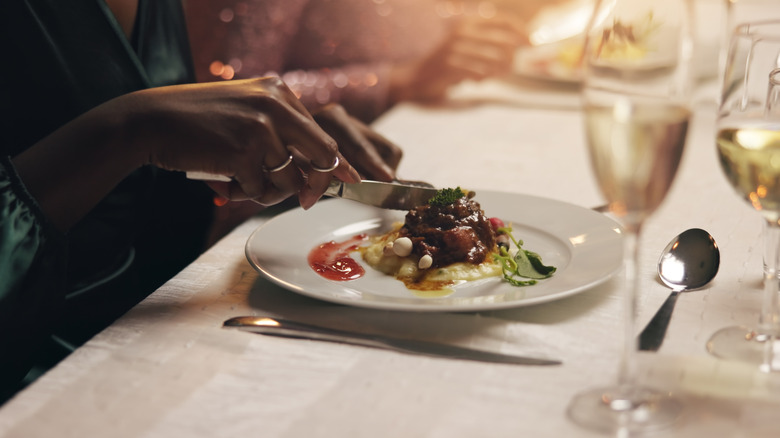
Especially for newcomers, the formal nature of fine dining can be intimidating. Rather than enjoying painstakingly assembled flavors, it's easy to worry whether you've been using your napkin wrong or how to handle dropping your silverware at a fine dining restaurant. Combined with the steep associated costs, this has led to a reinvention of the restaurant category. "True elegance now comes from intention and awareness, not formality," Rueda noted.
Such a fresh approach encompasses varying facets of the dining experience, including the courses. According to Rueda, you'll find pacing "handled much more flexibly today," noting that, at his restaurant, "we read the table and adapt." The same acceptance applies to other rules, too — whether the manner of eating, ordering, or socializing. If a patron fails to follow a small detail of decorum at a contemporary restaurant, Rueda explained that dining staff won't intervene. "Today, etiquette isn't about knowing the 'rules' — it's about respect," he said. Subsequently, it's now easier to ease into the experience and enjoy, thereby making luxurious dining more comfortable and fun.