

Younger Generations Can't Stand This Retro Boomer Comfort Food

Boomers and younger generations seem to disagree on almost everything, and food is no exception. One particularly striking divergence is the perception of offal, which refers to the edible internal organs of an animal — think hearts, livers, or even brains. Today, it's rare to see these items featured on restaurant menus, but back in the day, many of these organ meats were actually prized as delicacies.
Offal includes classic preparations like sweetbreads — a traditional Viennese dish of fried or sauteed thymus or pancreas glands — and tripe, the edible stomach lining found in countless global recipes. Mid-century favorites like rumaki, a 1950s tiki-bar staple, also relied on these cuts. There are plenty of other examples, too, and many of these dishes still exist today — though they're far less mainstream, particularly within the modern Western palate.
The United States has had a bit of a whirlwind relationship with offal. Prior to World War II, it was widely regarded as a food of poverty. During the war, however, rationing forced households to make use of every part of the animal, leading to a brief resurgence in its consumption — even getting a facelift and being rebranded as "variety meats". But despite this short moment in the limelight, once the war ended and food supplies stabilized, offal quickly fell out of favor again, becoming unfashionable and stigmatized. As subsequent generations grew up with greater access to meat, it continued to slowly disappear from the mainstream food scene, while prime cuts such as steaks and chops rose in popularity.
Can offal make a comeback?
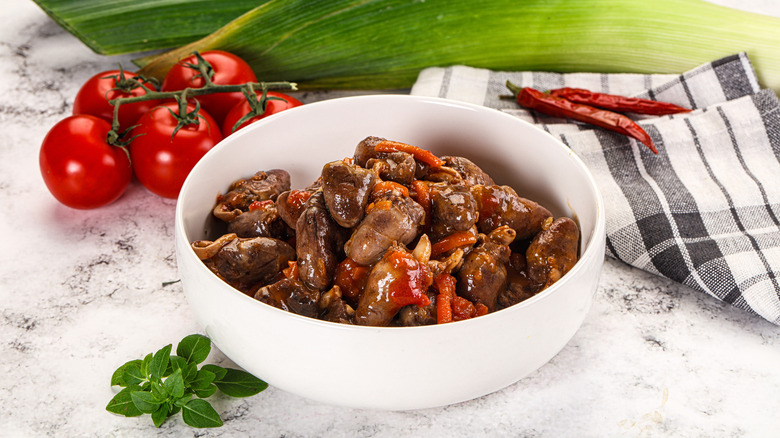
While offal isn't nearly as popular as it was back in its heyday, there are subtle hints that it might be undergoing a resurgence. One example of this is the rise of nose-to-tail restaurants. Arguably spearheaded by the iconic St. JOHN restaurant in London, renewed attention was brought to establishments that focus on using every part of the animal. In particular, St. JOHN is famous for its roasted bone marrow and parsley salad, which Anthony Bourdain cited as his death row meal. Today, bone marrow is a very common dish to find at steak restaurants, and nose-to-tail dining concepts are popping up everywhere.
While some offal cuts are making a comeback, others never really went out of style. Take haggis, the national dish of Scotland, which also happens to be banned in the United States. This may be the most offal-heavy of all offal dishes, featuring a seasoned minced mixture of sheep's heart, liver, and lungs, which are then stuffed into its stomach and slowly simmered. If you've ever been to Scotland, you'll find that it's widely available. Over in the U.S., regional preparations of offal are also quite common. In the South, fried chicken livers are especially popular, and you could once find them on the menu at Cracker Barrel.
Additionally, because it's more stigmatized today, much of the offal from slaughtered cows goes to waste, which contributes to harmful greenhouse gas emissions. It's also worth noting that many organ meats are actually more nutrient-dense than today's popular prime cuts, often providing higher levels of essential vitamins and minerals, making them both a sustainable and nutritious choice of meat.