

How This Oil Plays An Integral Role In Dan Dan Noodles
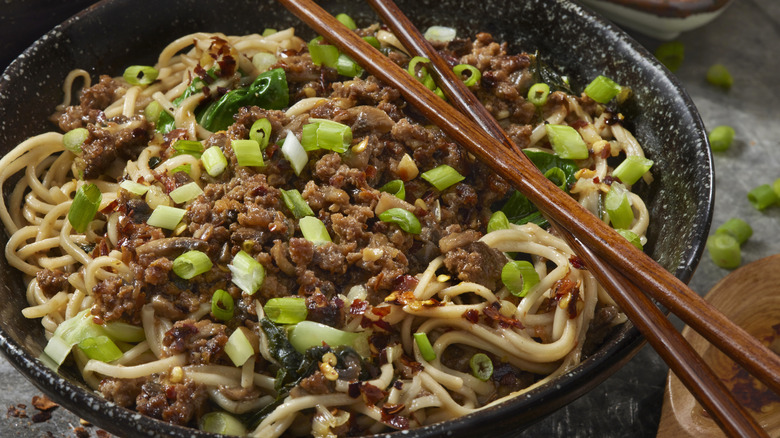
Spicy and mouth-wateringly numbing, Dan Dan noodles are a classic of the Sichuan street food scene. Served either dry or in a broth, the dish features white noodles topped with a fiery sauce, minced pork, and preserved vegetables. One of the most important ingredients is chili oil, which has a major impact on the sauce's flavor. To find out why, Food Republic spoke with Jem, recipe developer, food blogger, and photographer behind The Fruity Jem.
"[Chili oil] gives you that numbing-spicy kick and creates this glossy, slick coating on the noodles that makes them feel so rich and satisfying," Jem explained. Chili oil is an extremely important element of Sichuan cooking, which has become a hot spot for those seeking ultra-spicy offerings. The signature numbing-spicy sensation – also known as ma la — of Dan Dan noodles comes from the numbing sensation of the Sichuan peppercorns (ma) and the fiery heat of the chili oil (la).
Spice tolerance varies from person to person, but adjusting Dan Dan noodles to suit your palate is easy. When making chili oil at home, Jem suggested simply reducing the amount of chili flakes used rather than eliminating them altogether. She also pointed out that — contrary to popular belief — Sichuan peppercorns aren't truly spicy (they're also not peppercorns, either), so their quantity doesn't need to be scaled back. More importantly, Dan Dan noodles are about far more than heat. For a well-rounded sauce, "I also balance everything with sesame paste for nuttiness, soy sauce for saltiness, a little black vinegar for tang, and just a pinch of sugar," Jem told us.
Tips to make homemade chili oil
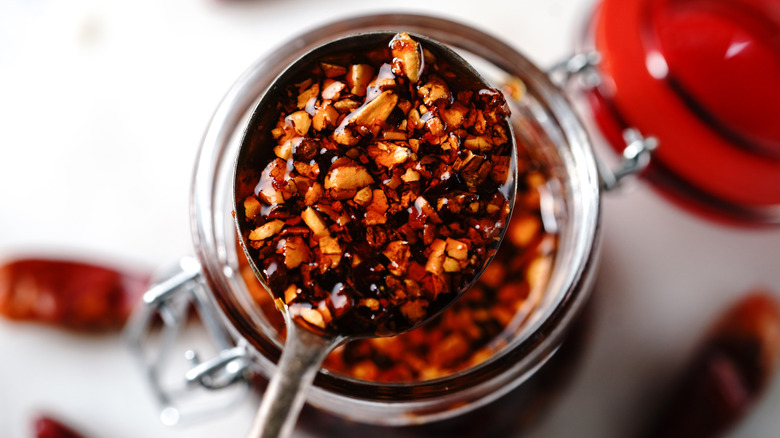
There are plenty of great, iconic chili oil brands available at the grocery store — but it's also super easy to make your own at home. All you've really gotta do is pour hot, neutral oil over chili flakes, but there are plenty of ways to customize it to suit your own taste.
Jem suggested toasting Sichuan peppercorns, star anise, cinnamon stick, and bay leaves in neutral oil, then pouring the infused oil over chili flakes. These ingredients also happen to be integral to Sichuan-style chili oil. Traditionally, Sichuan chili oil uses a blend of at least two different kinds of chilis. While there are many different kinds of dried chilis available in Sichuan, commonly used varieties include Er Jing Tao for color and fragrance, and Xiao mi la for sharp, intense heat. If you're outta luck finding these varieties in the United States, you could instead use a blend of Korean gochugaru for color and dried arbol chilis to mimic the punch of Xiao mi la chilis. Refrigerate the chili oil in an airtight container for up to a month, and you can use it for all kinds of dishes, including as a topping for ice cream.
When adding chili oil to your Dan Dan noodle sauce, Jem recommended mixing two to three tablespoons into the sauce base. She also suggested drizzling another tablespoon over the top before serving, which will improve the overall aesthetic of your dish. She noted that if the oil begins to pool at the bottom of the bowl, you may have gone a little overboard. In this case, place a dry paper towel on top of your noodles to absorb the excess oil.