

The Coveted Cut Of Steak Michael Symon Gives A Hard Pass To Every Time

If there's one thing to know about steak, it's that each cut is different. There are eight primal cuts, which are then divided into numerous sub-primal cuts — and finally into individual steaks. Each cut has its own unique qualities, from texture and tenderness to flavor and marbling, making some better suited for grilling, others for low-and-slow barbecue cooking. Another big difference between cuts is the price tag, and some steaks might not be worth their high price point. In an interview with Food Network, chef and restaurateur Michael Symon revealed that filet mignon is best skipped.
Known for its buttery flavor, filet mignon is a prized cut of beef from the beef tenderloin. But according to Symon, "It has no fat; it has no texture." Technically, he's not wrong. It's an exceptionally lean cut, and is usually trimmed to remove excess fat (sometimes up to three times). The result is a steak that is extremely tender, with a melt-in-your-mouth texture, but the absence of intramuscular fat — also known as marbling — is a divisive issue to steak lovers like Symon. See, marbling is one of the most coveted features of a steak. Just look at the pedestal people put the luxurious A5 Wagyu on, which is renowned for its exceptional marbling. As steaks with lots of intramuscular fat cook, the fat melts and bastes the meat in its own juices, enhancing the texture and flavor. Instead, filet mignon offers a milder, less rich experience. That's not to say it isn't as good; that all comes down to personal preference.
Steaks with plenty of marbling
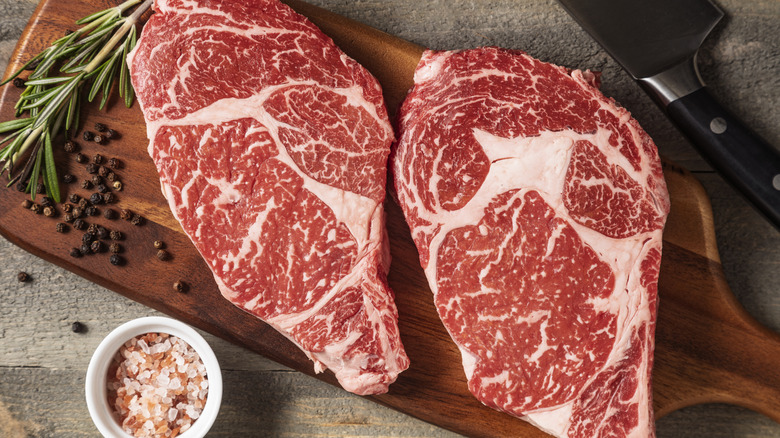
Due to the lack of intramuscular fat, filet mignon should be cooked differently from steaks with plenty of marbling. Typically, filet mignon benefits from a slightly gentler touch than other fattier cuts; given that it's so lean, cooking it rare is the best way to preserve its tenderness and prevent it from drying out. If you want to add a bit more richness, filet mignon is sometimes wrapped in bacon before cooking. The bacon adds fat and flavor, helping the steak stay moist as it cooks while adding a layer of smoky flavor. Meanwhile, fattier cuts benefit from high-heat cooking methods, such as grilling or broiling, which render the marbled fat to enhance their flavor and juiciness.
If you're in the camp who prefer a well-marbled steak, there are plenty of options out there. Wagyu overtakes filet mignon as the most luxurious steak out there, with olive Wagyu being one of the rarest and most coveted steaks out there. Wagyu isn't a cut of steak, but a breed of cattle known for its exceptional marbling. The marbling results from a combination of carefully selected genetics and a meticulously controlled diet rich in energy and fat. Popular lore even claims that some Wagyu cattle are massaged to keep them relaxed. Other luxury well-marbled steaks include ribeye, which is from the rib section of the cow, which doesn't do much work compared to tougher, denser cuts like brisket or chuck, allowing significant amounts of intramuscular fat to form. If you're looking for more budget-friendly options, Denver cut is a great alternative to ribeye, and flat iron or flap steak (also called bavette) are both great alternatives too.