

Why You Should Use Balsamic Vinegar To Caramelize Onions
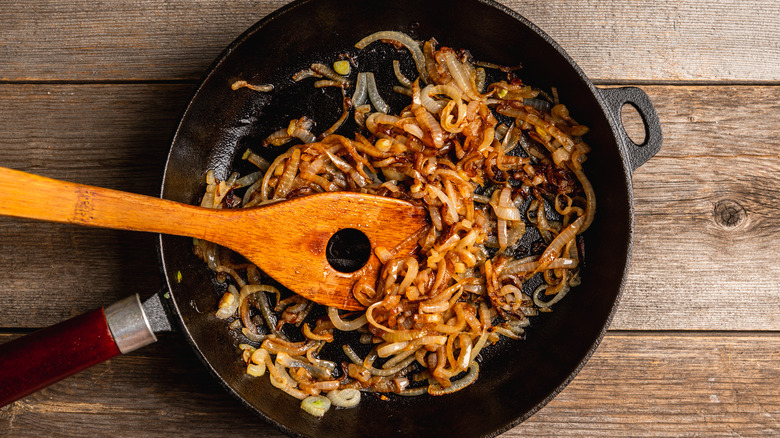
Caramelized onions are a tasty addition to countless recipes. They give a Philly cheesesteak-esque upgrade to basic sloppy joes, and they're a savory-sweet ingredient you should definitely add to boxed cornbread mix. Of all the ways to caramelize onions — including a fuss-free crockpot method if you don't want to stand over the stove — there's a certain liquid that will greatly amp up your efforts and bring dynamite flavor to the party: balsamic vinegar.
For the inside scoop on this must-try caramelization ingredient, Food Republic spoke with Emmy Clinton, recipe creator and founder of Entirely Emmy. "If done correctly, balsamic vinegar adds a really tangy, sweet, and subtle flavor to the caramelized onions that really enhances their natural sweetness," Clinton shared. "The liquid will also help deglaze your pan and all the delicious browned bits of onion!"
To incorporate balsamic vinegar correctly, it's all about timing, according to Clinton. Adding the liquid too early and thereby exposing it to too much heat can affect the flavor in all the wrong ways. High heat can burn the sugars in the vinegar, making it taste acrid and scorched, while cooking it too long makes it too dense and syrupy. "The perfect time to add the balsamic vinegar is toward the end of the caramelizing process, so that the flavor won't become too overpowering," Clinton instructed. Excess liquid can also disrupt the Maillard reaction, stopping your onions from browning and caramelizing properly. This is yet another reason you should delay adding the balsamic until near the end of cooking. "Wait until your caramelized onions are a golden brown, and 2-3 minutes before you're ready to remove them from the heat," Clinton stated.
Other tips and uses for balsamic vinegar caramelized onions

The ratio of vinegar to onions also plays an important role in getting the delicious results you want. Balsamic vinegar, particularly an aged, high-quality product, has a strong flavor, so a small amount goes a long way. "You'll want to add about 1 tablespoon of balsamic vinegar for every large onion you're caramelizing," Emmy Clinton explained. "When I cook with onions that are a bit smaller, I'll use ½ [to] ¾ tablespoon per onion. The key is to coat the onions and create a delicious glaze, not completely saturate them."
Once you've added your balsamic to the pan, you'll also want it to "completely cook down and reduce," Clinton advised, "so leave the covering off the pan once you've added the balsamic." Otherwise, the moisture will become trapped rather than escaping via steam, and the vinegar won't reduce properly.
When you have your final product — deliciously caramelized onions with the added sweet tang that balsamic vinegar imparts — a wide array of exceptional uses awaits to give ordinary dishes over-the-top flavor. Onions caramelized with balsamic vinegar are a superb topping for your barbecue, like hamburgers, steaks, hot dogs, and other grilled meats. They also level up sandwiches, pasta, pizza, omelets, and much more.
Clinton prefers using balsamic vinegar for caramelizing onions, as it "has a perfect balance of acidity [and] natural sweetness, kind of mirroring and enhancing the notes of the onions." However, other vinegars can do a similarly fine job of bringing flavor depth to your pan, including red wine vinegar, which "will give you the same vinegar-based tang with less sweetness," Clinton detailed. Sherry vinegar is also "really delicious and subtle," Clinton added, while "[a] splash of red wine works well," too.