

The Origins Of Sahlab Go Back Centuries
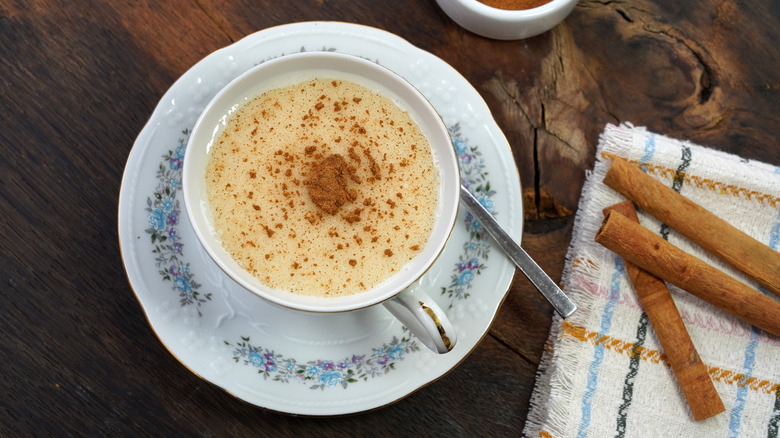
Morning drink rituals are surprisingly limited. Sure, you've got the classics like tea and coffee, and even fruity matcha lattes that will knock your socks off — but beyond that, there isn't much variety. That's where sahlab comes in. You may not have heard of this drink before, but it's been enjoyed as a warm, comforting drink since Roman times.
Sahlab is made from the flour derived from the dried tubers of wild orchids. Thanks to the flour containing starch, when paired with warm milk it transforms into a rich, velvety drink. Its flavor profile is described as mild and slightly earthy, with vanilla-eqsue notes.
The drink has touched a wide range of cultures, some long vanished and others still living today. In the Roman world, ground orchid tubers were used to make a beverage believed to act as a male aphrodisiac – which was called satyrion or priapisus. Centuries later, in the Ottoman Empire, the drink — known there as salep — held a distinct cultural role, and was sometimes consumed to promote weight gain for women in preparation for marriage. In Europe, before Britain's enthusiasm for high tea took the island by hold, salep was known as saloop. Made by thickening hot water or milk with powdered orchid tubers, in true British-style one of its uses was as a hangover cure. Its popularity only dwindled when tea and coffee became cheaper and more widely available as a result of global trade. By the nineteenth century, saloop had largely disappeared from everyday European life, but salep remains a very popular drink in the Middle East.
Where is sahlab enjoyed today?
The wild orchids used to produce authentic sahlab grow primarily in the West Asian and Anatolian regions, areas that broadly fall within the former borders of the Ottoman Empire. Today, unless you're in one of these regions, it's unlikely to encounter sahlab made with the traditional powder. Due to extensive overharvesting of the wild orchids, many species are now endangered, and the export of genuine sahlab powder was subsequently made illegal in Turkey. As a result, most commercial sahlab mixes available today (even within Turkey and the Middle East) rely on artificial flavorings and alternative thickeners such as cornstarch or rice flour to mimic the original powder's distinctive flavor and creamy texture.
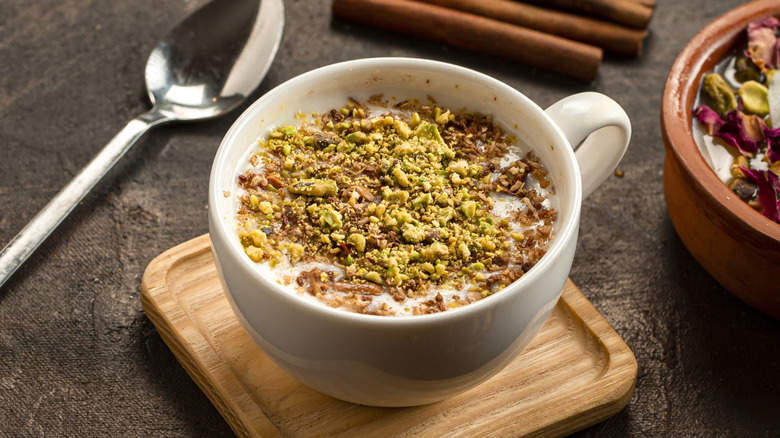
If you're lucky enough to try the real deal, you'll notice that sahlab can dramatically vary from country to country. In Turkey, it's typically served as a hot, comforting winter drink. It's also a key ingredient in the famous Turkish ice cream, which is known for its uniquely stretchy and chewy texture. Similarly, in the Levant, sahlab is commonly enjoyed by Christians in the lead-up to Christmas. In Egypt, you'll find sahlab paired with aromatic add-ins such as rose water or orange blossom, and garnished with a variety of toppings such as cinnamon and pistachios to complement its sweetness. Over in Greece, the drink is known as salepi and commonly sold by city street vendors, though the harvesting of wild orchids is now illegal, a few sustainable producers do still exist.