

What Is Air-Chilled Chicken From Whole Foods?
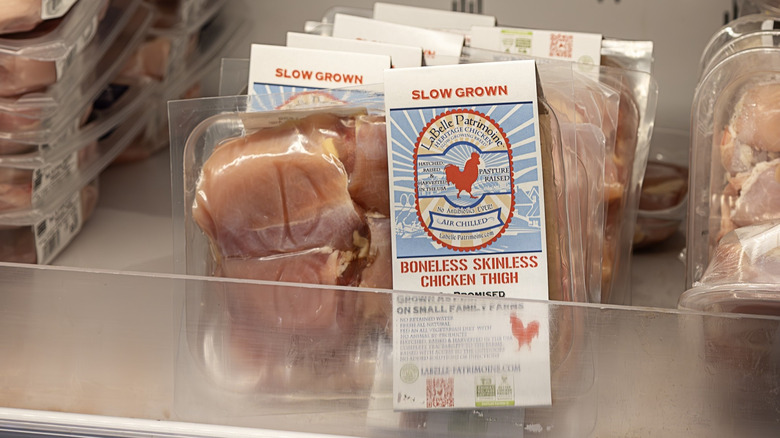
While not quite as bad as Erwhon, Whole Foods does have a reputation for high-end prices — but it not only talks the talk, it walks the walk with premium products to match; after all, there's a reason most of the world's cheese professionals start at this supermarket chain. Just look at its meat department. Whole Foods' ground beef is actually a cut above the rest, thanks to its single-cow origins. And some of its chicken selections arrive at the store air-chilled. Never heard of air-chilled chicken before? It's touted as the superior process of cooling chicken during processing, as opposed to bath-chilling.
Meat (and other perishable foods) must maintain a temperature below 40 degrees to be safe, so after they're slaughtered, chickens must be cooled to discourage the growth of harmful bacteria. The vast majority of chicken producers achieve this by dunking the meat in a cold-water, chemical bath. However, something like just 1 to 3% of processors in the U.S. (and all of them in the EU) instead cool the chickens using purified cold air. Whole Foods sells these premium cuts and whole chickens, but you must be sure to read the labels carefully because not all of its chicken is air-chilled. The products that are will be marked, typically on the front, with the words "air-chilled."
What makes air-chilled chicken better?
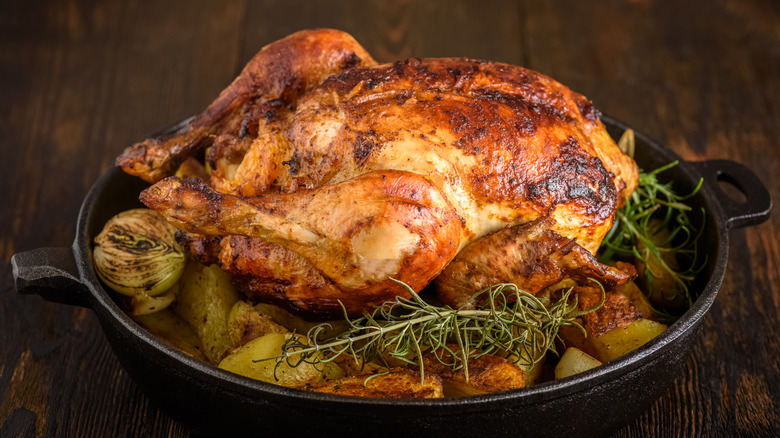
Air-chilling chicken isn't just a marketing gimmick used by Whole Foods — it has real benefits for the consumer. First of all, if you like your meat as natural as possible, air-chilling avoids any additional chemicals that the chicken might pick up in the bath; as mentioned, the EU has banned chemical baths, but American processors favor them (though U.S. government maintains that they are perfectly safe, and most chicken producers have moved away from chlorine and toward acids of an organic nature).
Still, dunking chicken in water does mean that the meat and skin absorb some of the moisture. The effects of this are twofold; first, it's like injecting the chicken with water, which can seriously dull the flavor (unlike Costco's rotisserie chickens, which get actual injections of a tasty saline solution). It also affects how the chicken cooks up, with water in the flesh dissipating and leaving dryness in its wake, and it inhibits how crispy the skin can get. With air-chilling, there are none of these ill effects, only tender, juicy meat, and skin that crisps up like a dream in the oven.
There is also the fact that bath-chilled chickens, which absorb water, are then weighed and priced accordingly, so you're partially paying for liquid and not meat. With air-chilled chickens, you can be sure that what you're paying for is much closer to what you're actually getting (which can be quite important when shopping at pricier supermarkets like Whole Foods).