

How Leftover Potato Peels Can Be Used In Your Garden
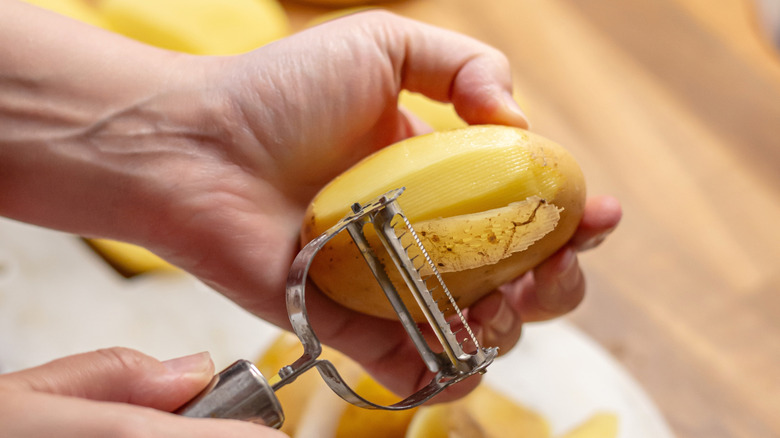
Among the many food scraps you shouldn't throw out, potato skins are one of the most versatile. Though they make for deliciously crispy appetizers, Gene Caballero, co-founder of GreenPal, told Food Republic that they're also an incredible fertilizer — when used correctly.
"They break down into [nutrient-rich] material containing potassium, phosphorus, and magnesium, all of which support strong root development[,] and they are all great for overall soil health," explained Caballero. Roughly 3.5 ounces of potato skins contain about 400 milligrams of potassium, one of the most important nutrients for many garden plants. Potassium is particularly important for cycling water and nutrients throughout a plant and even helps encourage healthy photosynthesis. Edible, flowering plants, particularly fruiting and root vegetable varieties, need regular doses to maintain overall health, as many of them store their potassium within the part you're trying to harvest.
"In my experience, the best way to repurpose them is by composting," Caballero continued. Composting over other fertilizer methods is especially useful for potato peels as it keeps them from sprouting in your garden, robbing it of the same nutrients you're trying to infuse it with. Additionally, he told us that if you were to simply scatter or lightly bury them in the ground, you run the risk of attracting vermin and insects that may eventually harm your other crops. But just like using eggshells to fertilize your garden or banana peels for plant growth, you have a few options on how to use them.
Other ways to use potato peels as fertilizer
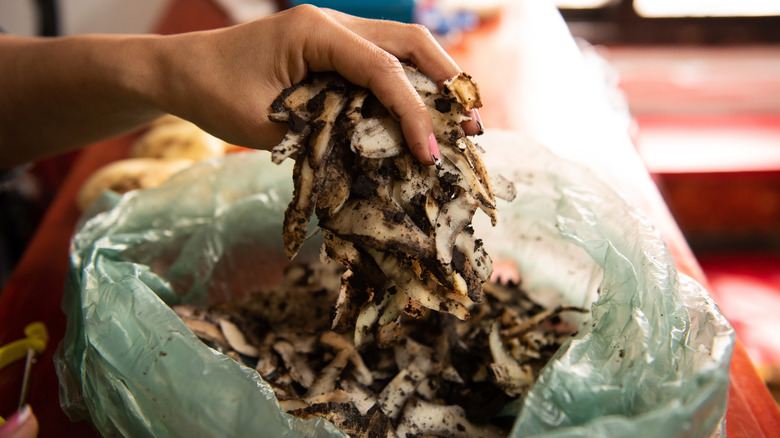
If you don't compost your peels, you can mitigate your vermin risks with a quick application of heat. "If you want to use them outside of a compost pile, make sure to dry them or bake the peels to prevent sprouting and reduce any pest issues," Gene Cabellero said. Spread them on a baking tray and let them sit in a 300 degree Fahrenheit oven for about 15 minutes to dry them out, robbing them of their potential to sprout. After grinding them into a fine powder, you have a couple of options for how to use them as fertilizer.
Potato peels are packed with starches, a type of sugar plants crave, and just one teaspoon of peel powder per cup of water creates a potent fertilizer. Most gardeners should only do this a couple of times a month to maintain nutrient balance in their soil, but gardens with sandy soil low in potassium may need more frequent applications. You can also sprinkle the powder around your plants before mulching, letting it slowly soak into the ground and creating a slow-release system of nutrients.
Regardless of how you apply your powder, avoid using peels that are green or sprouting. Green peels are high in solanine, which can harm your plants in large amounts. Feel free to cut out any green patches of skin before drying to create the most effective fertilizer possible.