
How Are Scoville Units Actually Measured To Rank The Hottest Peppers?

Scoville is a term that's usually thrown around when people are talking about the peppers that really pack heat. No one cares about the Scoville of bell peppers, but when we're talking about the Carolina Reaper or the Ghost Pepper, suddenly big numbers are getting thrown around. These simply refer to the Scoville Heat Scale (SHS), a system used to measure a pepper's heat (aka pungency) based on its concentration of capsaicinoids — the chemical compounds responsible for the spicy sensation. To measure Scoville units, an advanced scientific method called High-Performance Liquid Chromatography (HPLC) is used.
HPLC is the industry standard for accurately measuring pepper heat. Initially, the peppers are dried and ground, then solvents are used to extract the capsaicinoids. These components are then separated and measured by the HPLC machine, producing an exact capsaicinoid concentration that is converted into Scoville Heat Units.
Before this method was introduced, the Scoville Organoleptic Test was used. This was developed by the very same Wilbur Scoville in 1912. Pepper extract was diluted in sugar water, and trained testers would sip the mixture until the heat was no longer detectible — not the best job in the world! While it was much more unreliable than the HPLC, as spice tolerance can vary greatly from person to person, it did set a precedent for measuring spiciness. Also, we've got Wilbur Scoville to thank for officially putting it out there that milk is a reliable antidote for spiciness, which is why ice cream and chili crisp are an unexpected match made in heaven.
What are the hottest peppers out there
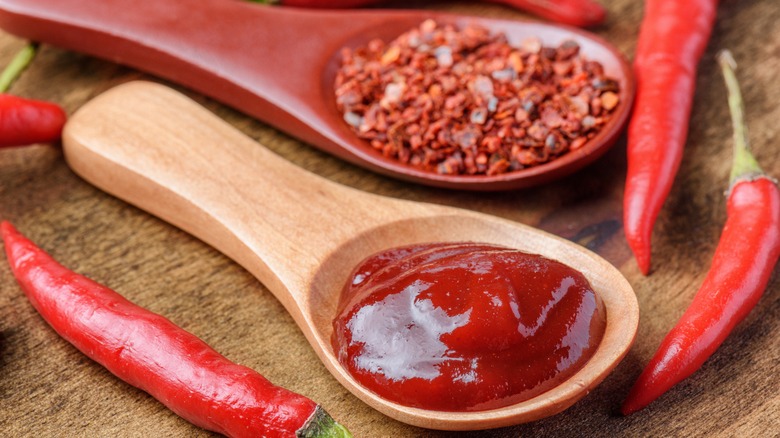
The Scoville scale is huge, and there's a vast difference in the spice levels of pepper varieties, ranging from mild to extremely hot. For instance, a jalapeño usually falls just under 5,000 Scoville Heat Units (SHU), whereas ultra-hot chilis like the Carolina Reaper can exceed two million SHU — you wouldn't want to put that in your microwave! Also, within pepper varieties, there are many factors that can influence the final capsaicin content, including water stress, temperature, and exposure to sunlight.
As for the peppers at the top of the Scoville scale, they actually happened to be developed by the same breeder, Ed Currie. Currie spent years deliberately cross-breeding peppers to push the capsaicin levels beyond anything previously measured. After years of refinement, the Carolina Reaper was officially recognized by Guinness World Records in 2013 as the spiciest pepper. In 2023, Currie beat his own record by breeding the infamous Pepper X. The average heat of this pepper is approximately 2.69 million SHU, but there are reports of it exceeding three million — which would put it on the same level as bear spray.
Unfortunately for the daredevils out there, you're not likely to find Pepper X at your local grocery store, and your closest bet is finding hot sauces or dishes containing Pepper X powder. The most common super-hot pepper that is commonly used and available is Scotch Bonnet, which can reach up to 325,000 SHU. Despite its intense heat, Scotch Bonnet is a fixture of Caribbean and West African cuisine, breathing fire into jollof rice and jerk seasoning.