

How To Grow An Olive Tree Indoors And The Variety You Need For The Best Fruit
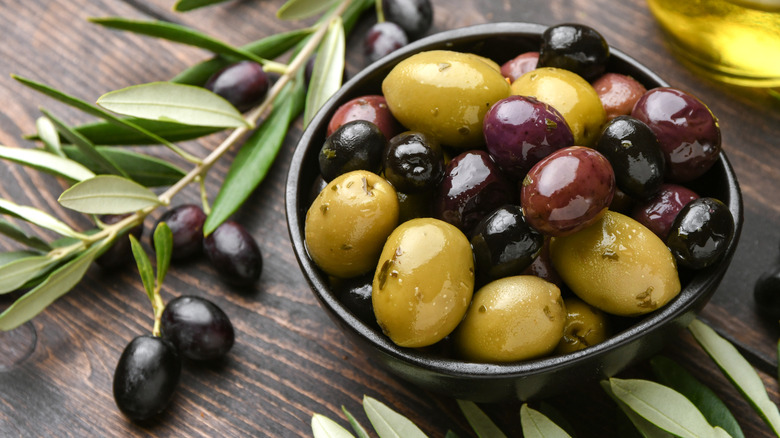
From fruity olive oil to dirty (or filthy) martinis, you've got olive trees to thank. While their natural habitat is found dotting the sun-soaked Mediterranean region, where twisted, ancient specimens have been producing fruit for well over a thousand years, you can also grow your own indoors – provided you care for them properly. To find out how, Food Republic spoke with Steve Corcoran, CEO of Lawn Love.
According to Corcoran, arbequina and manzanilla are the best olive trees to grow indoors. Both are popular Spanish olive varieties, which are also the nation that produces the most olive oil in the world. Arbequina is known for producing high-quality, fruity olive oil, while manzanilla olives are prized for their versatility, being perfect for stuffing or skewering alongside a cocktail. "Both can grow to be a decent size, so you want to make sure to pick the right spot and to prune them correctly," Corcoran advised. From small rosemary bushes to large, mature trees, pruning is an essential part of gardening. It simply involves selectively trimming back branches to control size and encourage healthier, more balanced growth.
While olive trees can eventually reach up to 25 feet outdoors, indoor specimens grown in pots typically remain much smaller, so they are more manageable. For placement, Corcoran recommended a spot that provides them with as much bright, direct sunlight as possible — ideally near a south-facing window or in a sunroom. "Both need at least [six] hours of direct sunlight per day," he explained. Remember, the natural climate of olive trees is under the intense Mediterranean sun, so you should always try to mimic similar conditions at home.
Tips for growing olive trees indoors
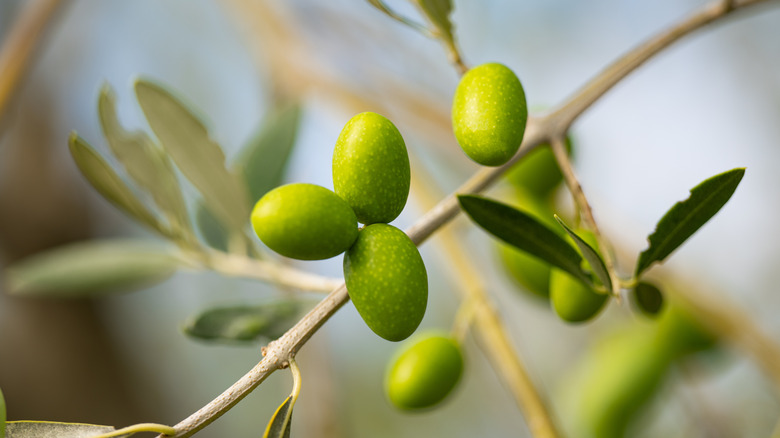
Olive trees are famously slow growers, especially when started from seed. It can take several years for a seed-grown olive tree to establish itself, and a decade or more before it produces any fruit. According to Steve Corcoran, this is true no matter what variety of olive tree you're using, which is why he recommended "buying an established tree and bringing it home." For consistency, many commercially grown olive trees are grown from cuttings or grafts, which produce fruit comparatively faster than seedlings. You'll likely be able to purchase these at your local garden center or online retailers.
As for the soil you should use, the best potting mix is something that mimics the tree's natural Mediterranean habitat. This is a well-draining, gritty mix with plenty of perlite and drainage holes at the bottom. As they come from a dry climate, olive trees are particularly vulnerable to root rot, so take care to avoid overwatering your trees. To determine when you should water them, stick your finger into the soil and only water if the top two inches are dry.
Green olives are typically picked while still firm and unripe, whereas black olives are left on the tree longer until fully ripe. In either case, olives should release easily when ready, so shaking the branches or hand-picking them should do the trick. Freshly harvested, olives are naturally extremely bitter, which is why they need to be cured in salt water before becoming edible. It takes patience, but the payoff is well worth it!