

10 Mistakes To Avoid When Cooking Garlic, According To Chefs
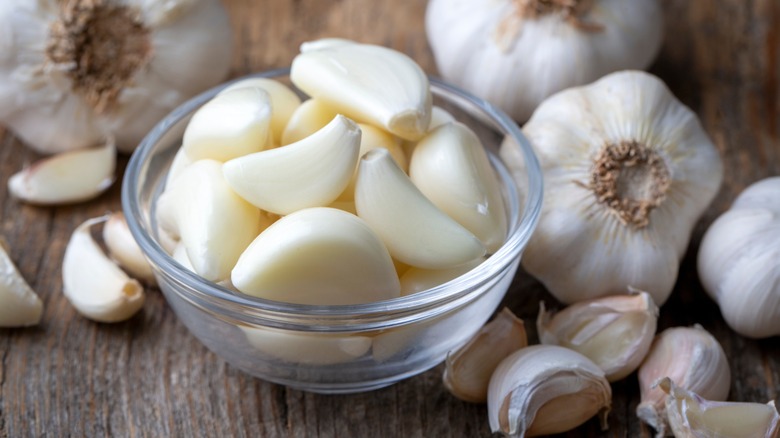
When it comes to infusing dishes with drool-worthy umami flavor, nothing gets the job done like garlic. Seriously, I feel bad for anyone with a garlic allergy because it's basically the most delicious ingredient in a world of different cuisines. Even so, it can be a touch fickle, so it's easy for home cooks to make mistakes when incorporating garlic into their meals. And you know what? We simply can't have that. I mean, if you use garlic as much as I do in the kitchen — translation: In about 99% of my dishes — nobody has time for silly blunders.
On a quest to ensure we never fall prey to garlic cooking mistakes again, I checked in with a few experts on the matter, i.e., some chefs who really know their stuff. The first pro I received insights from is Michael Handal, a chef at the Institute of Culinary Education. I also got some helpful tips from Sean Griffin, executive chef at Jean Georges Steakhouse in the ARIA Resort & Casino in Las Vegas. Last but not least, Dennis Littley, chef and culinary expert at Ask Chef Dennis, came through with lots of valuable knowledge. As he told me, "Garlic is one of the most versatile ingredients in the kitchen, but it's also one that many home cooks handle incorrectly or don't know how to get the most out of." With help from our three experts, though, we can kiss those pesky garlic cooking mistakes goodbye for good.
Adding garlic at the wrong stage of cooking, something that often results in burning
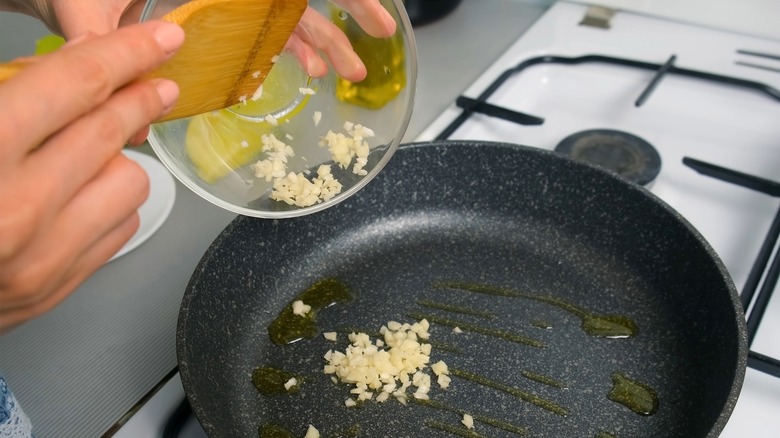
The first glaring garlic cooking mistake two of our experts were kind enough to reveal is one many of us have surely committed: Adding garlic at the wrong stage of cooking. I know my family often goes back and forth on whether or not to add it at the beginning or the end, and we are not alone in this. Either way, our experts are putting the debate to bed once and for all.
Chef Dennis Littley put it this way, "Some cooks add garlic at the wrong stage of cooking. Too early in a high-heat preparation, and it burns; too late in a slow-cooked sauce, and it remains raw and sharp. Understanding when to use garlic in different dishes is key." What I'm hearing is that both early on and a bit later work, it just depends on what you are making.
Michael Handal elaborated on the proper time to add garlic by saying, "When used in sautés and in sauces, garlic should be the last ingredient in the pan to cook before you add the liquid. Staying with the garlic during this process, stirring often, is advisable, and it's usually only a short period of time." He also recommends lowering the temperature when garlic hits the pan to prevent accidental burning. Regardless, you don't want fresh garlic in a dry-heat pan for long, or the flavor suffers. No, thanks.
Over-mincing or crushing garlic
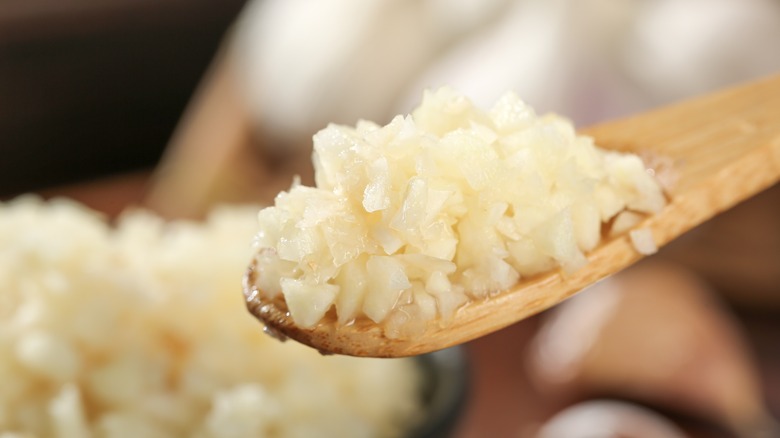
Let's face it: Peeling and chopping garlic is kind of a labor of love. It's sticky, and you don't have a lot of surface area to work with. Even so, when it comes down to tackling the task, chef Dennis Littley said it is easy to go overboard — and it's a mistake you want to avoid. According to him, "Crushing it too much releases all the sulfur compounds at once, which can give the garlic a harsh or metallic flavor. Slicing or lightly smashing cloves instead produces a milder, sweeter taste that blends naturally into sauces, sautés, and other dishes." I don't know about you, but I'm already a fan of smashing garlic, so this is music to my ears.
Chef Michael Handal also told me that "instead of mincing garlic cloves, a garlic press will quickly mince the clove into very small and uniform pieces." So, if you're looking for a great time saver, it's the way to go. However, if you don't have a garlic press, you can also sprinkle a touch of salt on cloves of garlic to help make slicing less sticky and easier as a whole. Handal didn't tell me this, but it's a valuable hack nonetheless, at least until you invest in a garlic press for yourself.
Relying too heavily on jarred garlic
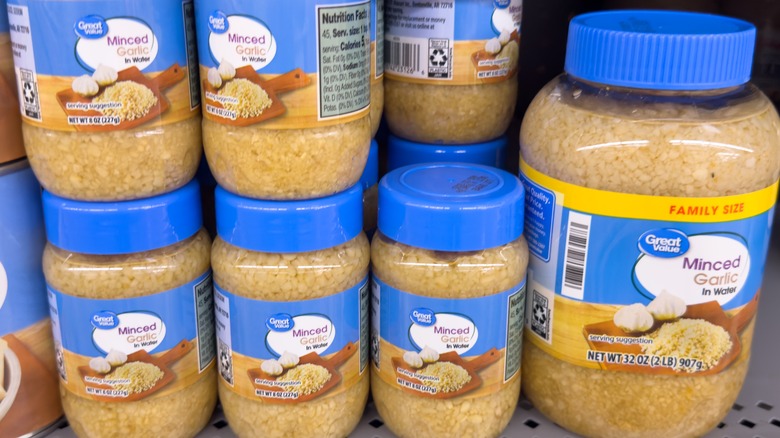
Oh, jarred garlic, or jarlic as I call it. There's no denying it is incredibly convenient. You can simply scoop some out and add it to your food, no peeling or chopping required. Still, relying too heavily on jarred garlic is a mistake two of our experts say won't serve you well.
As executive chef Sean Griffin told me, "The convenient jar of pre-minced garlic may seem like an easy option, but its flavor is usually muted, mild, and mushy, and you lose many of the qualities that make fresh garlic special." Basically, you won't get nearly as much bang for your buck in the flavor department. Since garlic is already quite potent, it may not seem like the biggest loss, but when you want the best flavors possible, fresh garlic is the way to go. Griffin also recommends opting for local garlic when possible. Additionally, he said fresh garlic should be light and pleasant, and the bulbs should feel heavy, as opposed to light or hollow." Keep this in mind while shopping, and you'll be setting yourself up for success.
As if that wasn't enough, chef Dennis Littley backed up Griffin on every aspect of jarred garlic, "While convenient, it lacks the freshness and aromatic oils that fresh cloves provide, resulting in a flatter flavor. I recommend buying whole bulbs and peeling cloves as needed, which ensures each dish has the depth and punch that fresh garlic brings." Consider me sold.
Not understanding the different varieties of garlic

This next garlic cooking mistake is a bit more nuanced, but as a result, something tells me it's one many of us aren't even aware of. At least I know I was completely in the dark about it before chef Dennis Littley revealed it. Ready? Okay, so according to him, not knowing about different varieties of garlic and when to use them is a common misstep home cooks make. It's easy to just grab pretty much the first head of garlic you see at the store and consider it done, but "Using the right type of garlic will always elevate your dish," says Littley.
Littley went on to tell me, "Softneck garlic stores well and has a mild flavor, while hardneck garlic is more robust and complex." He recommends using softneck garlic for quick sautés and hardneck garlic for roasting. If you do, a noticeable difference in flavor will be your reward. It seems too good to be true that garlic could taste even better, but that's more than enough payoff for me to pay closer attention to the variety of garlic I purchase. Now I just have to track down a store that sells them both. Challenge accepted.
Cutting garlic incorrectly for your particular dish, or not letting it rest

As it turns out, "Cutting garlic incorrectly can also affect the results," says chef Dennis Littley. Dang, and here I am chopping it basically the same way every time. You too? Well, Littley said, "Large pieces may not infuse enough flavor, while finely minced garlic can overwhelm a dish. Matching the cut to the recipe ensures even distribution and prevents the garlic from dominating." Makes sense to me.
Chef Michael Handal also stressed to me the importance of cutting garlic in various ways and how it affects taste. "Garlic may be cut in so many ways, from minced to lightly smashed with the side of your knife, to peeled and left in whole cloves. The smaller the garlic is cut, the stronger and more aromatic it will be." He recommends we don't just go for a fine mince every time to achieve the tastiest results.
Once you've chopped your garlic, chef Handal also recommends letting it rest for about 10 minutes because it permits "enzymes in the garlic to turn into a compound called allicin. Allicin helps produce the sharp taste and aroma of garlic, but is also thought to be of help in a range of healthful ways, from cholesterol levels to antimicrobial properties." Um, what?! That's awesome, and leaving it to sit is so simple. Who can argue with that?
Forgetting how delicious roasted garlic is
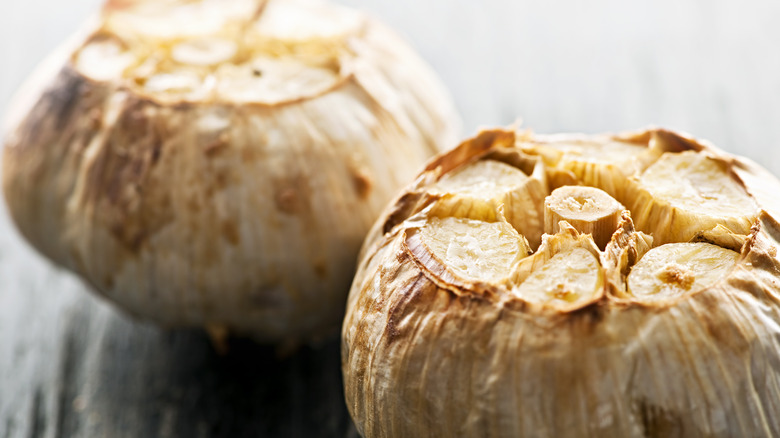
Roasting an entire head of garlic takes a considerable amount of time in the oven, like 45 minutes, so it isn't always something home cooks do. That, or we simply forget about it when planning a meal. Either way, overlooking how delicious roasted garlic is, and therefore not using it in your cooking, is a big mistake.
Chef Michael Handal told me, "Roasting adds a wonderful and softening effect to garlic, "that makes it perfect for using as a spread or adding it to things like mashed potatoes. Essentially, "You have the effects of garlic, without the harsh bite that minced garlic may add," says Handal. I mean, roasted garlic mashed potatoes? Enough said.
Chef Dennis Littley also likes using roasted garlic because it "brings a sweet, mellow flavor to soups, mashed potatoes, or sauces." He told me roasting it adds depth while simultaneously ensuring it won't overpower the other ingredients in your food. Plus, it's easy to do. After cutting off the top of a head of garlic, Sean Griffin lightly seasons his garlic and smothers it with oil. Then, he wraps it in foil and bakes it at 375 F for about 45 minutes. If you want to save yourself some time, though, the air fryer is your key to roasted garlic in about half the time.
FYI: Grilled garlic is essentially the same thing when it comes to flavor, so don't overlook it, either.
Storing your garlic improperly
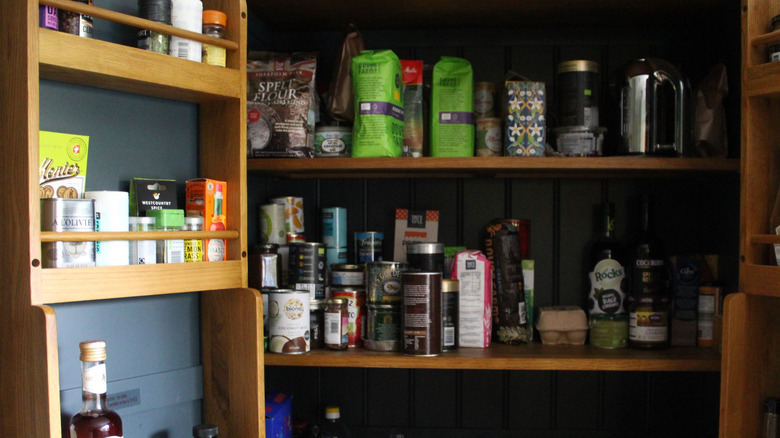
We all know that our jar of powdered garlic or garlic salt should live with our other spices, whether that's on a shelf, rack, or in a drawer. Pre-minced, jarred garlic also goes into the fridge. It says it right on the jar, so no surprises there. What about fresh garlic, though? Should you stick it into the produce bin in your fridge? Maybe in the pantry? Or should it sit out on the counter with your fruits? Well, according to our experts, this is a common question, and it's one many home cooks get wrong.
Chef Dennis Littley and executive chef Sean Griffin both told me that storing fresh garlic in the fridge is a mistake. Griffin said, "The cold, humid environment shortens its shelf life." Littley also noted, "Refrigerating whole bulbs can encourage sprouting and degrade flavor." So yeah, the fridge is a hard no. Instead, they recommend storing garlic in a cool, dry, dark space with ample ventilation. So your pantry area is perfect. And, of course, Littley also noted that "using it before it softens or sprouts ensures maximum aromatic quality." Seems simple enough, right? Excuse me while I go stick my head of fresh garlic in my kitchen cabinet that serves as a pantry (It's definitely not in a bowl on top of my fridge right now).
Not adjusting the amount of garlic used based on the dish you are making
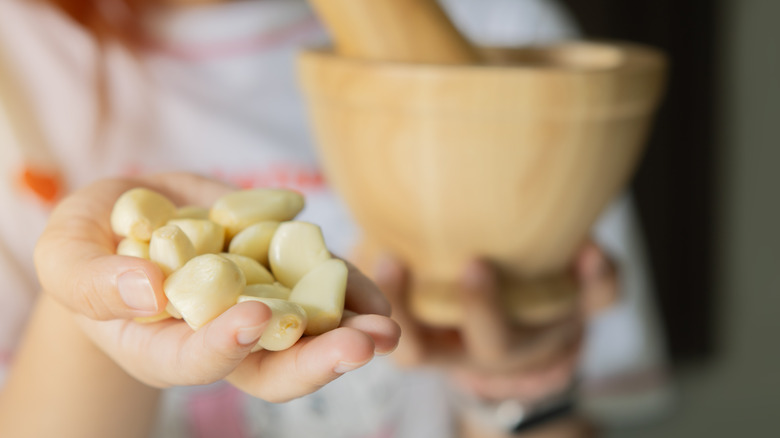
For a garlic lover like myself, just tossing ample amounts into any dish is easier than you think. I mean, I can't be the only one who often doubles what a recipe calls for. However, according to our experts, going overboard is easier than many of us would think.
As chef Dennis Littley told me, "Garlic is powerful, and a little goes a long way. Starting small and gradually building flavor allows the garlic to complement other ingredients rather than overpower them." Chef Michael Handal built on this concept by saying, "A small amount of garlic can go a long way, but can also quickly overwhelm the flavors and aromas that a particular dish might offer. Using garlic judiciously and carefully will add to your recipes and not detract from them."
What our experts said about using garlic more sparingly may not be what a fanatic like me wants to hear, but they are obviously on to something here. After all, I'm sure people don't taste their food and say things like, oh wow, that's a lot of garlic — and it's something I've heard many times before. Even so, "With a few simple adjustments, garlic can consistently enhance your dishes and bring out the flavors of every meal in the best way," says Littley. So, it's not like garlic has to take a back seat, but it shouldn't overwhelm the other elements of your dishes.
Cooking garlic at too high of a temperature so it results in burning

We already discussed the importance of when to add garlic to your dishes, but even if you do it at the exact right time, it's still incredibly easy to burn it if the temperature is turned up too high. Don't make this mistake, or you'll likely end up with bitter garlic permeating your entire dish.
Actually, according to chef Dennis Littley, cooking garlic at too high a temperature is one of the biggest mistakes one can make, "Garlic burns quickly, and once it scorches, it becomes bitter and unpleasant." For this reason, he likes to "add garlic later in the sauté or lower the heat, so it softens and releases flavor gradually."
Chefs Michael Handal and Sean Griffin agree with Littley that burnt garlic is never pleasant, and it happens quickly. To avoid this, Handal told me you should always pay close attention to it while it is cooking. Griffin elaborated by saying, "When sautéing, I start the garlic in a cold pan with plenty of oil and slowly bring the heat to medium, swirling the pan as the garlic begins to sizzle, turn fragrant, and turn a light golden color." This all sounds easy enough, but Griffin also said the line between golden and bitter is very fine. Always opt for a low and slow if you want perfectly cooked garlic, which, obviously, we all do. Don't forget to watch it closely, as well.
Not removing green filaments found in garlic
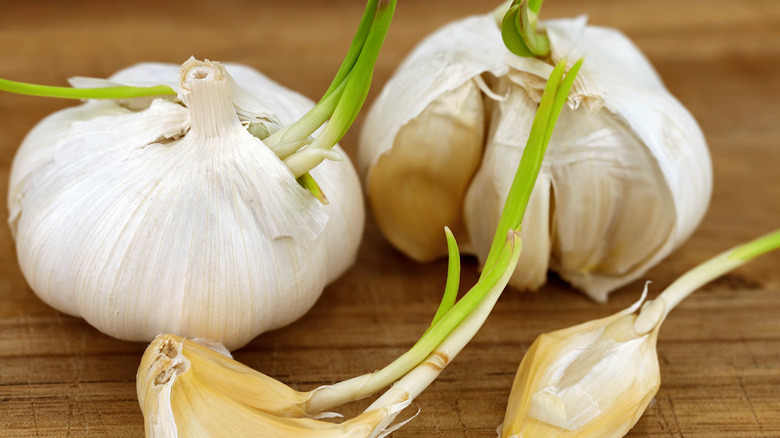
The final garlic cooking mistake many home cooks unknowingly make is not removing the green filaments found in the heart of fresh cloves. I'll be honest: I've definitely been mid-dice before, came across the filament, and wondered if it truly matters whether I extract it or not. Well, as it turns out, our experts say yes. It does, in fact, matter, and leaving it in is something you won't find them doing.
Both Michael Handal and Sean Griffin told me they remove the green filament or germ. As Griffin said, "When cooking with garlic, I always remove the germ. If you slice a clove in half, you will see a small sprout in the center that becomes more noticeable as garlic ages and it can add a bitter, overly pungent taste." Um, no thanks. Handal confirmed what Griffin said and also noted that the filament is harmless, but due to the off-putting, bitter taste, it's "much better to remove it before cutting the garlic further."
If you've ever cooked with sprouted garlic, you know what the bitter taste our experts mentioned is all about. While cooking with sprouted garlic or leaving in the green filament isn't a deal breaker, it certainly isn't doing us any favors. It's detracting from the rich umami flavor we all know and love, too, so you better believe I'll be removing the green filaments from my garlic cloves from here on out. I recommend you do the same.