

Functionality Is Key When Organizing Your Pantry
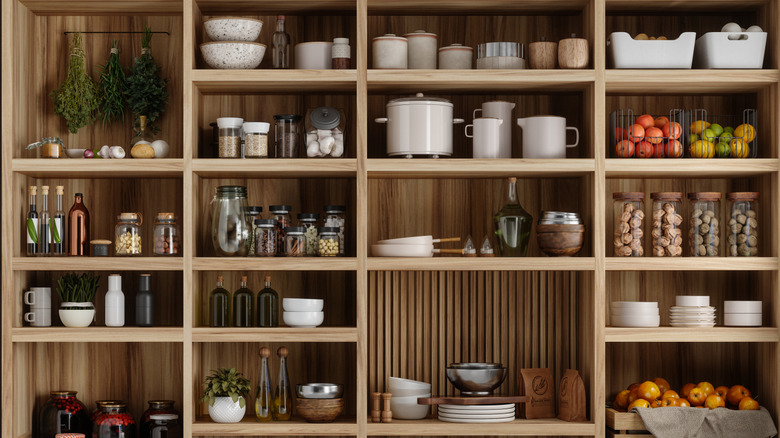
The key to a perfect kitchen is a blend of visual appeal and functionality. If your pantry isn't well-organized and your workflow isn't thoughtfully planned, you'll find yourself constantly digging for ingredients, building up clutter, and losing track of items — no matter how good it looks. To find out how to perfectly balance design and practicality, Food Republic spoke with Ashley Bailey, founder of Everything Orderly.
"The first thing I do when organizing a pantry is inventory the items and determine what is going to live in the space," Bailey explained. Organization with intention is an easy way to improve the overall look and feel of your pantry. An inventory is also a chance to rediscover forgotten ingredients that were once destined for an exciting meal, only to be left gathering dust at the back of your pantry — we're all guilty of this! This step is also important if you're trying to organize a space where presentation really matters — such as open-shelving storage – to prevent visual clutter from building up with a muddled array of pantry items.
"Once you know what needs to be stored, you can create zones for like items — baking, cooking, pasta, grains, snacks — and organize them in a way that supports the natural flow of the kitchen," Bailey added. The layout of pantry you've got should also dictate how you zone your items. For example, the most accessible shelves should be used for the items you use the most, think essentials like pasta or rice, lower-shelving for heavy items like pots and pans, while lesser used items can live on the higher, harder-to-reach shelves.
More tips for a functional pantry
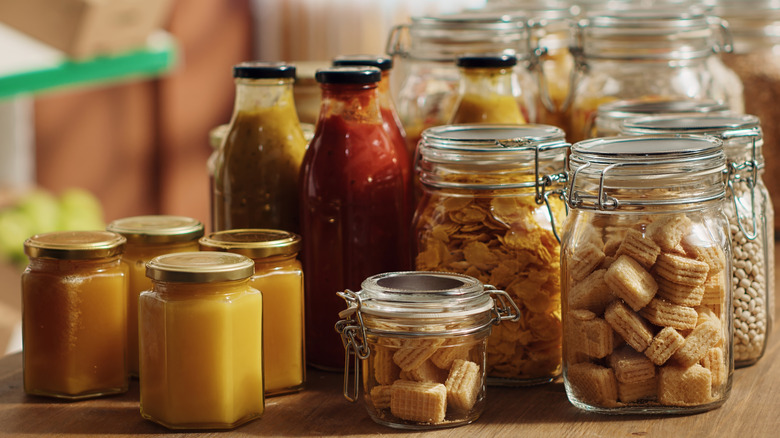
According to Ashley Bailey, another way to guarantee a functional pantry is by categorizing your ingredients by food groups or usage. "Keeping categories somewhat broad is key," she added. "When things become too specific, systems are harder to maintain." For home chefs out there who love to collect a wide variety of unique ingredients for experimenting with new dishes, keeping track of them can become difficult. With broad categories in place, it will be much easier to quickly locate these niche items, allowing you to spend less time digging around your pantry and making a mess, and more time focusing on cooking.
"Deep shelves can quickly become an abyss for lost items if they aren't set up thoughtfully," Bailey warned us. "I recommend using tiered shelving at the back of deep cabinets or bins that fit the full depth of the shelf." Other effective fixes for deep cabinets include smart storage tools designed to reclaim and maximize every inch of that underused space. "Visibility is the goal," she explained. "If you can't see items, you'll forget they're there, which often leads to wasted food and duplicate purchases." Another way to keep track of ingredients while also making your pantry look ultra-streamlined is by storing your items in clear, labelled containers like Ina Garten, which also helps keep them fresher for longer. This will reduce the visual clutter of branding and make it easier to see what you've got in your pantry at a single glance.