

How To Choose The Right Rug For Your Kitchen
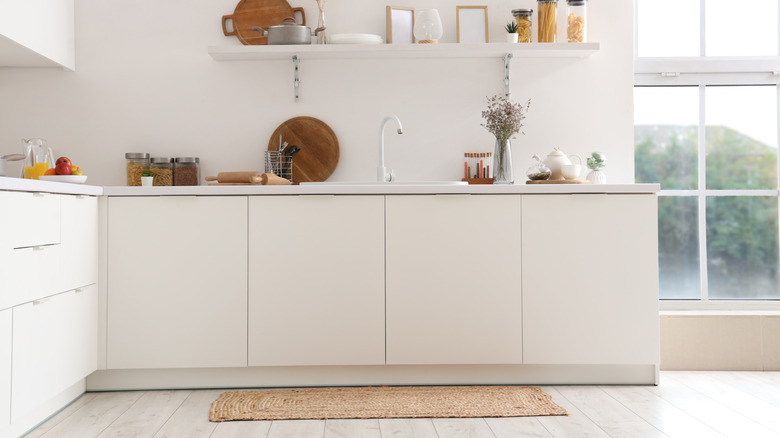
A rug is an easy way to brighten a dark kitchen, add a cozy touch, and even bring back some '90s kitchen vibes. But for it to really work, you'll have to think more than just looks — functionality is just as important, too. To break down what makes the perfect kitchen rug, Food Republic spoke with Evelina Juzėnaitė, principal interior designer at Planner 5D.
"[The rug] should be durable, easy to clean, and non-slip," Juzėnaitė told us. "Liquids are often spilled in kitchens, and people walk on them frequently, so you need a rug that doesn't get dirty and doesn't pose a safety hazard." Unlike your lounge or bedroom, the kitchen is a high-traffic space. To avoid slipping, consider purchasing a non-slip rug designed to stay securely in place on the floor. These rugs typically have a rubber or latex backing to provide grip. If you're set on using a rug without backing, a non-slip mat or gripper placed directly underneath the rug is a smart investment.
While certain materials may look good, they might not be able to withstand the rigors of daily wear. To maintain cleanliness, "I recommend choosing rugs with a short pile or smooth weave made from stain-resistant materials that can be wiped or even washed," Juzėnaitė added. These types of rugs are made with low, tight fibers rather than long, fluffy ones. This makes crumbs and dirt less likely to get trapped in the fibers, keeping the rug easy to clean while preventing pests from being attracted to forgotten food particles.
Other factors to consider with a rug in the kitchen
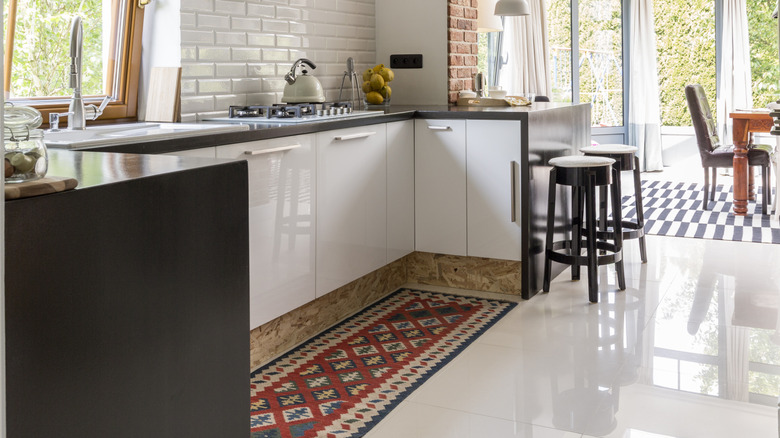
When picking a kitchen rug, you'll want something that looks good and feels comfy, while also being able to withstand daily use. According to Evelina Juzėnaitė, polypropylene or recycled PET rugs are great options as they're "soft to the touch, very durable, and easy to clean." They're also easier on the wallet than natural fibers — though they might not have that higher-end look of wool or cotton. If you want something stylish but still practical, washable cotton rugs are a solid option, Juzėnaitė noted. Just keep in mind, cotton rugs tend to wear out faster than wool or synthetic materials.
"I recommend avoiding thick wool or high-pile rugs in the kitchen, as they absorb stains and are more difficult to clean," Juzėnaitė added. Wool might serve a great decorative function, but its long, thick fibers can trap moisture and airborne particles, leading to the rug absorbing odors from cooking over time. Sure, you could use baking soda to clean your kitchen (including deodorizing your rug), but a more practical long-term fix would be to use a wool-synthetic blend rug.
As for the shape of your rug, "A rug runner is the most convenient and attractive option, adding warmth and functionality," Juzėnaitė told us. "In open kitchens, a small rug in front of the sink is a classic choice, helping to reduce strain on your feet while you work." A durable, waterproof material can also help protect your wooden floorboards from spills and stains from the sink.