

9 Grocery Chains With The Worst Value For Your Money

Remember when you could walk out of a grocery store without feeling like you'd just been mugged in broad daylight? Grocery prices have skyrocketed over the past few years, and everyone's feeling the pinch. But while some stores are making an attempt to stay affordable, others are brazenly ripping you off. So we set out to find out which ones were the worst offenders.
We looked at independent price comparison studies that tracked similar baskets of groceries across different chains. We weren't just looking for which stores were the most expensive; we also dug into customer satisfaction surveys to see how quality stacked up against price. We don't mind paying a premium price for a premium product. The goal was to find the grocery chains charging premium prices without delivering on value.
Price comparisons show that some stores charge 50% to 100% more for the same basket of groceries. Even worse, a few stores are combining high prices with terrible quality, giving you the worst of both worlds. Some chains have been caught charging different prices in different neighborhoods, targeting lower-income areas with higher markups. And certain stores are price-gouging customers who don't have many other options nearby, banking on convenience to justify outrageous prices.
While there are plenty of hacks that can help you lower the cost of your grocery bill, knowing which stores to avoid altogether is probably the best way to save your money. In some cases, it can add up to thousands, which is enough for a vacation or a rainy-day fund — not something to scoff at. So let's dig into which stores are the worst culprits when it comes to overpricing.
Erewhon
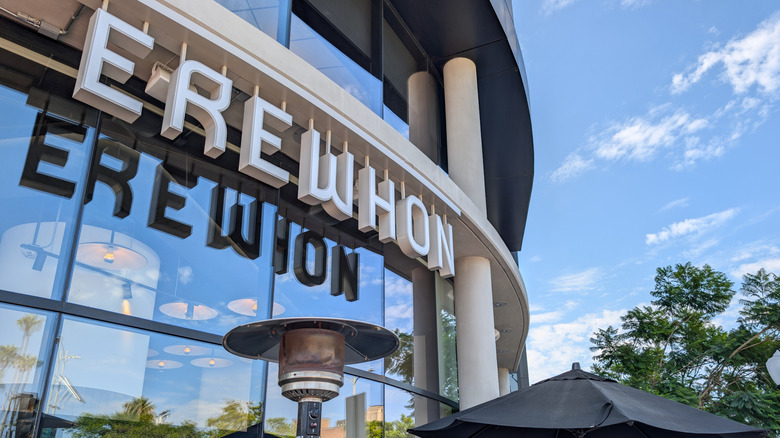
How could we not mention Erewhon? It almost feels like satire how unaffordable this place is. And the thing is, it isn't even trying to be sneaky about it. It's almost the whole point.
When it first started back in 1966, it was a health food shop in Boston run by a couple, Michio and Aveline Kushi, who were really into the whole macrobiotic eating thing. We're talking proper wholesome stuff — organic ingredients, nothing processed, you know the drill. It was earnest and a bit hippie-ish, catering to people who cared about clean eating before it became trendy. Then the store moved to LA, and everything changed. Wellness became big business. Now there are 10 Erewhon locations scattered around Los Angeles, and counting, and they've got nothing to do with that humble health food shop vibe anymore. Walk into one, and you'll think you've stumbled into a designer boutique. Everything is perfectly arranged; the lighting makes you feel like you're in a spa, and the whole place exudes an air of luxury.
Shopping at Erewhon has become less about actually eating healthy and more about being seen doing it. People post their Erewhon hauls on social media like they are unboxing a Birkin bag. The tote bags alone have become a flex. The exclusivity is entirely the point. Those sky-high prices keep the "riffraff" out and maintain that elite, aspirational brand image that attracts influencers and celebrities.
Stop & Shop
Stop & Shop is in trouble, and it seems that it has brought it on itself. In 2024, the chain announced plans to close 32 underperforming locations, with more closures expected to roll out through 2028. The company has admitted that its pricing strategy is the problem, acknowledging that it has driven customers straight into the arms of cheaper competitors. Shoppers have been complaining for years that Stop & Shop costs too much, and now even the executives can't deny it anymore.
Stop & Shop has bigger problems than just being expensive across the board. In 2024, a group of teenage volunteers from the Hyde Square Task Force in Massachusetts discovered something even worse — the chain was charging higher prices in lower-income neighborhoods compared to its suburban locations. When the findings came out, lawmakers, including senators Elizabeth Warren and Ed Markey, weren't having it. They sent a letter to Stop & Shop demanding that the company explain why it was potentially price-gouging the communities that could least afford it. Charging poor neighborhoods more for the same products while keeping prices lower in wealthier areas is a pretty damning look for a grocery chain already bleeding customers over high prices.
Customers have figured out they can get the same groceries for less money at competitors like Aldi, Walmart, and other chains. Stop & Shop is learning the hard way that you can't charge premium prices without offering premium value.
The Fresh Market
The Fresh Market has always positioned itself as a competitor to Whole Foods, and for a long time, Whole Foods held the crown as the pricier option between the two. But things have shifted since Amazon bought Whole Foods and started lowering prices. Now, The Fresh Market is actually more expensive than Whole Foods on quite a few products.
The store got its start when Ray Berry and his wife, Beverly, came back from a trip to Europe feeling inspired. They wanted to recreate that European open-market vibe in America, offering shoppers a more personal and intimate experience instead of the massive warehouse-style supermarkets that were everywhere at the time.
The produce at The Fresh Market isn't lacking in quality. It's got fresh, well-displayed, and often organic or specialty varieties you won't find at lower-end grocery stores. The problem is the price tags. Everything costs significantly more than it does at other stores, and unless you're only buying a few special ingredients for a dinner party, doing your weekly shop there will absolutely wreck your budget. You're paying a premium for that boutique atmosphere and carefully curated selection, but most families can't justify spending that much on regular groceries.
The chain does have one saving grace, though. The Fresh Market offers "Little Big Meals" where you can feed a family of four for around $25. It's actually a decent deal compared to the store's usual prices, and the meals are pretty solid. Cynics might see it as a tactic to lure you into the store, hoping you'll grab a few overpriced items while you're there. So if you do go, stick to just picking up one of those meal deals and resist the temptation to browse.
Giant Eagle
Giant Eagle has been catching heat for years about its prices, with shoppers constantly complaining that everything costs way too much. In late 2025, a fed-up Redditor decided to settle the debate once and for all by doing a proper price comparison. They bought 19 similar everyday grocery items at both Giant Eagle and Aldi — things like spring onions, Parmesan cheese, chicken strips, and other regular staples. The results were pretty damning. The Aldi basket came to $66.82, while the same products at Giant Eagle rang up at $105.41. That's a difference of nearly $40 for the same groceries. So you could be spending almost 60% more at Giant Eagle for the same products you'd get at Aldi. We're not talking about fancy organic alternatives or premium brands here. These were basic, everyday items that most families buy on a regular basis.
To its credit, Giant Eagle seems to have finally noticed that customers are tired of getting fleeced. In fall 2025, the chain launched price-cutting initiatives, lowering prices on over 300 frequently purchased items. It's a clear sign that the company has recognized the problem and is trying to claw back some of the customers it has been losing to cheaper competitors. Whether those price cuts are enough to make Giant Eagle competitive remains to be seen, but at least it's acknowledging what shoppers have been saying all along.
Cub Foods
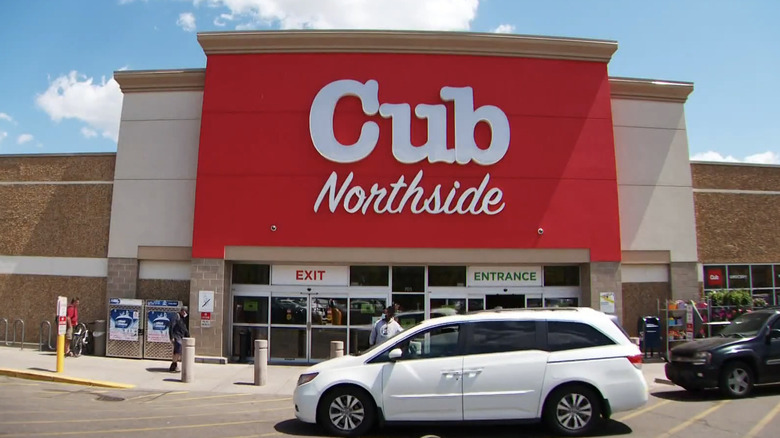
The Minnesotan chain Cub Foods didn't used to be such a rip-off. Back in 1968, two brothers, Charles and Jack Hooley, teamed up with their brother-in-law Bob Thueson and friend Culver Davis to open a grocery store with a new concept. The aim was to increase the volume of food they sold so they could negotiate better prices with suppliers and pass those savings directly to customers. They created one of the first stores to pioneer the warehouse-style grocery store that we know today, which combines high volume with low prices. It seemed that these guys genuinely tried to make grocery shopping more affordable for regular families.
So what happened? Somewhere along the way, Cub Foods completely lost the plot. Research by Ebitda Catalyst found that a basket of groceries at Cub Foods was 60% more expensive than the same items at Walmart and Aldi. Some individual items were over 100% more expensive at Cub than at budget competitors, meaning you'd literally pay double or more for the exact same product.
It gets worse. At least a few items at Cub Foods are now priced higher than Lunds & Byerlys, a premium grocery chain in the same area that positions itself as a competitor to Whole Foods. Lunds & Byerlys is supposed to be the fancy option where you pay extra for a boutique shopping experience and high-end specialty products. Cub Foods has no business charging more than that kind of store. It started as a discount warehouse grocer promising low prices, and now it's out-pricing luxury chains. Oh, the irony.
Acme
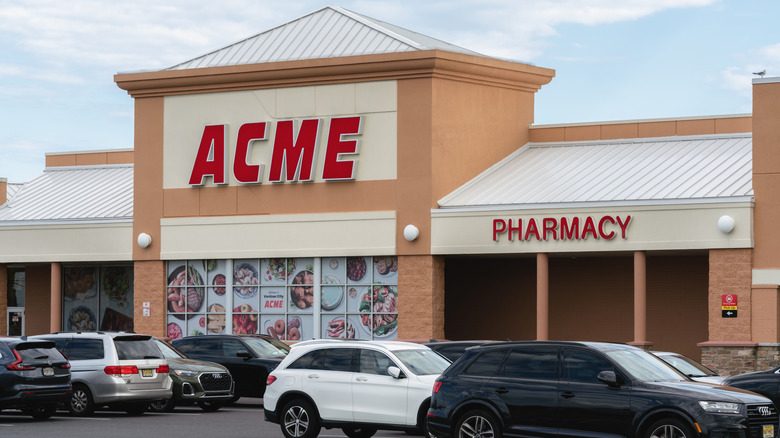
The Northeast chain Acme dates all the way back to 1981. That's over 40 years to build a solid reputation and figure out how to balance price and quality. Apparently, the store spent those decades doing neither.
Research carried out by Consumers' Checkbook in the Delaware Valley compared 150 common grocery items across different stores and interviewed shoppers about their satisfaction with each chain. The goal was to see how price and quality stacked up against each other. Acme came in as the second most expensive store, right behind Whole Foods. But here's the kicker — it was also rated second worst for quality, with only Target scoring lower. So essentially, you're paying Whole Foods prices for quality that's barely better than Target's grocery section.
The report also calculated how much an average family spending $300 a week on groceries would overspend at Acme compared to cheaper alternatives. The answer? A staggering $2,028 per year. That's a huge amount to be wasting on bottom-of-the-barrel groceries. High prices usually come with the promise of better quality, organic options, or a premium shopping experience. Acme offers none of that.
The Fresh Grocer
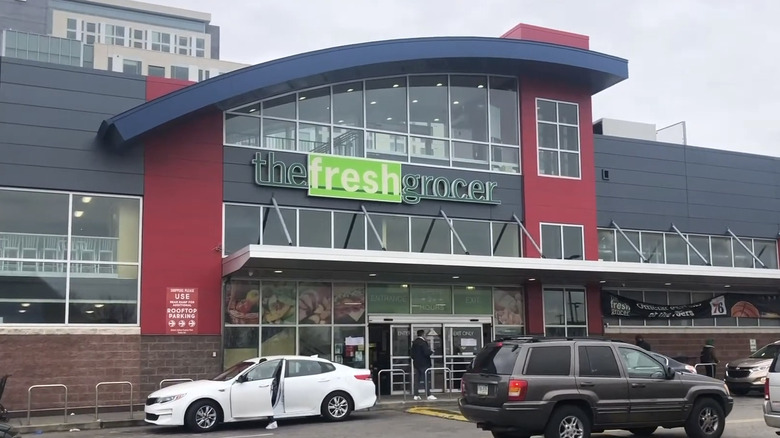
The Fresh Grocer is a Northeast chain that's part of the Wakefern Food Corporation, the same company that owns ShopRite. It has just 12 locations across New Jersey and Pennsylvania, but that hasn't stopped it from being a little audacious when it comes to its pricing.
In the Delaware Valley comparison carried out by Consumers' Checkbook, The Fresh Grocer received absolutely abysmal ratings for quality. The store scored just 36% in customer satisfaction, while the average across all surveyed stores was 62%. Shoppers clearly have serious problems with the quality of what they're buying at The Fresh Grocer, whether it's wilted produce, questionable meat, or just an overall lack of freshness despite the name. To make matters worse, The Fresh Grocer was the fourth most expensive store out of the 18 chains surveyed. So you're paying premium prices for subpar quality.
Students at Temple University in Philadelphia have been particularly vocal about their frustration with The Fresh Grocer, since there's a location right near campus. On Reddit, Temple students warn each other to avoid the store because the prices are ridiculously high. Some students have even suggested that The Fresh Grocer deliberately jacks up prices because they know students shop there and assume they won't travel further for better deals.
Star Market
Star Market is a small chain with 20 locations in Massachusetts. It was founded back in 1915 by Sarkis DerMugardichian, who had fled Armenia to escape Turkish persecution. The store has over a century of history in the Boston area, but unfortunately, it's lacking in competitive prices or quality.
An analysis of Boston grocery stores by Consumers' Checkbook found that Star Market had one of the lowest scores for overall quality, coming in at just 25%. That's terrible by any measure. But despite the poor quality, Star Market's prices are quite high compared to other stores in the area. You'd think a store with ratings that low would at least try to compete on price, but apparently not.
On a Boston subreddit, a user asked which store had the best prices between Star Market, Trader Joe's, and Stop & Shop. The responses about Star Market were brutal. One shopper called it an "absolute rip off." Another said, "Star Market feels like someone's trying to prank me," which is quite a funny description of the experience. Yet another commenter admitted they get "sticker shock" every time they look at the price tags. So if you are in the Boston area and looking for somewhere to pick up some groceries, go literally anywhere else but Star Market.
Whole Foods
A report by Business Insider compared prices at Trader Joe's and Whole Foods using a basket of common items. The same groceries that cost $48 at Trader Joe's rang up at $60 at Whole Foods. That's a 25% markup for essentially the same products. One of the most egregious examples was the chicken tenders. You could pick up 2 pounds of them at Trader Joe's for $8.99, while a bag weighing less than 1 pound at Whole Foods cost $11.99.
Another study carried out in September 2025 by The Market Report compared prices of 50 common items at 30 stores across the northeastern United States. The basket included everyday staples like apples, flour, milk, eggs, ground beef, and paper towels. The report also compared the results to a similar study from January to track price changes over time. Out of all 30 stores surveyed, Whole Foods came in as the most expensive. Even worse, Whole Foods had the biggest price increase of any store since January, jumping over 10%.
If you still want to shop at Whole Foods, then head over on a Wednesday. This is the day of the week when the store initiates new markdowns. If you are already an Amazon Prime member, it might be worth your while going as you'll get a few additional perks as part of the rewards program, such as 10% off all sale prices.
Methodology
We pulled together findings from several credible sources to work out which grocery stores are giving customers a raw deal. Studies from Consumers' Checkbook, Business Insider, The Market Report, and Ebitda Catalyst provided the hard numbers on price comparisons across different chains. They compared dozens or even hundreds of common grocery items to get a full picture of what shoppers are paying.
What we focused on was the relationship between price and quality. A store charging high prices isn't automatically bad value if the quality justifies it. The problem comes when chains charge premium prices but deliver mediocre or poor-quality products. That's where customers are getting ripped off, and those are the stores we wanted to highlight.
We looked at grocery stores across different regions of the United States to get a broader picture, from the Northeast to the Midwest and beyond. The patterns were pretty clear once you looked at the data and listened to what customers were saying.