

You Can Actually Grow A Pistachio Tree From Store-Bought Pistachios. Here's How
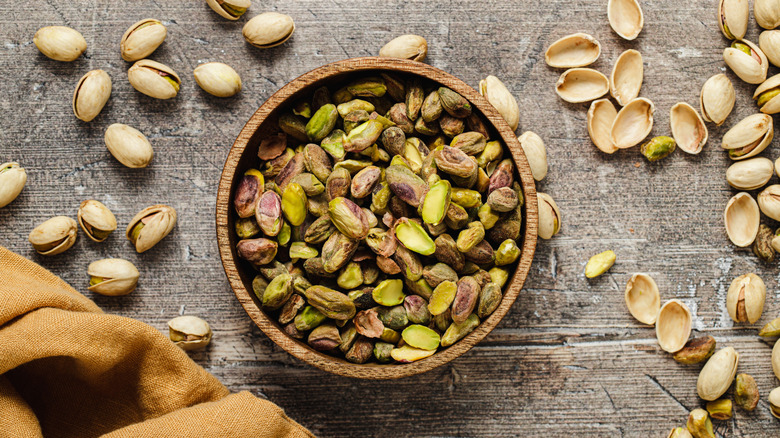
The humble green (though once red) pistachio is capable of producing many great things, from bright gelato to top-tier marinades, and even featuring as the creamy star of the ultra-viral Dubai chocolate. But did you know that just a single bag of store-bought pistachios could be the source of a free, lifetime supply of these versatile powerhouses? To find out more, Food Republic spoke with Angelika Zaber, lawn care specialist and gardening expert with Online Turf.
According to Zaber, if you want your pistachio seeds to germinate, they've gotta be as fresh as possible. Forget about using roasted or salted variations because these processes kill the seed inside, making germination impossible. Even when using fresh nuts, "the germination rate may still be quite poor," Zaber explained. "This is because store-bought seeds are not fresh, so their viability decreases over time." For older, more stubborn seeds, a commonly used method to initiate germination is called stratification. After soaking the seeds for 24 hours, place them in a damp paper towel inside a container and refrigerate for up to six weeks. This stimulates winter, which causes the seed to break out of dormancy to eventually germinate.
If you're looking for quick germination, stratification is skippable. To kickstart this process, "Deshell your nuts and soak them for 24 hours, changing the water halfway through," Zaber said. "Next, put them on a wet paper towel in a container, cover with another paper towel, and a container lid." If your seed is viable, you should see growth occurring within a week.
What happens after your seeds have germinated?
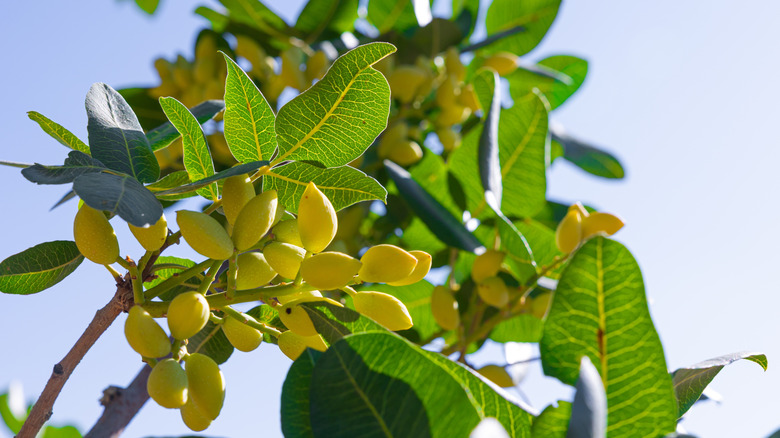
Native to Central Asia, pistachios enjoy hot, arid climates with cold winters and hot summers. That's why they thrive in states like California, which is responsible for 99% of pistachio growth in the United States. When growing your pistachio seeds, you'll want to closely mimic their natural climate to ensure optimal growth. Once germinated, "You should then move the sprouted nuts to a small pot and place it in a warm, sunny location," Angelika Zaber recommended. Think a windowsill, or a greenhouse if you've got one.
"The soil should be light, sandy, and loamy," Zaber added. "For best results, make sure it stays consistently moist, but not waterlogged, so good drainage is essential." One way to ensure good drainage is by crafting your own potting soil mixture. You can ensure good drainage by mixing coarse materials — such as sand, perlite, or small gravel — into your potting soil, so water can flow through easily. Always make sure to use a pot with drainage holes in the bottom to allow excess water to escape and prevent the roots from sitting in soggy soil. "Once the tree is older, switch to watering it deeply, but infrequently instead as this will ensure a good harvest," she told us.
Don't expect results instantly — pistachios don't grow as fast as rhubarb or follow the same annual cycle of standard seasonal produce. "Realistically, it usually takes at least five years for the tree to start producing fruit," Zaber explained. "However, it only reaches its maximum productivity at around 15 to 20 years."