

Give Leftover Mashed Potatoes A Caramelized, Crispy Side With A British-Style Classic
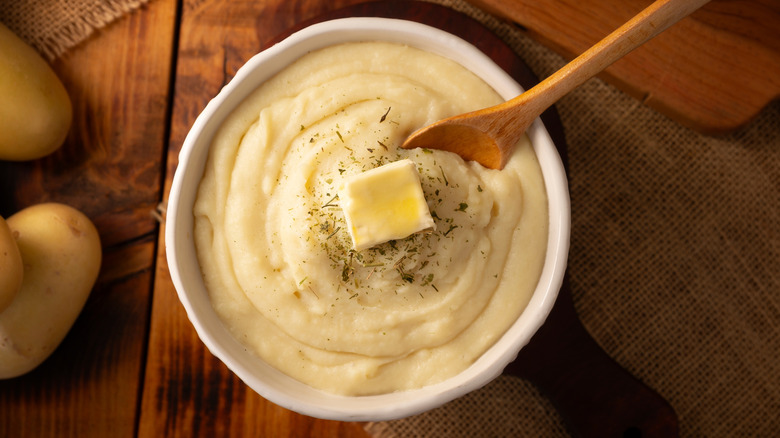
Not many dishes can compete with mashed potatoes. Beyond being the ultimate comfort food, and dare we say, the best preparation of potatoes, it's also super budget-friendly, and any leftovers can be saved and used up later. But let's face it: Nothing beats freshly cooked mashed tots. You could pop leftovers in the microwave or oven to reheat them, but they often come out dry and lackluster. To give them a new lease of life, borrow a tip from the Brits (who know a thing or two about mash) and fry them in butter instead.
Mashed potatoes fried in butter are part of an English comfort-food classic called bubble and squeak. The dish is traditionally made from Sunday roast leftovers, with mash and cooked cabbage or other veg shallow-fried in butter, lard, or meat drippings until a crispy brown crust forms. That crust is what brings the leftovers back to life, so it's essential to let it form. This comes down to the Maillard reaction, which occurs when amino acids in the potatoes react with reducing sugars. For that to happen, you only need two things: heat and time.
The potatoes need time to develop that crust. If you drop them into the pan and start stirring them around, they'll warm through, but they won't form a base layer. Instead, pat the mash into an even layer in the pan and cook it undisturbed over medium heat for around five minutes, or until the underside is deeply golden. Then flip it and repeat. You'll hear it sizzle and pop as it fries, which is said to be where the name bubble and squeak originates from.
How to turn bubble and squeak into a hearty meal
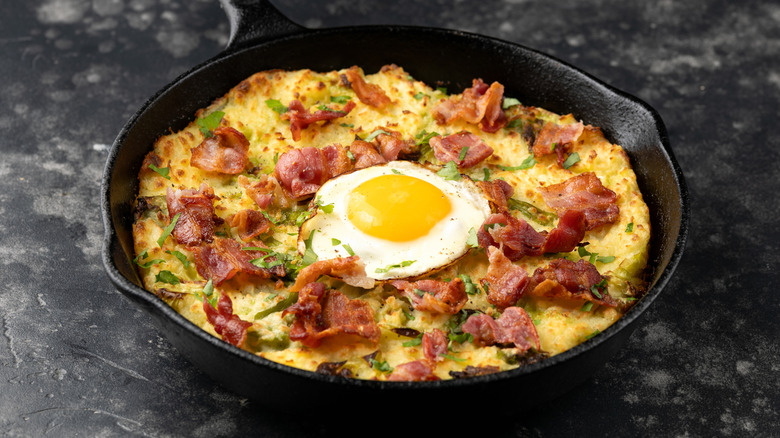
In restaurants across the country, chefs are swapping high-end dining rooms for cozy neighborhood taverns – not to be confused with bars – serving food that's comforting, hearty, and nostalgic. Much of it looks like standard British pub grub, which makes bubble and squeak a natural fit for those looking to hop on the tavern food trend. It's a great side on its own, but with a few smart upgrades, it can easily become the main event.
Since the dish goes so well with butter, you can push it into true gourmet territory by whipping up a compound butter. For reference, this is softened butter mixed with sweet or savory flavorings. It truly couldn't be easier to make, yet delivers a world of flavor. In a nod to the dish's Sunday roast heritage, mix butter with garlic, chives, and horseradish, with a spoonful of English mustard for good measure. When it comes to frying, many chefs also advocate for using lard over butter since the semi-solid pork fat has a higher smoke point, allowing the mash to develop a crispier crust. For the best bubble and squeak, we'd recommend using lard to fry, then melting a knob of the compound butter over the finished dish.
Then there's what else can go into the dish. In the spirit of making use of your leftovers, toss in any spare roast meat, bacon, or sausage. Even better, cook the bacon or sausage from scratch in the pan first, remove it, add the butter, and let the potatoes soak up all that flavorful leftover fond. For a cheesy, tangy edge, mix a generous handful of grated cheddar and a spoonful of Dijon mustard into the mash before frying.