

Add This Ingredient To French Toast For A Crispier Crust (Hint: It's Not Butter Or Oil)
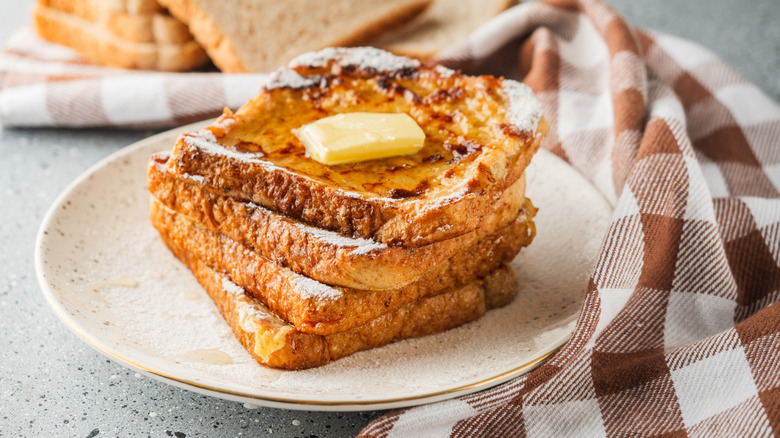
A classic French toast recipe is one of those comforting dishes that can be whipped up in a matter of minutes. However, one common problem people run into is soggy bread rather than a crisp, beautifully caramelized exterior. Unfortunately, sogginess is something of an occupational hazard when you're soaking bread in liquid. To give your slices more of a chance to thrive, all you need to do is add a little semolina flour to your soaking mixture. Two tablespoons per cup and a half of liquid is just about all you need.
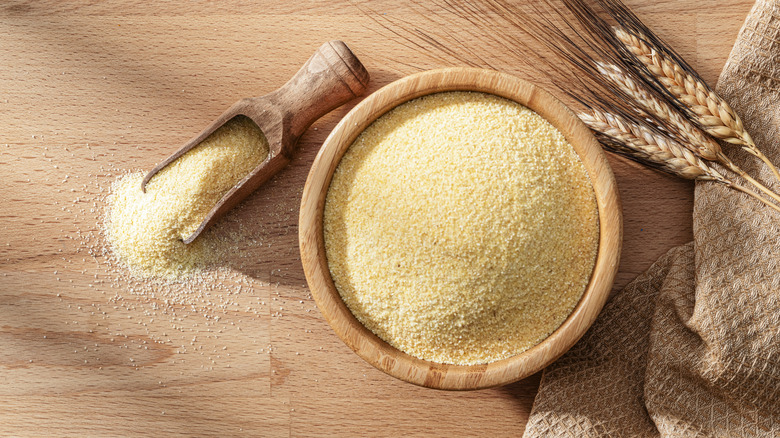
Semolina is a coarse, pale-yellow flour made by grinding the endosperm of durum wheat, one of the hardest species of wheat there is. Compared to standard, powdery all-purpose flour, semolina is higher in protein and fiber, and its coarse grains are well-suited to soaking up moisture. In French toast, that can be the difference between a soggy exterior and a crispy one. A small amount turns a watery custard into a more structured batter that clings to the bread instead of letting it drink up all that liquid and fall apart before it even reaches the frying pan. Its subtle nuttiness also adds a whole new layer of complexity to the flavor of the French toast, and would pair wonderfully with some cosy nutmeg and cinnamon.
Just don't go overboard. Semolina is still flour, so balance is key. Add too little and the mixture stays watery; add too much, and you end up with something closer to a paste than a batter. We recommend starting with a small amount, around a tablespoon, then adjusting until you reach your desired consistency. Semolina flour takes time to absorb liquid, so once you've added it, let the custard sit for a minimum of 10 minutes before adding your bread. Once it's rested, it should be thick enough to coat the back of a spoon.
Tips and tricks for crispier French toast
Semolina is one way to give French toast a crispy, lightly browned exterior, but it's by no means the only one. If you're having a hard time finding it, you can always swap in regular flour. The texture is different, but flour also absorbs liquid and thickens the batter, so you get largely the same effect, just without the nutty flavor. You could even skip the flour altogether and stir a cornstarch slurry into the custard, which packs even more thickening power. Just remember, as with semolina, moderation is key when adding flour or cornstarch into the mix.
Beyond thickening the custard, there are plenty of other handy tricks for shatteringly crispy French toast. To improve both its texture and flavor, give your bread a generous dusting of sugar after it comes out of the custard (before it hits the heat). Alton Brown might prefer honey over sugar in his French toast, but we'd argue that's a rare mistake. See, once sugar hits the heat, it starts to caramelize, melting into a crisp, brûléed crust and infusing the bread with a rich, toasty flavor. Keep the heat moderate, since caramelization can quickly turn to burning without proper care.
If you're not sold on the idea of messing around with the batter or adding extra ingredients, you can guarantee crispy French toast from the get-go by using stale bread. This might not sound too appetizing, but hear us out. Bread that's around one to two days old has lost a good chunk of its moisture, which leaves it firmer and drier. It acts like a sponge, soaking up the custard without turning to mush, so you get a rich, eggy center and a browned exterior instead of a soggy, limp slice.