

Olive Garden's Buttery Breadstick Topping Is Actually Dairy-Free
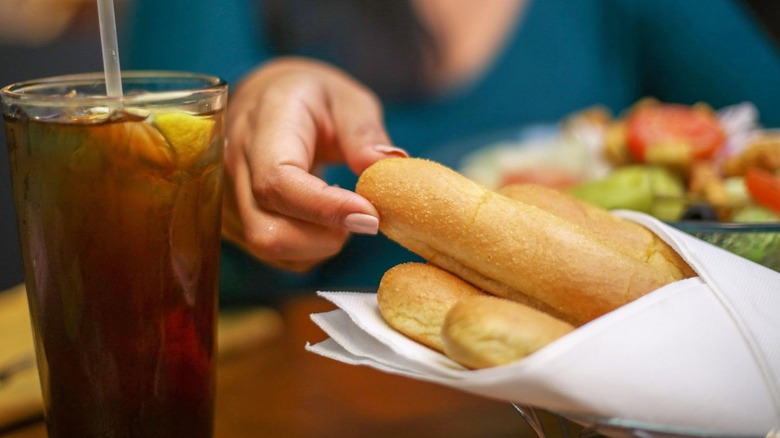
Many diners would agree that one of the biggest pleasures of dining out at Olive Garden isn't just the ambiance or even the appetizers or entrees, like the Tour of Italy, but rather one of the complimentary items that comes with your meal: breadsticks. These soft, pillowy sticks of dough are buttery, garlicky, and great for dipping into dressing or sauces. They are so popular that the chain of Italian-inspired restaurants goes through a staggering number each week, and many diners may even request some extra when taking home leftovers. But despite the buttery flavor of this signature item, it doesn't actually contain any real butter. Instead, the company uses margarine.
Margarine differs from butter in that it is made from oils with a variety of additional ingredients, including water. Together, they form an emulsion that can resemble butter. While not all brands of margarine are completely dairy-free, the kind Olive Garden uses doesn't contain any dairy at all, making it suitable for diners with dairy allergies or those who abstain from animal-derived foods. One reason Olive Garden may use margarine instead of butter is that it can provide a smoother, more consistent topping for its breadsticks.
Butter can also resolidify after it cools, potentially giving the breadsticks a pasty coating. According to Reddit users, Olive Garden uses liquid margarine, which retains its consistency. Additionally, margarine is generally less expensive than butter, and in an industry with razor-thin margins, anywhere you can save money can lead to greater profits.
From copycat breadsticks to baking, margarine is remarkably versatile
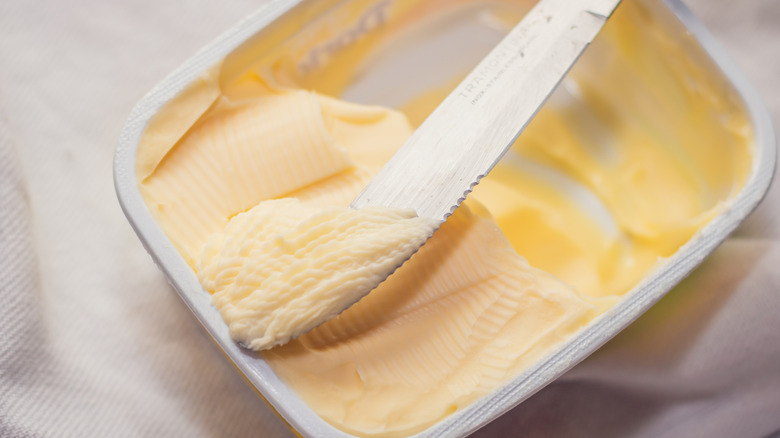
Perhaps the best use of margarine for Olive Garden fans is to recreate a homemade version of its iconic breadsticks. You can start by using Great Value Garlic Bread Sticks — a fantastic store-bought dupe, available at Walmart — and brushing melted margarine over the sticks after they're heated for an extra buttery finish. Or you can use the melted margarine to give new life to any of the chain's leftover breadsticks you bring home.
Margarine's uses extend well beyond breadsticks, though. For starters, many types of margarine retain a soft texture even when refrigerated, meaning you can easily spread it onto bread or toast even when it's cold. Try doing that with regular butter! Because some types of margarine contain little to no milk solids, they also don't burn as easily as traditional butter does. This means that you can use them to pan-fry foods at relatively higher temperatures than you can with butter without as much risk of altering the flavor of the finished dish.
Finally, margarine is also great for baking. You can often use it in place of butter in the same quantities, though the substitution may affect the finished product. Certain types of margarine also remain solid at higher temperatures, which can be beneficial when baking things like pastries, where fat that melts too quickly can make the difference between beautiful, puffy layers and a flat, greasy end result. Just be sure to avoid spreads or squeezable margarine for baking, as the water content can be too high and negatively affect your recipe.