

Former McDonald's Chef Reveals Why Fast Food Chicken Tenders Are Smaller Than They Look
From accusations of serving heavily processed food to concerns about the temperature of scalding coffee, fast food chains have faced their fair share of backlash over the years. One thing they could usually fall back on was offering an affordable meal, but with soaring prices, that promise is becoming harder to keep. And while customers have certainly felt the rising costs, they've not noticed a corresponding increase in quality. In fact, some are beginning to question whether they're really getting any bang for their buck at all.
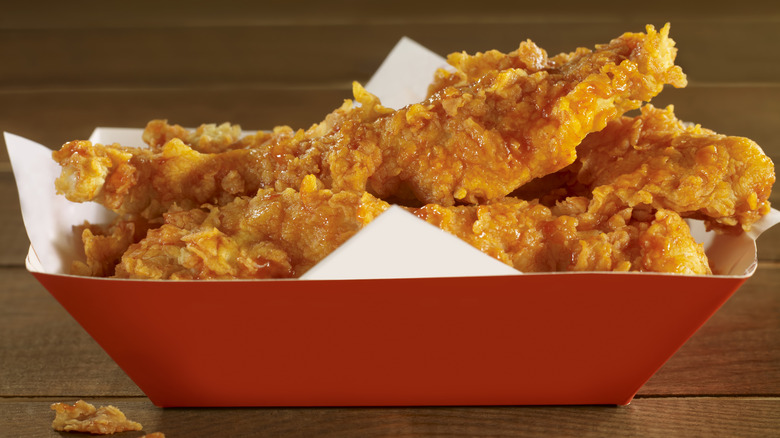
Enter shrinkflation, the increasingly common practice of charging more while quietly reducing portion sizes. Even more frustratingly, some chains might be selling you a product that looks perfectly generous on the outside but contains surprisingly little actual meat. In a documentary produced by More Perfect Union, former McDonald's corporate chef Mike Haracz revealed some industry tricks fast food chains use to make their chicken tenders look bigger than they actually are. Right off the bat, Haracz explained why some chains compromise on product quality in the first place. "They are willing to serve not as good of a product because they can make more money and serve more people," he shared. "Make it as cheap as possible, so they can get the most profit."
So how exactly do they pull it off? According to Haracz, there's more than one way to make a chicken tender like bigger without actually adding more chicken. One approach involves the marinade. By injecting or soaking the meat in a saltwater brine, manufacturers can increase its moisture content and weight, making the tender appear plumper. Then there's the breading. Using a thicker coating, double-dredging the chicken, or opting for bulkier panko breadcrumbs can all add extra volume to the finished product.
Chicken tenders aren't the only fast food made to appear bigger
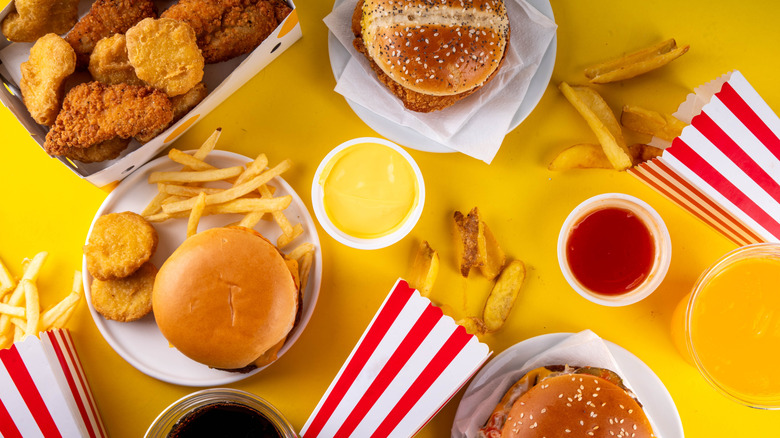
It's no secret that nobody likes shrinkflation. Just look at the brutal way those accused of it were treated in the Middle Ages. These days, however, mob justice has largely been replaced by people venting their frustrations on Reddit. Reacting to the More Perfect Union video, one Redditor wrote, "Any company that is publicly traded has a fiduciary duty to sell you the worst possible product for the most money possible. Fast food is no exception." This user might be onto something since chicken tenders aren't the only fast food product that has been accused of shrinkflation.
According to Fox News, chicken is the number one best-selling fast food protein on DoorDash, with beef burgers not far behind. While anything labeled 100% ground beef legally cannot contain added water, and coating it in extra breading is obviously out of the question, that doesn't mean chains are short on other tricks to cut costs and make their beef go further. According to the More Perfect Union documentary, one common approach is to use beef with a lower lean-to-fat ratio, which is typically cheaper than leaner blends. However, the price trade-off becomes apparent once the patty hits the grill.
As the fat renders out during cooking, the burger can shrink considerably, leaving you with a smaller finished patty than you might expect from its raw weight — and it's the raw weight that most fast food joints use in advertising. Another trick involves the toppings themselves. By reducing the size of ingredients like lettuce, tomatoes, pickles, and even the bun, restaurants can make them more proportionate to a smaller patty, helping maintain the illusion of a generously filled burger even when there's less meat underneath.