

Baste Your Chicken Breast In This Ingredient For Juicier Results, Gordon Ramsay-Style

Chicken breast is a reliable protein option that's easy to integrate into a wide array of recipes. Yet knowing how to cook a juicy one takes some finesse: The meat's lean composition makes it prone to drying out. In addition to techniques like brining or using sous vide, there's also a simpler method to retain juiciness: Basting the protein with butter while cooking.
The technique is showcased by Gordon Ramsay in an episode of "MasterChef Junior," during which the chef spoons butter over the chicken during the final few minutes of cooking (note that a tablespoon of oil is used for the initial sear instead, helping prevent burning). The technique works for several reasons. Foremost, a butter base enhances juiciness, compensating for the cut's low fat content. The fat melts and adds moisture to each bite, even if not much of it seeps into the meat's interior. In parallel, the butter also enhances the dish's flavor, encouraging browning through the Maillard reaction. The chicken develops more of a golden-brown crust, and the butter solids add a pleasant toasted note. Not to mention, the butter sops up other seasonings in the pan, making basting a terrific technique for flavoring chicken.
Aromatics and pan sauces round out basted chicken
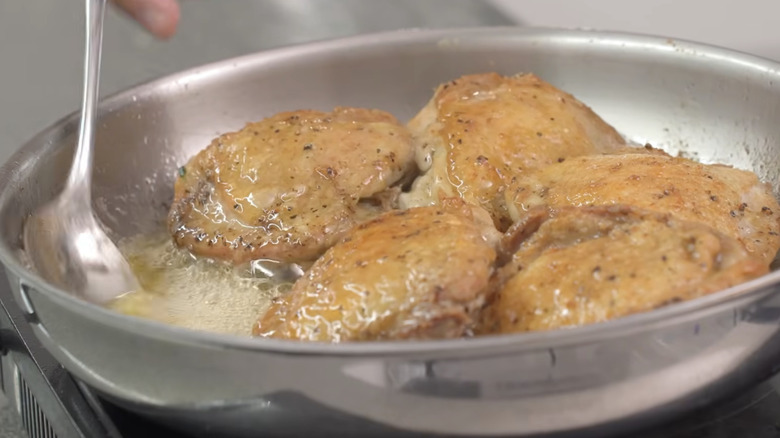
Most often, basting is used as a step for better pan-seared ribeye steak or a fillet of fish. However, there are ample opportunities to employ the technique with poultry, too. In addition to the textural advantages, the butter can serve as a flavor vessel for aromatics, upgrading a simple seared chicken breast into an entree of its own.
Pairing garlic with an herb is a classic combination. In addition to Gordon Ramsay's choice of thyme sprigs, you can use rosemary, sage, or even a mix. Settle for a sturdier, woodsy herb — delicate options like basil can burn during basting. And in addition to the savory notes of garlic, you can always add shallots for additional allium complexity.
Once the poultry has cooked, consider using the leftover fat to make a pan sauce, rounding out the meal. The technique can be as simple as adding a splash of water, which will effectively loosen the browned bits, herbs, and aromatics from the pan and yield a rich, spoonable liquid. However, don't overlook deglazing liquids like wine, stock, or even orange juice (a dash of acidity can lend added dimension). Drizzled over an already moist, seared chicken breast, the sauce will surely erase any fears of dryness.