

Make Eggs Crispier Than Ever With A Boxed Pantry Staple From Your Cabinet
Crispiness is one of the most satisfying sensations you can experience when eating. What's better than a potato chip? Can anything equal the delightful crunch of a piece of well-done bacon? Though many people associate Japanese cuisine with sushi and ramen, Japanese cooking techniques also produce an abundance of crispy textures, including katsu. More commonly, you'll see chicken katsu or tonkatsu (pork) on a Japanese restaurant menu, but eggs can be made katsu-style, too. And they use the same boxed (or canistered) pantry staple as the meaty versions: panko breadcrumbs, which you may already have on hand.
You'll need just three things: eggs, panko, and squares of parchment paper to use as a kind of sling or vessel for moving the panko-coated eggs to the hot oil on your stove. Panko is definitely the move here; you could try substituting regular breadcrumbs if that's all you have, but panko's lighter, airier texture is going to fry up so much crispier, making each bite of egg shatteringly crunchy.
When it comes to seasoning, sprinkling salt onto the egg before coating it in panko can really enhance its natural flavor. But if you're a fan of pepper, you might freshly grind a little of that on, too, to add slightly more complexity to what is a very simple dish (it's commonly used to season other types of katsu as well).
Simple steps for perfectly fried katsu eggs
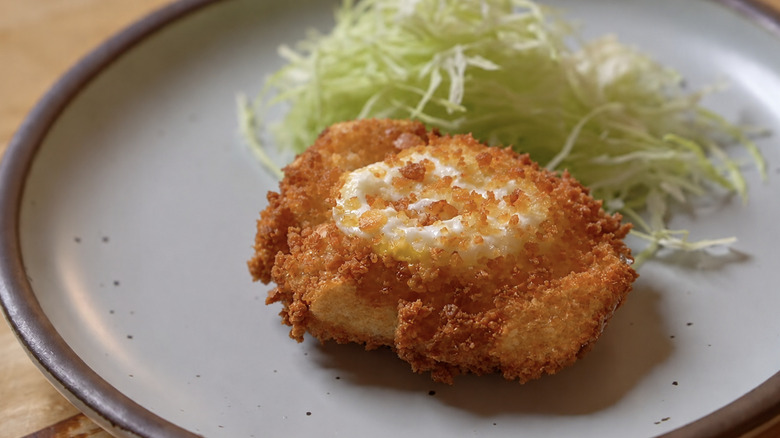
There are two things that are a must when it comes to finished katsu eggs: the super-crisp fried panko coating staying put and the soft, runny or jammy egg yolk contained within. Both require a bit of technique that might be new to you, intrepid home cook, but both are easily mastered with a little practice.
You can make the whole frying process a lot easier by working on a square of parchment paper. But after you apply the panko, you'll want to let the egg rest for a few minutes on its parchment paper bed to make sure the coating sticks. This lets the breadcrumbs dampen a bit and adhere better to the egg. It's a simple bit of patience that will yield much happier results.
As for the actual frying process and ensuring the yolk doesn't cook all the way through, a cooking thermometer to gauge the temperature of the oil will be your best friend (frying eggs is a bit different from boiling them for jamminess). You'll want to keep the oil between 340 and 350 degrees Fahrenheit and fry the eggs for no more than about a minute and a half, flipping them over halfway through. Then, just as you would with chicken katsu, let the eggs cool on a wire rack to ensure the crispiness doesn't steam away.