

London Broil Isn't A Cut Of Beef
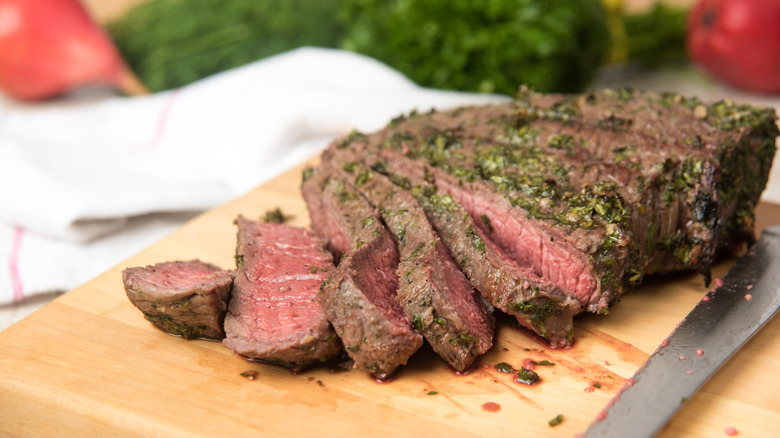
With some beef dishes, it can be tricky to tell a cut apart from its application. Although you might see beef pot roast on a grocery label, the name refers to a simple slow cooker meal (one that only needs three ingredients). And despite the abundant prime rib recipes, the term is technically tied to a specific cut. Another frequent mismatch? London broil.
The name doesn't apply to specific beef cuts, but rather a preparation technique. While you might spot the term London Broil on raw beef labels, the phrase instead refers to transforming a lean cut of steak using a marinade. Spotted on menus as early as 1919, it's a long-running preparation method with storied American (not English) origins.
The essence of London Broil lies in elevating a cheap cut that's typically tough via a marinade to make it tasty when medium-rare. Most often, the cooking technique is employed with flank steak, although beef cuts like top round, sirloin, and chuck shoulder can also be London Broiled. The size of beef varies, ranging from a thin breakfast steak to a beefy 4-inch-thick slab of meat. Dependably, though, the cut spends time in a marinade and is then grilled or pan-seared into a delicious steak experience.
London Broil welcomes many dish variations
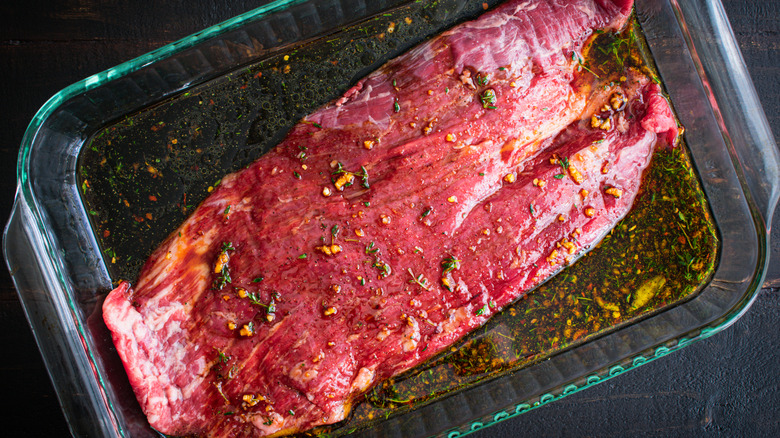
The concept of London Broil is simple: flavorful marinade meets a tough cut of beef. Subsequently, the interpretations of such a template are wide-ranging. The marinade alone can vary drastically, in turn creating many London Broil flavors. Dependably, though, this liquid must contain salt and acid, which function as the agents for tenderization. Many types of citrus and vinegar are poured onto the beef, but specifically lemon juice, balsamic vinegar, and apple cider vinegar show up frequently.
Complementary aromatics come in more varied choices, with options including fresh garlic and ginger, dried seasonings like paprika and oregano, as well as honey or sugar for sweetness. Worcestershire sauce — which happens to be lightly acidic –- is often included for both texture enhancement and flavor. Plus, a dash of soy sauce often lends a salty-umami component to a London Broil marinade. Oil (typically olive oil) rounds out the recipe, adding more moisture to the mix. Beef is stored in the resultant marinade for around three hours per inch of thickness; marination takes up the majority of a London Broil's assembly duration.
To cook, the meat is typically grilled, which is considered the best way to cook a London Broil, but can be pan-fried, too. Hit with high heat, the beef develops aesthetic sear marks, despite the marinade. And the meat is traditionally cooked to a still-pink medium-rare or medium. Following some resting time, London Broil is sliced thin and enjoyed, producing a beefy yet tender dining experience.