
This Award-Winning Butter Is Even Creamier Than Kerrygold
When it comes to store-bought butter brands, Kerrygold always sits high on the list thanks to its rich flavor and decadent texture, both of which come from an 80% to 82% butterfat content. However, Cabot's Extra Creamy butter might just be a strong competitor thanks to a slightly higher percentage starting at 83% — please note that this is only for the Extra Creamy; Cabot's standard butter is only 80% butterfat.
While a couple of percentage points may not sound like that big of a deal, just think about the textural and flavor differences between skim and 2% milk. Milk fat is an exceptionally potent ingredient in just about anything, and it's why even just a pat of butter can transform everything from vegetables to steak. This is one of the main reasons why European butter tastes so different from American; they require it to have a minimum of 82% butterfat as opposed to 80%. By adopting this practice, Cabot makes something far more silky and creamy in both salted and unsalted varieties.
The product proved to be so successful that it walked away with nine awards at the National Milk Producers Federation's 2025 Cheese & Yogurt Contest, including best butter overall. This is largely thanks to Cabot's commitment to quality from start to finish. Whether it's providing cows an ideal living environment or extra-long churning times, the end result is something incredibly smooth with the perfect arrangement of fat to produce the best, melt-in-your-mouth taste. Plus, since it has a similar price point to Kerrygold, you won't have to break the bank to try a new, high-quality option.
Ways to use Cabot extra creamy butter
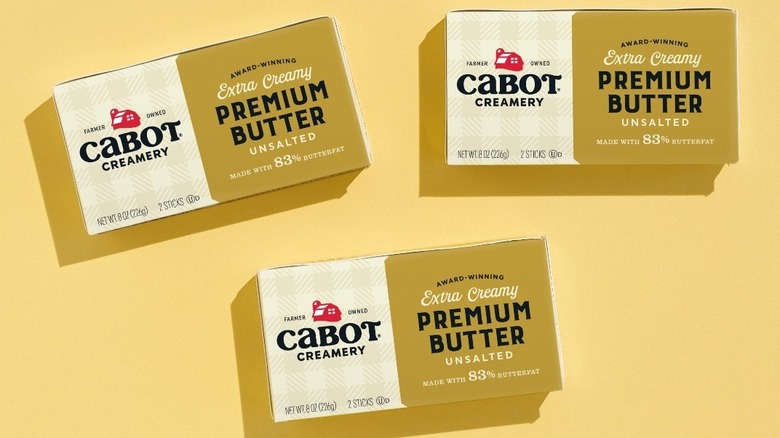
It's hard to go wrong when using good butter, whether you're using it as a cheat code for better flavor or as a main ingredient. The intense creaminess of Cabot's product goes far beyond just a more enjoyable spread over toast and can have fantastic benefits for many recipes.
Butter that's a bit higher in fat content is a major boon for pastries. Fat helps develop a more tender crumb, contributing to things like the flakiness of a croissant, the fall-apart texture of a muffin, or the pillowy softness of a cake — it coats the protein in gluten, preventing it from developing. It's also a major factor in determining the softness of your buttercream frosting or even preventing protein coagulation for softer, richer scrambled eggs. While an extremely high fat content can pose problems, using extra creamy butter in a 1:1 ratio like normal butter gives you just the slightest textural upgrade with no more effort.
Still, a high-fat butter is perfect when you want to quickly upgrade a meat. For something particularly lean, like chicken, more fat means you only have to use a small amount for a bit of extra moisture, leaving more room for seasonings. For something heartier, like upgrading grilled steak with butter, that extra fat only makes it easier to create a velvety mouthfeel for every bite. It's also crucial for heat transfer when roasting meat, helping you develop an even deeper golden-brown coloration that only means a better taste.