

14 Ways To Use Leftover Juices From The Slow Cooker
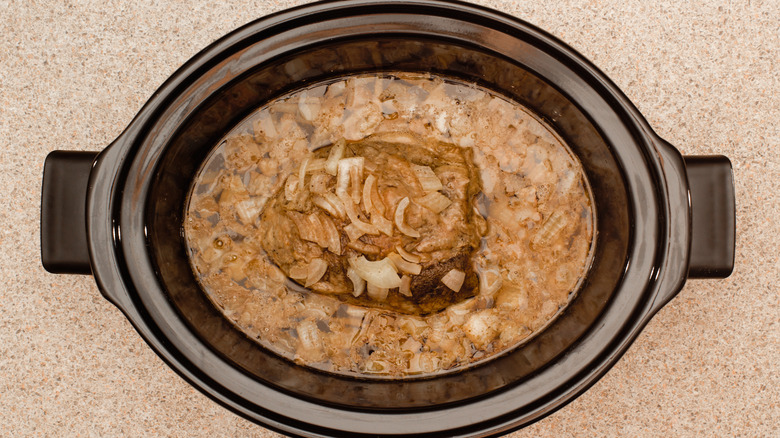
Olive oil, ghee, honey, even bacon fat... these precious ingredients have earned the common culinary nickname "liquid gold" thanks to their ability to make dishes more special. But there's another special liquidy substance that deserves to be a part of that lineup — the rich, flavor-packed juices that are left behind in your crockpot after a long, slow, beautiful cook.
If you use a slow cooker, you know just how versatile these appliances can be. You can make anything from pot roasts and whole chicken dinners to ribs, shredded meat, or vegetable-packed stews. Besides being delicious, all of those things have something in common: They leave behind that liquid gold in the form of deeply flavorful juices. And the last thing you want to do is waste those precious juices that spent so long developing flavor and depth.
So how can you put these leftover slow cooker juices to good use? Based on several years of experience as a personal chef with hundreds of meal prep dishes under my belt (and decades as a home cook), I've got plenty of ways to make sure that flavorful liquid never goes to waste.
1. Create a makeshift stock
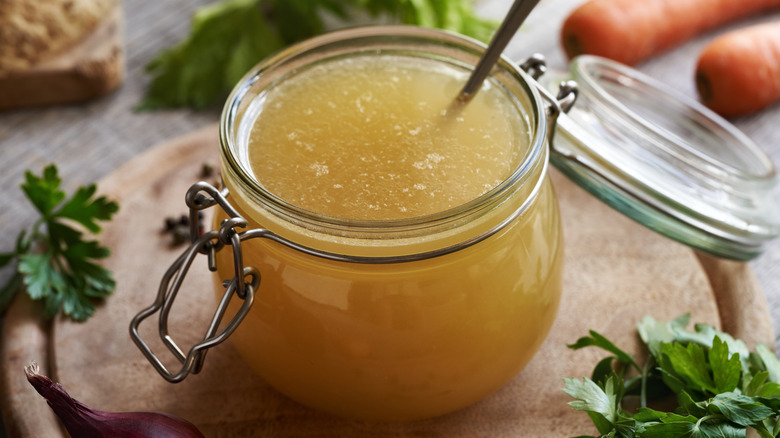
Those juices at the bottom of your slow cooker are already concentrated with an umami-level flavor of all of the ingredients you cooked together, so they are the perfect start to a flavorful stock — and the beauty is that stock can be made from pretty much anything, whether you cooked a rich meat, a lean chicken, or even a fish or vegetable-based dish.
The difference between stock and broth can be murky, since the two are often used interchangeably in the culinary world. But in general, a stock is considered an ingredient in itself that acts as more of a foundation for a dish. So in this instance, we're referring to a makeshift "stock" because although the cooking process isn't the exact same, the application will be; the remaining liquid from your juices can act as a full-bodied base for any dish that typically calls for stock.
A few quick steps can turn your leftover slow cooker juices into a versatile stock. All you need to do is strain the meat or other food parts out of your juices by pouring them through a fine-mesh sieve into a large bowl, and then reserve the refined liquid. If you happen to cook a particularly fatty meat, you can also skim the fat off. Then, simply refrigerate or freeze that smooth, concentrated liquid and use it as stock to make soups, stews, sauces, and much more.
2. Reduce and freeze into cubes for individual flavor bombs
It's a similar concept as the above, but this approach takes things a step further to really maximize the flavor that you can get out those delicious juices. By reducing the liquid down further, all that depth of flavor from the slow cook will be concentrated even more — a little will go a long way to provide a flavor boost.
To create this stock "concentrate" of sorts, start the same way: Strain your leftover cooking juices through a fine-mesh strainer to remove any bones, scraps, or bits of food. Then, skim the fat off of the top of the liquid to refine it more (this can be done with a slotted spoon or fat separator, or you can always chill the liquid and wait for the fat to solidify on top to make it easier). Once you have refined liquid, reduce it in a pan over the stove, bringing it to a gentle boil (uncovered) and letting it cook until it reduces by about half the amount. The reduced liquid should appear thicker and glossier, and a good test is to see if it coats the back of a spoon when dipped.
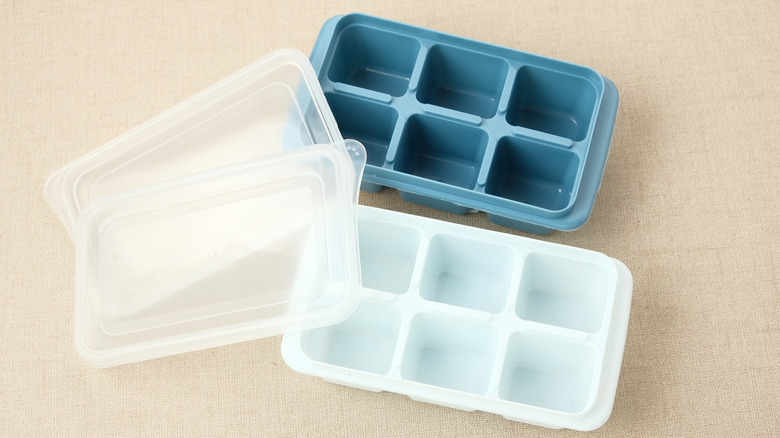
Allow the liquid to cool and then freeze in an ice tray into cubes — now you have flavor bombs packed with savory, rich goodness which you can drop into a myriad of dishes for an effortless flavor boost. Throw them into sauces, stir fries, and pasta dishes.
3. Skim the fat and turn it into cooking lard
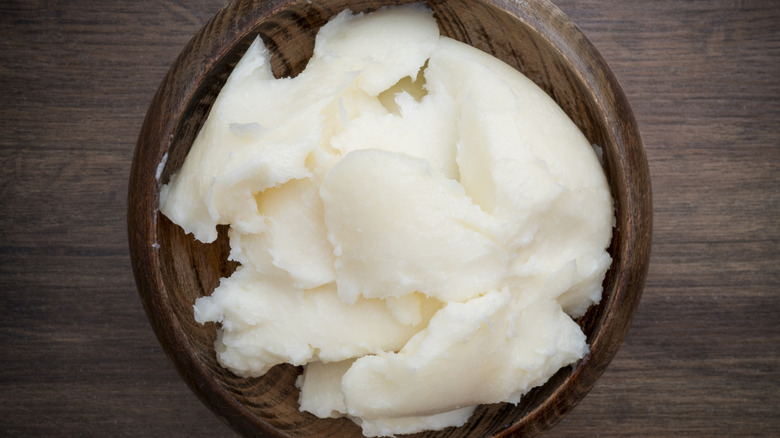
You know how we mentioned removing the fat from your liquid to make the concentrate? Well, hold onto it... because there's a whole other application for this specific kind of liquid gold, and it'll make everything taste better.
This obviously works especially well if you cooked something meaty in the slow cooker, and the fattier the better (so meats like beef and pork will be great, but chicken can definitely work, too). All you need to do is strain the leftover juices, as outlined above, and then chill the liquid in the refrigerator for up to 24 hours. This will allow all of that delicious rendered fat to rise to the top and solidify, turning it into a homemade lard of sorts.
Simply skim that solid off the top and save it to use as a cooking fat. When you want something that's got a little more flavor or richness than a butter or cooking oil, you can grab a spoonful and use it cook, sauté, or sear whatever your heart desires. Just remember that the lard dupe will have a specific flavor profile based on what you cooked, so it's best to use it for other dishes that would work well with those base flavors.
4. Make a gravy
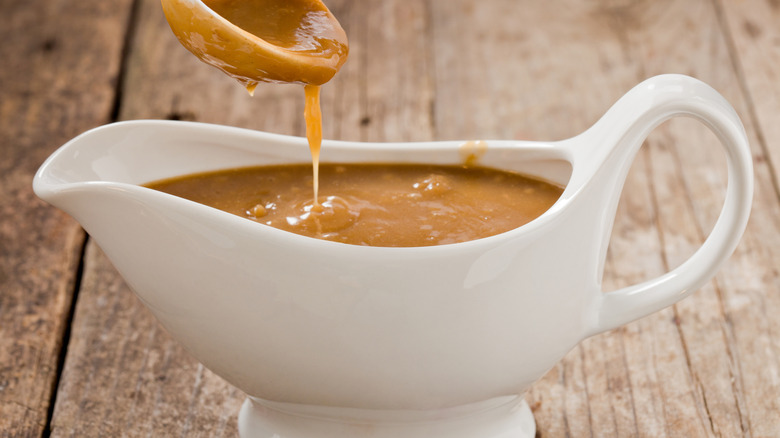
To put those leftover juices to use right away, you can create an easy, tasty gravy that'll be a delicious addition to any meat or veggie dish you just happened to slow cook to perfection.
You can make a simple gravy by adding some of your leftover juices to a saucepan. You could strain the juices beforehand if you wish, or strain the gravy after you make it, depending on what texture you prefer — but it's not totally necessary here since those browned bits are great for gravy. All you need to do is whisk in some flour (or, alternatively, a cornstarch slurry made of cornstarch and water), and stir over the heat until the flour is smoothly incorporated, forming a pasty consistency. Then, finish it off by whisking in a bit of liquid — a matching stock or broth, milk or cream, or even water will do in a pinch — and simmering until the concoction becomes thick and transforms into a pourable gravy. Be sure to season as you go and at the end if needed, to taste.
A good rule of thumb for making gravy is to use a 3-to-2-to-1 ratio of flour to fat to liquid. In this case, your drippings act as the fat, so if you use 2 tablespoons of juices, you'll want to use around 3 tablespoons of flour and 1 tablespoon of additional liquid.
5. Use the juices to cook rice, grains, or legumes
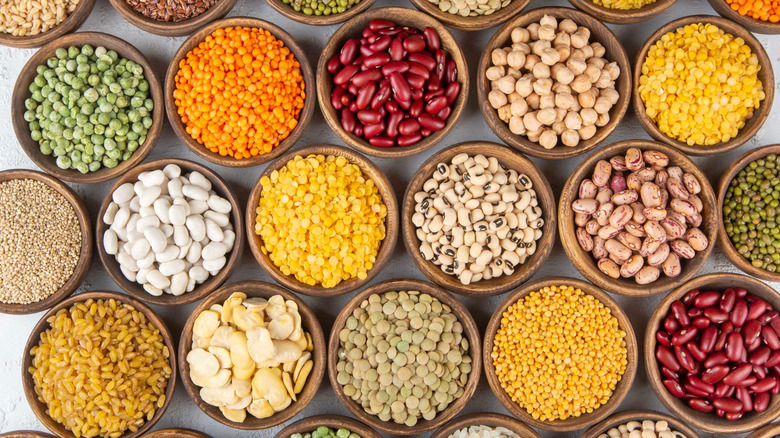
Utilizing a rich cooking liquid (instead of water) is the not-so-secret secret to make otherwise bland ingredients come to life more, allowing them to soak in the flavors as they boil and soften. Enter: yummy leftover slow cooker juices. This liquid will do wonders for your grains, legumes, and rice.
This is something you'll want to strain the juices for if they contain a lot of leftover food bits. But once you complete that simple step, you can use the refined liquid to cook your side dish for the same meal! Simply sub in the cooking juices at the same ratio as your water for whatever recipe you're making. Whether you're cooking up quinoa or lentils on the stove, rice in your trusty rice cooker, or maybe even a warm, broth-y bean dish, this is a great way to repurpose those juices and produce way tastier side dishes in the process.
6. Incorporate them into a risotto
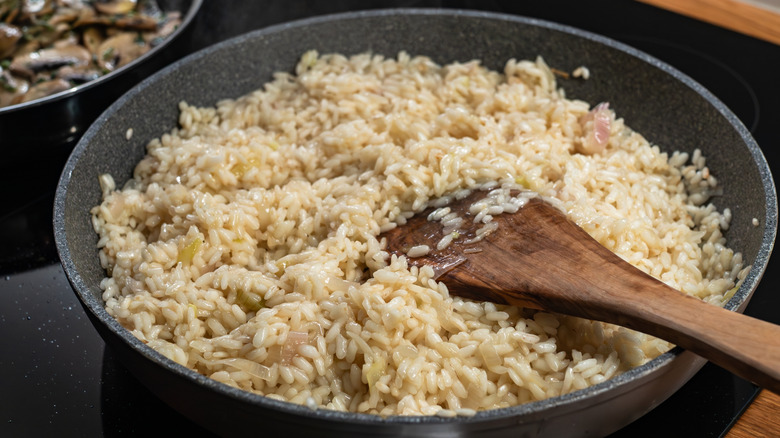
Risotto is a special dish that takes time and patience, and if done correctly, always delivers on ultimate warmth and comfort. While this is a similar approach to using your juices to cook grains, the application is a bit more specific. Flavor-wise, slow cooker dishes that contained chicken or veggies (especially mushrooms) will work great for risotto — and particularly any dishes where you used wine to braise.
There are two ways to go about this. First, the more obvious application is to create a stock from the juices (as explained above), and then use that as a direct substitute for the stock in your risotto recipe (or you can dilute the liquid if it's heavily seasoned), typically adding about a cup at a time to the rice and stirring until it absorbs before repeating.
But you can also use your leftover slow cooker juices as a braising liquid to start off the whole dish, giving the base of the risotto an extra flavor boost from the very beginning. To do this, just reserve a few cups of the juices and add them to your pan with a little oil or butter. You can use this to sauté your risotto rice and and other initial aromatics for a few minutes until everything is coated in silky, savory goodness before you continue with your dish.
7. Use as broth for a noodle dish
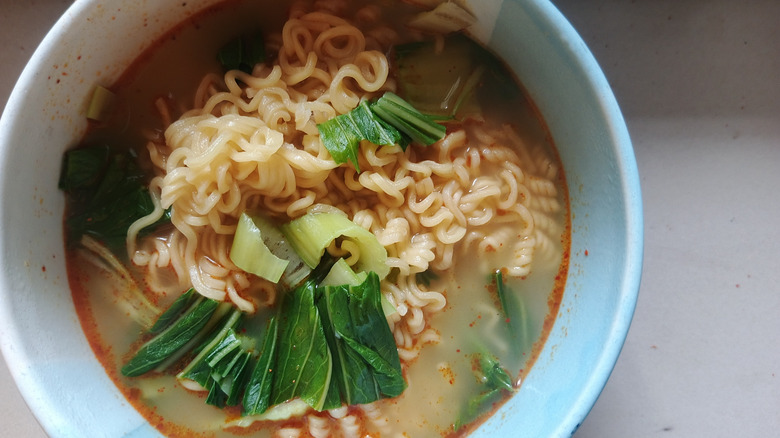
Remember when we mentioned the difference between stock and broth? While stock is traditionally used as a base to build into a dish, broth is something that's usually more seasoned and can be eaten or sipped as is. So those juices can not only operate as a stock that you use as a foundation for a soup, but also a ready-made broth that you can simply add ingredients to and dig in immediately.
Slow-cooked dishes that used chicken or pork make a great base for a noodle bowl, and any meals that used Asian flavors like ginger, garlic, soy, and miso will work particularly well here. All you need to do is strain the juices (if necessary), heat them up, and add your desired ingredients to build your perfect noodle bowl.
You can make it as simple or complicated as you want from here, whether you just want to toss in a pack of premade ramen noodles with some fixings or create an ingredient-packed bowl with cooked noodles of your choice, wilted vegetables, and tons of garnishes. Whatever you decide, that broth will create the perfect vehicle to slurp up your dish.
8. Whip up an au jus or dipping sauce
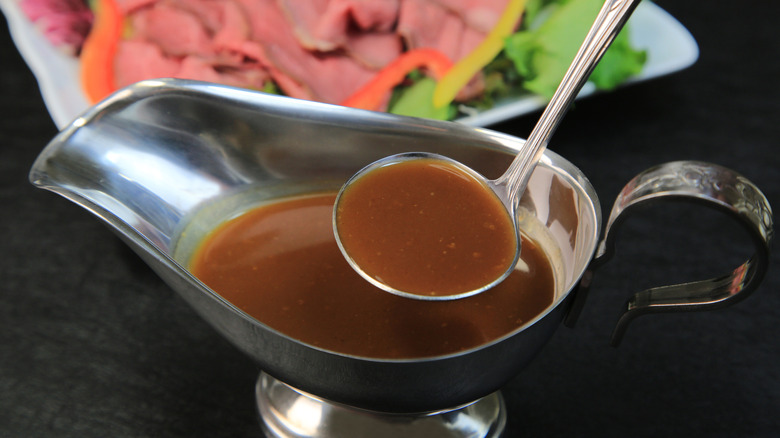
Slightly different from a gravy, you can also use those leftover juices to make an easy "au jus" or dipping sauce for your meal. This will obviously be ideal with beef drippings — think flavors like garlic, onion, wine, Worcestershire — for a finished product that you've sliced or shredded which can then be dipped, maximizing its juiciness and flavor.
To make an au jus, you will want to skim or drain off the fat from the juices first. Then, you can add a few cups of the reserved juices to a sauce pan and bring to a boil. From there, it's mostly just seasoning. Reduce the heat to a simmer, and add in additional spices and ingredients like onion powder, garlic powder, balsamic, Worcestershire, or maybe some more beef base if you think it needs it. To thicken, add a bit of cornstarch slurry while it simmers until it reaches your desired dip consistency. You can finish off the sauce by whisking in a tablespoon of butter until it melts, which is always optional but... why not?
9. Reserve for reheating/rehydrating leftovers
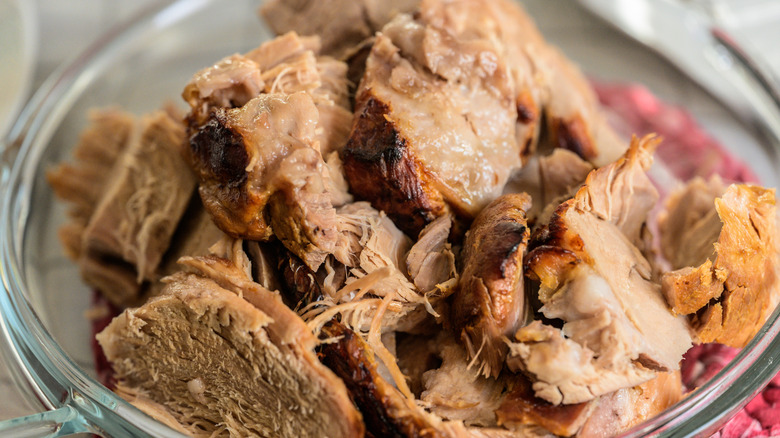
This one seems like a bit of a no-brainer, but you may not have thought of this simple use. Rather than tossing your leftover juices down the sink, reserve some of the liquid and put it aside in the fridge so you can add it to your leftovers when you reheat them.
No need to strain, drain, or skim for this one! You can simply save the juices as they are. If you've got leftovers from that big slow cooker meal, you can drizzle or mix a bit of the reserved liquid into your food before you reheat it to enjoy again. The juices will essentially rehydrate your meal, and the extra moisture will not only help add more flavor to the food but it will also help keep your dish from drying out too much as it reheats — allowing your leftovers to live up to their tastiest potential.
10. Make a pan sauce
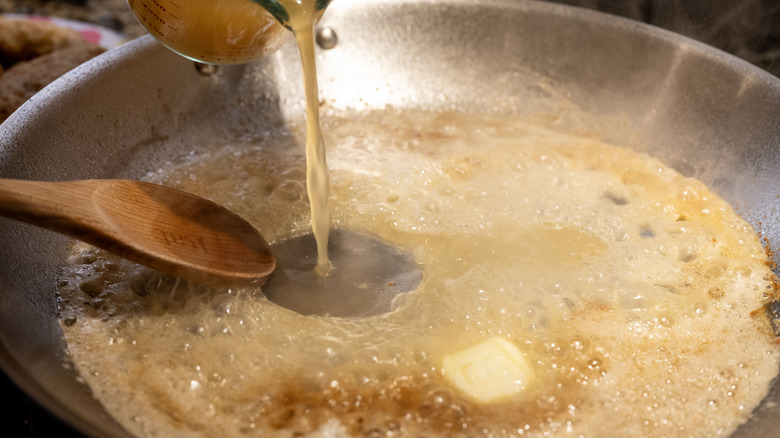
While it's in the same realm as a gravy or a dipping sauce, a pan sauce is another application for your slow cooker juices that'll produce a very different final product. All three start by boiling and reducing the juices or drippings, but it's what you add to it and how you finish it off that separates one from the other.
The beauty of a pan sauce is its versatility, and general ability to work with a lot of different ingredients that you happen to have sitting around the kitchen. It's typically started off with some aromatics, whether that's onion, garlic, shallot, herbs, or any combination of the above. Once you've sautéed those a bit for your foundation, you can add your leftover juices and continue to add more flavors like wine or citrus. You'll want to reduce to a slightly thickened, yet glossy, consistency — finishing it off with a swirl of butter or cream — that can be spooned over your meal for more depth and moisture.
11. Make a pasta sauce
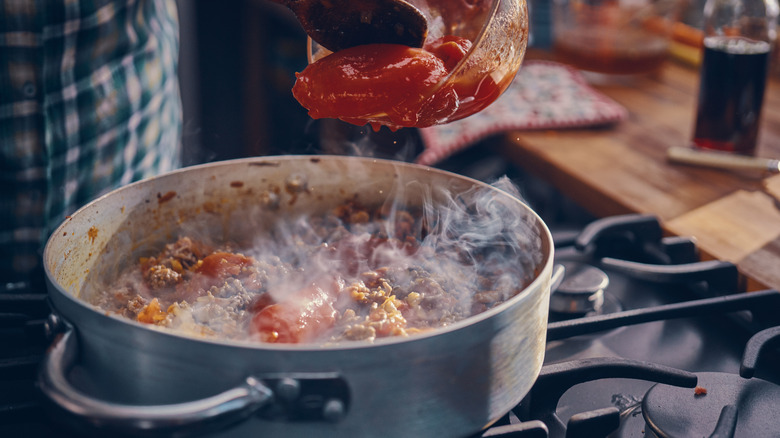
One more sauce for all the pasta lovers out there... your leftover juices make a great base and/or addition to various types of pasta sauce that you can use to coat your favorite noodles. Again, many types of cooking juices will work here depending on the flavor of your sauce, but if you've slow-cooked anything that's tomato-based, this obviously a perfect application for those juices.
And again, you can keep it as easy or complex as you'd like with this one. In its most basic usage, you can just sub in your strained juices wherever you see liquid or stock in your pasta sauce recipe. Otherwise, you can use them as a base for a simple yet flavorful by reducing the juices in a pan, tossing with your pasta, and finishing off with some cheese, butter or cream, and herbs if desired.
For something a little more involved, use the juices (and even some of your leftover meat) to make a delicious ragu — starting with your mirepoix, adding wine to deglaze, and then using the juices along with some crushed tomatoes and diced or shredded meat to simmer into a thickened, beautiful meaty pasta sauce that your noodles will love to soak up.
12. Use the juices to sauté vegetables or greens
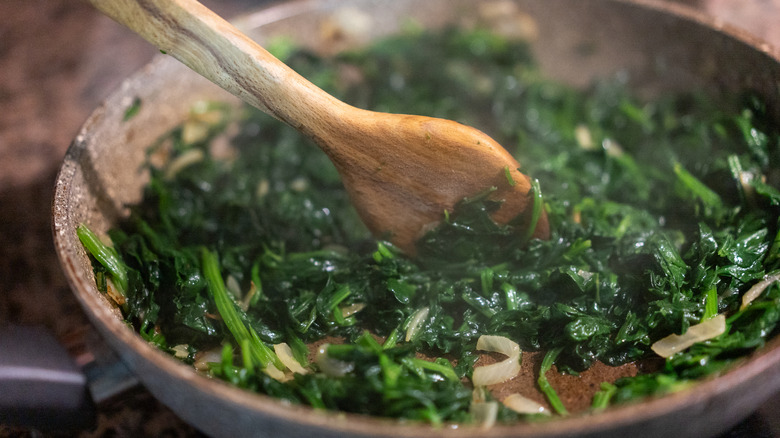
A super easy way to put those leftover juices to good use is to turn them into a cooking liquid to sauté various vegetables. Where you'd typically use water or maybe some broth to wilt or sauté different veggies or leafy greens, simply replace with your strained juices instead to infuse more richness and flavor into what could have otherwise been a boring vegetable dish.
The best part about using your juices for this purpose is that you can use the leftover liquid from pretty much any meal with a wide array of greens and vegetables, as long as you're a fan of the flavor combination. So the possibilities are really endless. Use chicken, beef, pork or veggie juices — whether they have a herby wine flavor, Asian flavors, or meaty umami flavors — to cook, sauté, wilt, or soften anything from mushrooms, cabbage, carrots, bok choy, spinach, kale, chard, potatoes... the list goes on and on.
13. Mix into (or pour over) potatoes
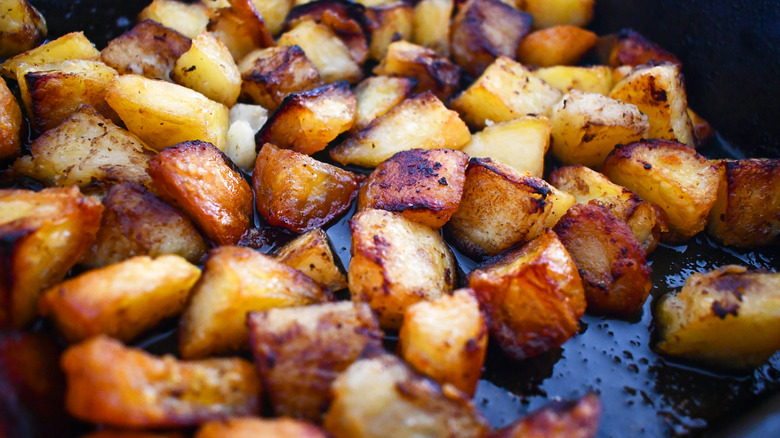
One thing that savory, flavor-packed meat and veggie juices go fantastically with: starchy, creamy potatoes to soak up all that goodness. There are several different ways you can go about this, and whichever strikes your fancy is sure to be a crowd-pleaser. Because does a more crowd-pleasing vegetable exist aside from the humble potato?
One way to do this, which requires no extra effort but adds a ton of extra flavor, is to simply pour your slow cooker juices (strained or not, whatever you prefer), directly over your potatoes and eat as is. Whether you've roasted them, smashed them, or sautéed them, the juices will keep your potatoes moist and make them even more delicious. If you're making mashed potatoes, you can also incorporate your juices (best if strained) into your recipe to sub in a bit of your milk or cream as you mash, elevating the flavor profile. And you can even mix a little into your favorite condiment to use as a dipping sauce for roasted potatoes or fries.
Alternatively, if you like a braised potato, just use your leftover juices in place of the liquid in your favorite recipe, like a spin on Greek lemon potatoes which are typically slow roasted in lots of broth.
14. Use as a braising or poaching liquid
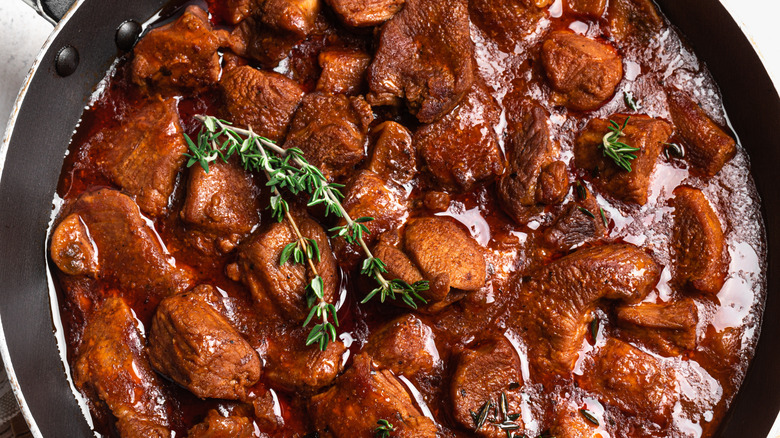
Speaking of braising, what's left in your slow cooker after a juicy meal is essentially a braising liquid. So why not reuse it for that exact purpose? In any recipes where you are braising an ingredient, either a large piece of meat or simple vegetables, use your leftover juices either as a partial or full substitute for the liquid in the recipe and you'll have a head start on flavor.
Poaching will work the same way. Once you strain and cool your reserved juices, you can use them instead of water to poach anything from eggs and vegetables to chicken and fish. The juices act as a short cut, allowing you to skip some of the ingredients you'd typically add to a poaching liquid to give it more flavor; this way your liquid is already a pre-seasoned, and you'll come away with more flavorful food as a result.