

What Does IBU Mean On A Can Of Beer?
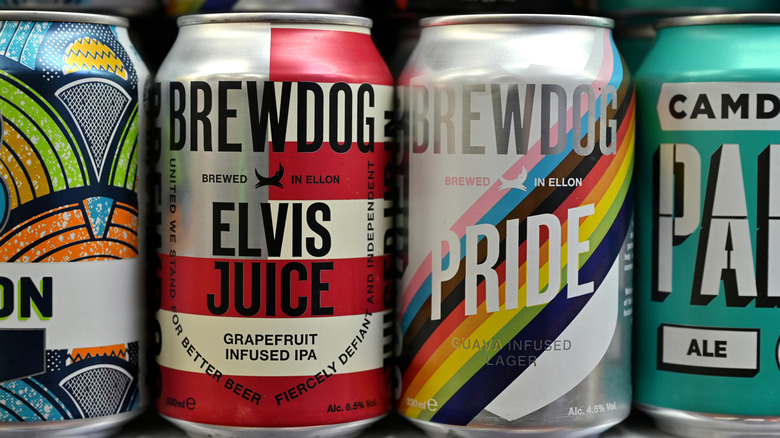
There are plenty of different styles of beer, from blondes and ales to lagers and IPAs. You may also come across the term "hoppy," particularly on the new-wave IPA scene. If you're unfamiliar with beer, all this jargon can quickly begin to feel overwhelming. Among the most perplexing terms you can find stamped on a bottle is "IBU," which stands for International Bitterness Units. Simply put, this refers to the concentration of hop-derived bitter compounds in a beer on a scale from zero to 100-plus.
IBU is all about the hops, the small green flower cones that give beer much of its bitterness and aroma. They're added at different stages of the brewing process, with timing having a major effect on the final flavor. Hops added while the wort is boiling release alpha acids that are converted into iso-alpha acids, creating bitterness. Later additions, including those made toward the end of the boil, preserve more of the hops' delicate aromas and flavors. Hops can also be added during or after the fermentation in a process known as dry hopping, which primarily boosts aroma without adding much bitterness.
The IBU works by measuring the concentration of iso-alpha acids in a beer. It gives drinkers a strong indication of bitterness, but don't take it as a definitive measure of how the beer will taste. Perceived bitterness is also influenced by factors such as the beer's sweetness, alcohol content, carbonation, and type of hop additions. Generally, though, a higher IBU means a beer has more measurable bitterness than one with a lower IBU. The scale can go well beyond 100 IBU, but once you get into that range, the number becomes somewhat arbitrary; there's a limit to how much bitterness human taste buds can perceive.
Other basic measurements to know
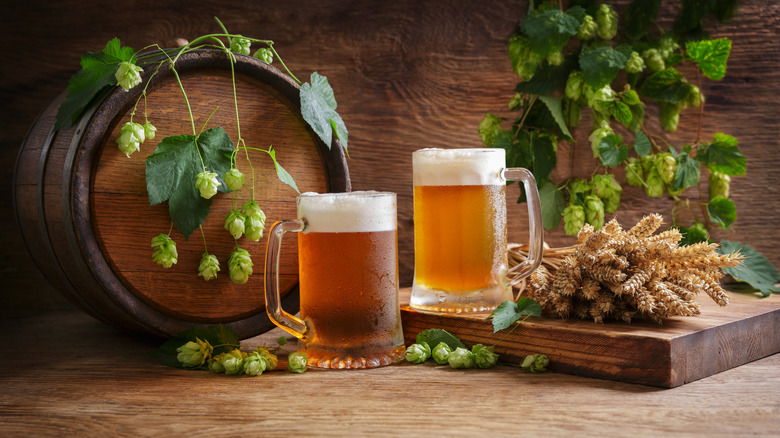
While not a hard rule, most beers sold in the U.S. often come with their alcohol content clearly stated on the label, usually as ABV (Alcohol by Volume). Simply put, ABV tells you what percentage of a beer's total volume is pure alcohol. Several factors determine the final percentage, including the amount of fermentable sugar in the malt, the yeast strain, and the conditions under which the beer ferments.
At the federal level, there is no single ABV cap for naturally fermented beer. Individual states can also set their own limits on the sale of high-ABV beer, which means certain beers may not be legally sold in some states. Aside from telling you how much alcohol you're drinking, ABV can also give you a rough idea of how a beer will taste. Lower-ABV beers — around 3% to 4.5% — tend to be lighter and crisper, while beers above 7% are often fuller-bodied and can have a thicker, more warming character.
Another lesser-known numerical scale used in the brewing industry is the SRM (Standard Reference Method), which quantifies the color intensity of beer. It's measured by shining a specific wavelength of blue light through a small sample of beer and recording how much of it gets absorbed. The lower the number, the paler the beer. The higher the number, the darker it gets. The scale typically runs from around one up to 60. This number can sometimes — but not necessarily always — give away hints of the beer's character. Darker beers (higher SRM) often use roasted or caramelized malts, which frequently bring toasty or toffee notes. Paler beers usually lean on lightly kilned malts, suggesting a cleaner, crisper flavor.