

Should Steak Rest Covered Or Uncovered?
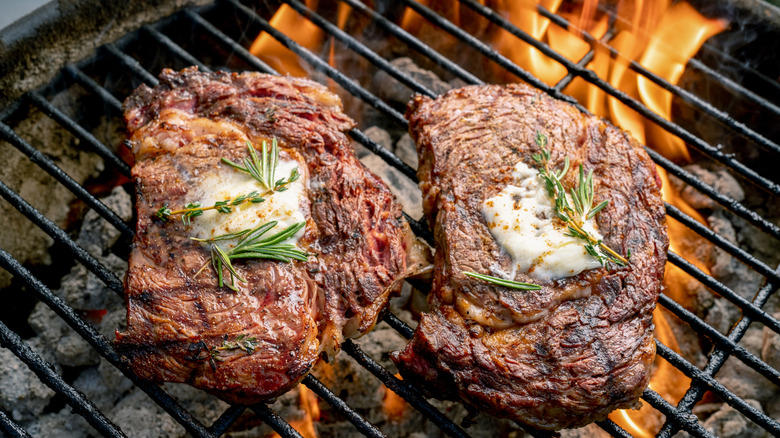
Cooking steak is a simple, straightforward task once you get the hang of it, but if you're just starting out, there are a lot of little details that you might have questions about. For example, how do you pick the perfect steak at the grocery store? What's the best way to prep this pricey piece of beef? How often should you flip your steak while cooking it? Whether you're making a special dinner for an occasion, or just treating yourself mid-week, you want that ribeye or NY strip to come out perfectly. And that is why, if you were also wondering if you should rest your steak covered or uncovered, the right choice — in most situations — is uncovered.
Of course, there is a single case for resting your steak with a tent of aluminum foil after it's come off the hot skillet or grill: It helps keep it warm, so if you're a forgetful home cook, it won't cool down completely before you remember to come back to it. However, a beautifully done steak has plenty of flavorful crust on it, and by covering it when it's still screaming hot, you're encouraging steam to form. And steam can wreak havoc on the satisfyingly crisp crust you worked so hard to form, softening it into nothingness, and honestly, pretty much ruining that piece of beef for which you no doubt paid a premium price.
More tips for resting your steaks
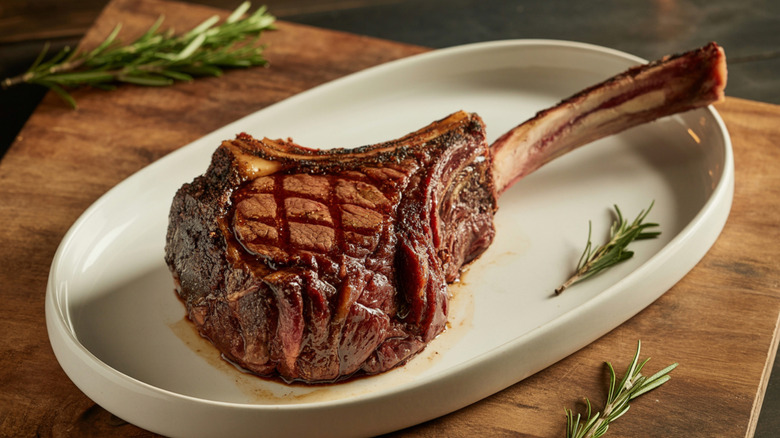
We've gone over why you don't want to rest your steaks covered with foil, but let's back up and explain why letting them sit for a period of time after cooking is so important in the first place. Giving them a little repose before cutting ensures the juiciest and most flavorful steaks (Anthony Bourdain in particular counselled this step) because it allows the beef to both redistribute the juices throughout and carry-over cook to reach your desired meat doneness.
So obviously there are a few factors at play that can affect how well the rest works, including how long the steaks sit. You obviously don't want to cut into the meat too soon, but nor do you want it to get cold. A good time frame is no more than 15 minutes, unless you have a really thick piece of beef; if you get distracted by other things in the kitchen (like making sides), set a timer so that you remember.
What you rest your steaks on matters, too, no matter if you've got an expensive ribeye or a budget-friendly alternative. You could use a wire rack over a pan to keep the crust as crisp as possible, but a downside of all that airflow is the beef might cool faster than you want. Instead, a good way to help preserve the warmth is to set the steak on a pre-warmed plate or cutting board (and actually the "loss" of crust due to the juices pooling on the steak's bottom side is negligible).