

Make Steak 10x More Flavorful With The 24-Hour Rule
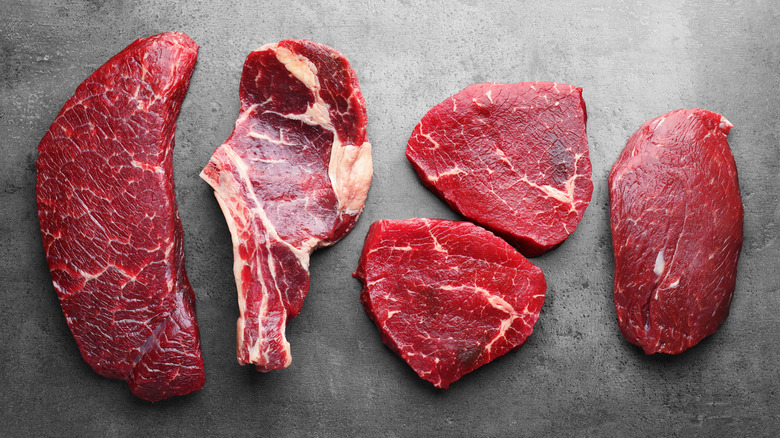
Marinades are fantastic for steaks, but ratioing ingredients, clocking the perfect amount of time in the mixture, and then drying the meat afterwards can be a hassle. If you prefer to keep things simple, a 24-hour dry brine works with just about any cut and amplifies the natural flavors of your steak to an incredible degree.
The trick itself is quite simple and only requires you to thoroughly salt your steak's exterior and then place it in the fridge for 24 hours. It's important to guarantee even airflow, so keeping your meat on a rack (rather than directly on a plate) can make all the difference. Not drying the surface is a mistake everyone should avoid when cooking steak, and when you combine the cold air of your fridge with the salt, it's far easier to achieve the perfect Maillard crust. Your goal is to let the salt bring out moisture, dissolve in it, then get reabsorbed back into the meat rather than removing your steak's juices entirely.
Whereas some cuts and marinades may start to work against each other after a few hours, 24 hours is something of a sweet spot for dry brining. It's just enough time to let the salt do its work, but not so much that your steak risks going off or drying out too much in the fridge. While even a few hours is enough to see some benefit, doing it 24 hours in advance ensures you see all the benefits possible.
What kind of salt and cuts of beef to use for dry brining
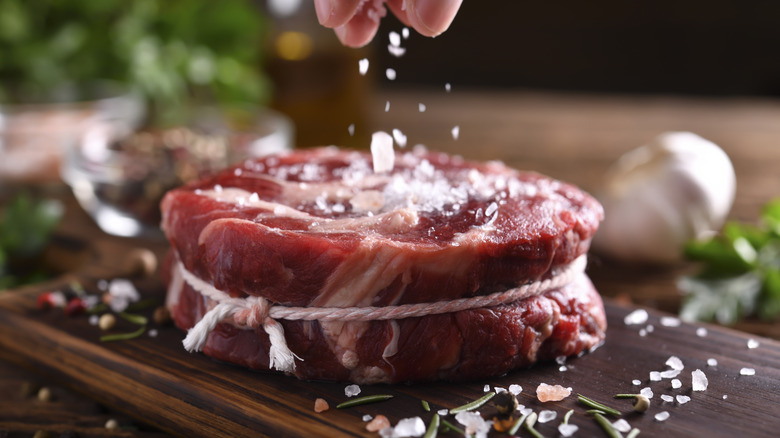
Just about any slab of red meat can benefit from a 24-hour dry brine, but although ribeyes may see some improvement, its real value is in transforming a budget-friendly cut of steak into something more luxurious. You'll definitely see more of a difference in tougher, leaner proteins, and that goes double if you use the right kind of salt.
Lean steak cuts like sirloin, round, and flank are at a greater risk of drying out, even if you cook them perfectly. While searing meat doesn't lock in juices, the 24-hour dry brine helps denature proteins in muscle fibers, tenderizing steaks and locking in their juices. The salt may not be able to fully penetrate an exceptionally thick cut, but it will do wonders for thinner, tough ones without much fat or inherent flavor. Still, don't hesitate to use this trick on more decadent meats, like filet mignon, when you want a wider margin of error.
Different types of salt are best-suited for different tasks, and while your regular table salt may get the job done, it isn't the best choice available. Large flake kosher is widely perceived as the best choice because it won't clump, and the large grains make it easier to distribute evenly. Each flake has a higher percentage of air in it, helping it dissolve quickly and get to work improving your steak. The larger size also helps it adhere to the meat better, ensuring bits won't fall off before they have a chance to dissolve.