

Skip Butter: Add This Leftover Ingredient To Ground Beef For Juicier Burgers
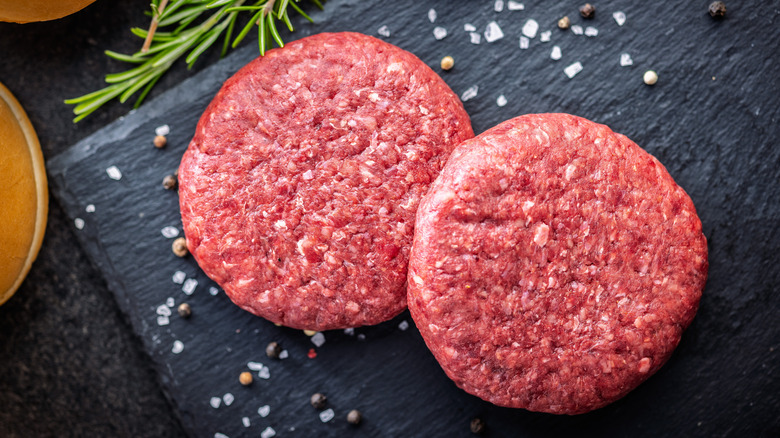
Burgers delight when prepared to varying levels of doneness, whether an extra-crispy smash burger or a perfect medium-rare thick patty. Yet the dish's biggest disappointment is dryness — no one wants to bite into beef patties devoid of moisture. Sure, there's always the butter hack for juicy patties. However, consider changing up this tried-and-true method and using reserved bacon fat instead.
Too often, leftover bacon grease is destined for the trash. Work it into a patty, though, and you'll get an extra-juicy burger with a mouthwatering hit of saltiness, savoriness, and smoke. The method works best with meat on the lean side — stick to beef that's about 85% lean by weight. And don't overdo the bacon fat, either; stick to under a tablespoon per patty. Adding too much fat makes a patty that's overly greasy. Nail the ratio, though, and you'll get a burger that's perfectly moist. The bacon fat will impart some of the cured meat's signature seasonings, but since it's rendered, the burger won't contain any bacon bits to ruin the texture.
For the best results, use the technique with a cast iron skillet, Bobby Flay's suggestion for an evenly cooked burger. With this cooking vessel, any runoff fat will accumulate in the pan, basting the burger's base. You can also use the grill — just watch out for potential flare-ups. The bacon fat is a simple add-in that lends a burger a completely new spin.
Hold on to leftover bacon fat for burger night
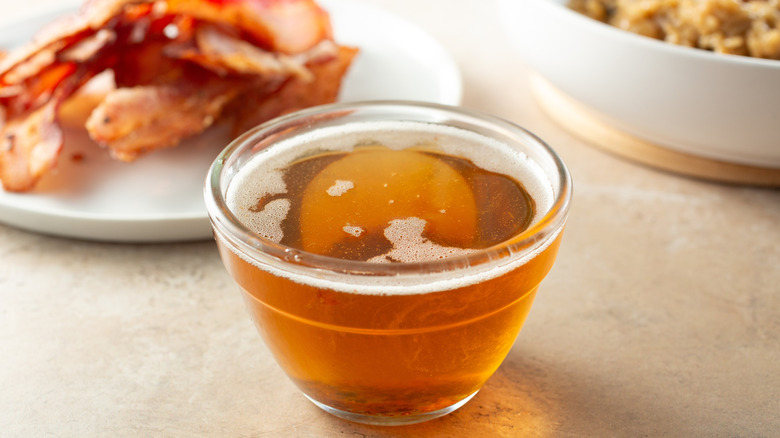
If a bacon fat-flavored burger sounds appealing, you'll need to get your hands on some of the cured fat. You could fry up some strips as a topping or batch some of the fat ahead of time, too. Either way, make sure that you cook the meat low and slow, letting the fat slowly melt without any burning — yes, that means you should never use a hot pan to cook bacon. A hot pan equates to chewy, limp meat whereas a cold pan allows the fat to render and the bacon to crisp beautifully.
Once done, you'll want to remove any bacon bits. Use a slotted spoon for the bigger chunks, and if you see smaller sediment, pass the fat through a sieve lined with a coffee filter or cheesecloth. Stored in a clean jar, the rendered fat will be safe to consume for up to a month refrigerated, letting you craft batches of burgers down the line.
Plus, you can use the fat for other cooking applications, too. Bacon fat will utterly transform your caramelized onions, and you could even whip up a bacon fat-tinged aioli as a burger sauce. With a little culinary creativity, bacon fat melds into many parts of burger assembly, making it a savvy upgrade to keep in mind.