

Chef Makes Ground Beef 10x More Flavorful With One Simple Step
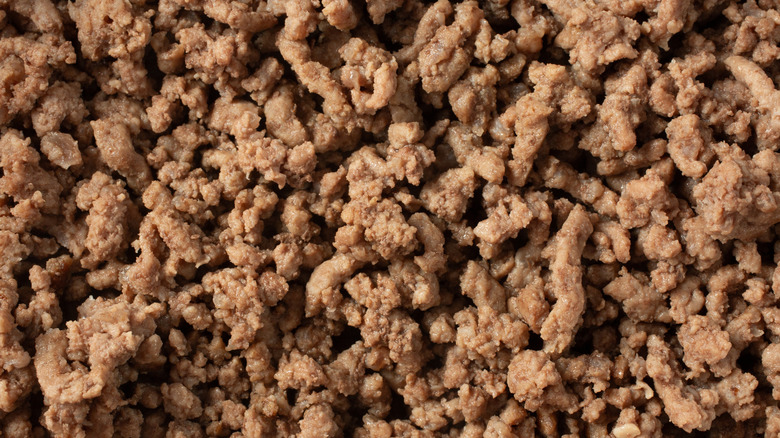
Ground beef is one of the great kitchen all-rounders, and it's far less intimidating to work with than whole pieces of steak or chicken breast. But just because it's easy to cook doesn't mean there's no room for improvement. A few small tweaks can take your ground beef from perfectly serviceable to seriously flavorful, and in a YouTube video, one chef shared a seriously overlooked step: searing the beef until it develops a deep, golden-brown crust.
That golden-brown crust, whether it's on ground beef, a big slab of steak, or even french fries, is the result of a wondrous process known as the Maillard reaction. Simply put, it's the chemical reaction between amino acids and reducing sugars that gives browned food its deep color while intensifying its aromas and flavor. We like to think of it as a way to build flavor into the meat before you've even thought about aromatics and seasonings. One of the best by-products of this reaction is the leftover fond (those little brown nuggets that stick to the bottom of the pan). They might not look like much, but they're packed with flavor. For this reason, we'd always recommend browning your ground beef first, removing it from the pan, then sauteing your aromatics in all that flavorful fond before adding the beef back in.
When it comes to getting a good sear, patience is one of the most important ingredients. You've got to leave the beef undisturbed for at least three minutes. Trust us, if you start moving it around the second it hits the pan, you'll rob it of the time it needs to develop that all-important crust. To get the Maillard reaction going from the start, make sure your pan is already searing hot before the beef goes in.
More tips and tricks for perfectly seared ground beef
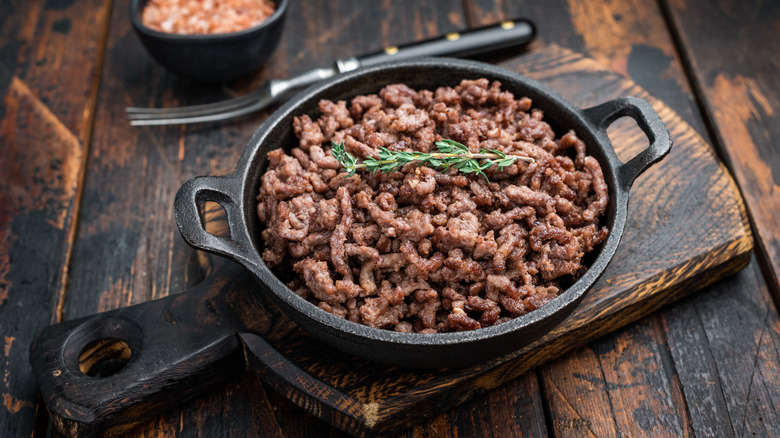
While we'd always advocate for browning your ground beef, it's easier said than done. You might have done everything right; the pan is hot, and the beef has been left to sizzle undisturbed, yet it's still refusing to brown; rather, it's taking on a grayish hue. One of the most common culprits for this is overcrowding the pan. When exposed to heat, ground beef naturally releases moisture. If the pan is packed too tightly, the temperature drops, and the moisture can't evaporate quickly enough. Instead, it pools at the bottom and creates a thin layer of boiling liquid, quickly turning your attempted sear into an unintentional steam bath. As tempting as it might be to toss all your ground beef into the pan at once, it's always better to work in batches.
Since moisture is the well-established enemy of the Maillard reaction, it's also a good idea to pat your ground beef dry with a paper towel before searing. You can focus on the side that's going into the pan first, then dab the other side while the first side cooks. This trick is common when cooking both steak and ground beef, but there's an important difference when it comes to salting.
A steak benefits from being salted long before cooking, but ground beef has a much greater surface area. In simple terms, this means salt draws out considerably more moisture, once again encouraging the meat to steam rather than sear. On top of that, if you're working with burger patties, salting the meat beforehand can dissolve the muscle proteins, resulting in a bouncy, sausage-like texture. So, when working with ground beef, it's best to either add salt immediately before cooking or hold off until the meat has already browned.