

Chef Cooks Ribeye Steak In A Spiral For 10x The Flavor
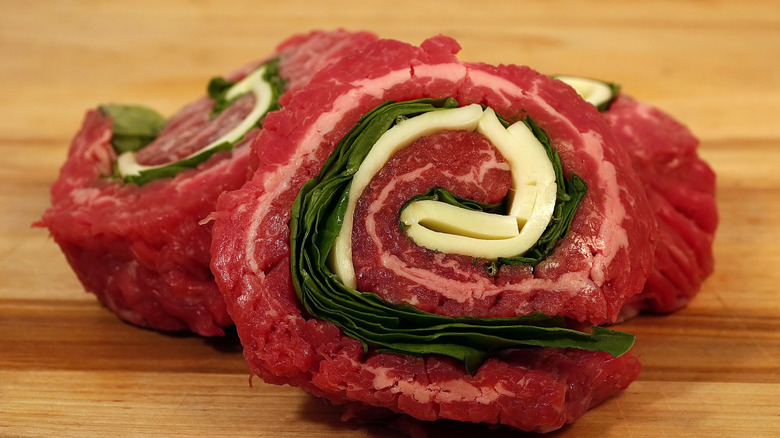
Quality prime rib costs a pretty penny, so squeezing every last drop of potential flavor out of it is vital to getting your money's worth, even if it can take a bit of effort. But if you're looking for something novel that can save you time before you get to cooking, ribeye steak spirals give you a ton of flavor at the expense of a bit of upfront labor.
@alpinebutcher Miso Butter 🇦🇺 Wagyu Ribeye Spirals 🥩 🌀 #steaktiktok
At its core, the idea is to maximize the surface area contact a seasoning blend has with your meat. Whereas rubs may only flavor the exterior, the swirl of extra ingredients also infuses the center portions of the steak. If you use butter or another high-fat ingredient, this has the added benefit of basting the meat as it cooks, saving you from having to flick spoonfuls of butter over the top again and again. The result is something incredibly juicy, rich, and well-seasoned that requires a lot of upfront work, but very little once your protein actually hits the pan, grill, or oven tray.
Provided they can stand up to whatever type of heat you're using, there's no real limit on what kind of seasonings you can use. Whether you opt for a simple blend of dried spices or use slabs of herby compound butter, the only other thing you need to keep in mind is moisture. Too much butter or leftover marinade may end up poaching, rather than searing, your steak, robbing it of that delicious crust.
Tips on preparing your own ribeye steak spirals
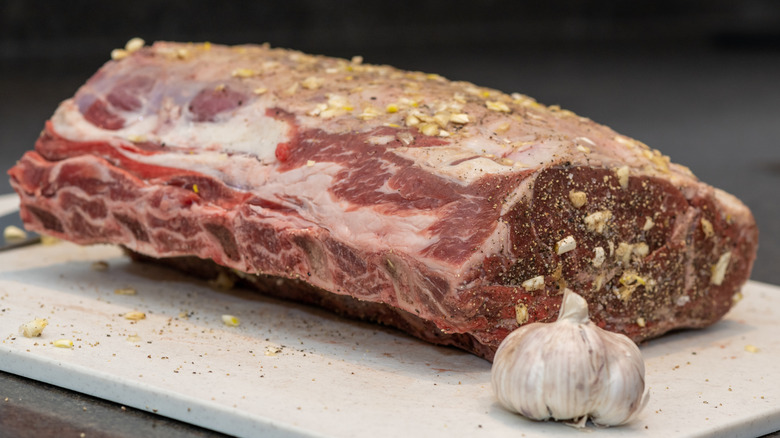
This method of steak prep can be pretty time-consuming, but taking care to observe all the important steps and finding room to experiment will only save you a headache down the line. Chilling the meat properly, using an extremely sharp knife, and taking care with the type of roast you buy can all determine your success.
If you don't feel ready to break a whole roast down into a long flap, a deckle of beef can be a reliable alternative. On ribeyes, it's that extra cap of muscle called the spinalis dorsi, and you can remove this from the prime rib, trim it, and use it for fewer, more manageable portions. Regardless of whatever cut you use, partially freezing it can really help you make clean slices. Chilling it for up to an hour firms up the muscle fibers, preventing them from being soft and squishy, and lets you pass through them with clean, even pressure rather than having to use saw-like motions, which end up tearing the meat.
This is a pretty big job, so be sure you have a large, sharp chef's knife on hand. Once you've portioned out the spirals, they're remarkably easy to freeze, especially if you have a vacuum sealer. Their compact size and shape make them simple to stack, pull out, and thaw as needed, giving you a seasoned, high-quality steak on demand with next to no effort.