

Quickly Sharpen Kitchen Knives With An Easy To Use Lowe's Find Under $15
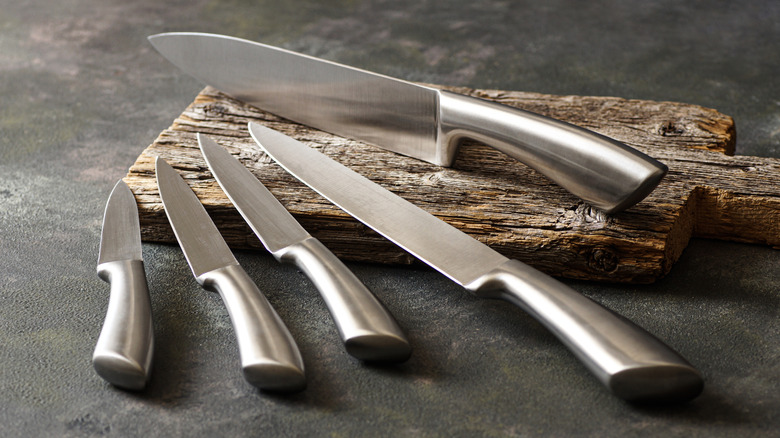
While whetstones and sharpening rods are effective, tried-and-true tools, they can take a bit of skill to use properly when you want to keep a keen edge. Handheld knife sharpeners, on the other hand, are reliable and easier to use, and the Work Sharp Pivot Plus model from Lowe's runs for $14.98, making it cheaper than many alternatives.
Like most other pull-through models, this little tool has two sharpening surfaces: a carbide slot for doing the bulk of the work and a fine-grit ceramic slot for that final polish. It's a knife sharpening myth that the grit of the sharpening surface doesn't matter, but these two surfaces should be more than enough to get your knife back in working order. On top of that, it even comes with a little fold-out sharpening rod. While it may not be as large as a standalone rod, combining these sharpening options in a single tool makes the process easier and quicker.
Unlike clever tricks to sharpen with a plate, the edge of a car window, or the back of another knife, this one comes with fewer downsides. While these are valuable hacks in a pinch, using a purpose-built tool to maintain your cutlery can help it last longer, and, for under $15, this small investment could prevent you from prematurely purchasing new blades. It'll work on most knives you need in the kitchen, whether you're using the pull-through slots or the rod.
How to use a pull-through knife sharpener effectively
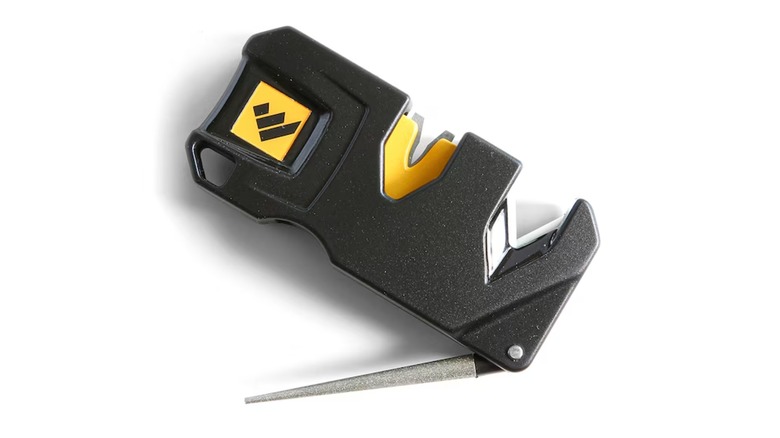
While there's some debate about the efficacy of pull-through sharpeners, this device can be effective if you use it safely and avoid damaging the blade. Still, little details like how much pressure to use and how to maintain the sharpener itself are important if you want your knives to last as long as possible.
The biggest drawback of a pull-through model versus a whetstone is its fixed sharpening angle. The Pivot Plus is set at 25 degrees, which may differ from your knife's existing edge angle. Rather than trying to twist and finagle your knife too much, set the blade vertically into the sharpener and, with very light pressure, pull it all the way through. Additional pressure won't speed up the process and may end up damaging the edge.
It's important to start at the heel near the handle and pull all the way to the tip to ensure no dull spots. If your knife has a chip in it, avoid running it through the carbide pull-through slot, which may further damage the edge. In this case, your best bet is probably to have the chip sharpened out or use an appropriate sharpening stone. Once you're done, be sure to wash or wipe your knife to remove any metal residue.