

5 Alternative Italian Cheeses To Parmesan To Add To Your Pasta
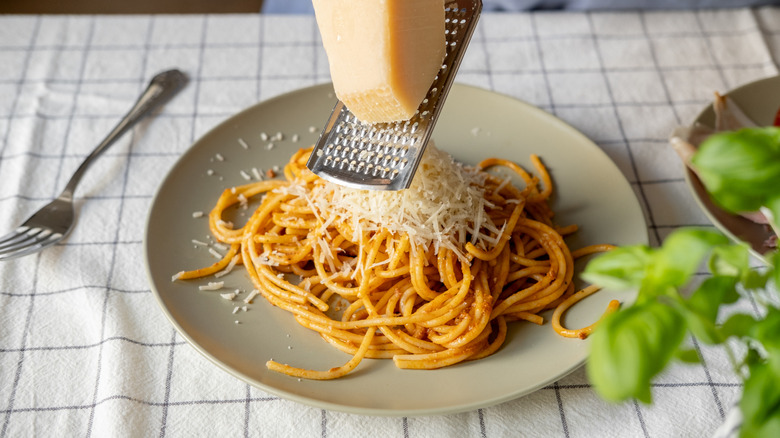
In the world of pasta-pairing cheeses, Parmigiano Reggiano reigns supreme. Italians love it, of course, but it's widely popular Stateside too, with the U.S. importing over 16,000 tons a year. However, it's far from the only cheese you can shower over your dish of spaghetti. You can garnish your noodles with all kinds of salty, tangy, and sharp wedges and wheels, each with its own nuances to harness depending on what you're making.
When it comes to Parmigiano-Reggiano — often called Parmesan in English-speaking contexts even though they're not the same — it's pretty clear why it's become the default choice for pasta. Originating in the northern Italian region of Emilia-Romagna, its exquisitely savory, well-rounded, almost nutty profile complements the starchiness of the noodles and the tanginess in the sauce, especially if made with tomato passata. It also offers a whole other range of benefits, including being possibly the highest-protein ingredient in Italian cuisine and very low in lactose.
That said, there are reasons you might want to skip the Parmigiano when grabbing your grater. It doesn't exactly pair well with seafood pastas, and it's pretty much an unspoken cultural rule in Italy not to mix the two. Moreover, it isn't to everyone's liking, especially children, who can find its aftertaste a little acidic or at times even nauseating. But the reasons don't have to be that dramatic — maybe you've just grown tired of resorting to Parm every time you fancy some pasta. So, from aged sheep's milk cheese to creamy blue, use these alternatives to zhuzh up your next batch of noodles.
Pecorino adds a savory tang that pairs with seafood dishes
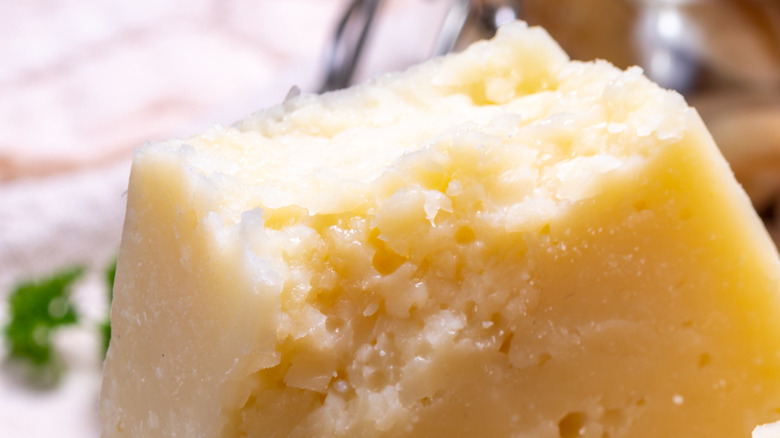
Pecorino cheese has become increasingly well known internationally, largely due to its use in popular central Italian (specifically Roman) dishes like carbonara. Yet it remains an underrated choice for everyday pasta despite complementing a surprising range of sauces.
This traditional sheep's milk cheese is made with lamb rennet and generally hails from central Italy, particularly Tuscany and Lazio, as well as the island of Sardinia. There are multiple varieties, including Pecorino Toscano and Pecorino Romano — the latter is the one you want with pasta. Its texture is soft and delicately chewy, but like other ovine dairy products, it possesses a distinctly tangy, salty profile. This lets cooks easily enhance the flavor of most pasta dishes without needing much extra seasoning or even salt.
Pecorino suits everything from basic pasta sauces like simple marinaras, spaghetti with meatballs, and pestos, to veg-forward recipes. It also works surprisingly well in seafood pastas with bivalves like mussels and crustaceans like shrimp, which is notable considering cheese and fish can clash. But out of all the pasta dishes available, pecorino shines brightest in cacio e pepe, the undeniable queen of Roman pastas. The recipe's as simple as its name suggests, since all you need is pecorino cheese and black pepper — though make sure you use a harder variety, ideally aged eight to 12 months, and add it off the heat to avoid getting gooey clumps.
Aged ricotta's salty creaminess complements vegetable-packed sauces
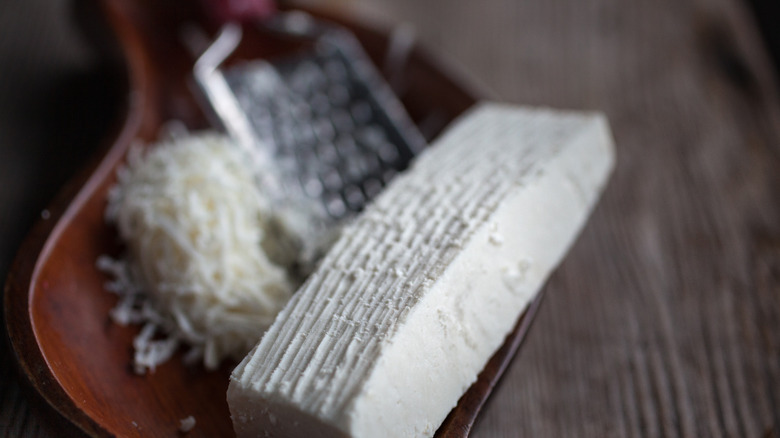
Ricotta is a staple Italian whey curd cheese: soft, almost feathery and soufflé-like in texture, with a very gentle dairy tang. It works well spread on bread, with roasted veggies, or as a cream cheese substitute in desserts like tiramisù and cheesecake. But its aged, seasoned older twin — known in Italian as "ricotta salata", or "salted ricotta" — has been used on pasta in southern Italy and Sicily for generations, and is definitely worth trying.
Its most typical pairing is with a Sicilian classic recipe, "pasta alla Norma" — made with tomato sauce and pan-fried sliced eggplant. Ricotta salata is soft enough to slowly fuse with the hot pasta sauce yet firm enough to grate easily. Its flavor combines the gentle creaminess of ricotta with a noticeable salty kick, rounding out any pasta dish while infusing it with noticeable savoriness. Its use in Norma sauce may be the traditional combo, but it also works with a variety of veggie-based pasta dishes — especially those featuring Mediterranean produce such as zucchini, bell peppers, red onions, and cherry tomatoes.
Grana Padano is Parmigiano's milder sibling
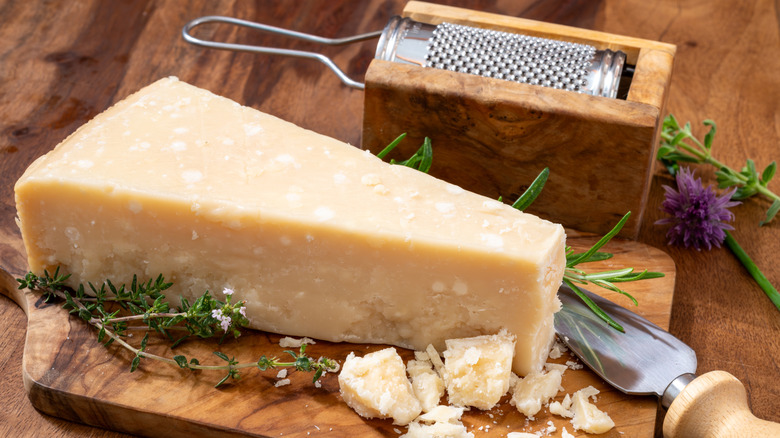
Now, it may be easy to dismiss Grana Padano as Parmigiano's cheaper sibling, or a "poor man's Parmesan". On the surface, the two cheeses seem incredibly similar. Both are made of hard cow's milk curds, have a similar crumble and texture, and a generally mild, nutty note. Indeed, Grana does generally have an advantage when compared to Parmigiano, in that it is usually cheaper, making it a more accessible choice when you want something that can broadly replicate Parmesan's flavor profile while also being easier on the wallet.
However, that doesn't mean that Grana is an inferior or inexpensive copy. It actually has its own very distinct background and differs from Parmesan, so it could be a better choice in some contexts. Grana Padano, as the name suggests, comes from Italy's northern Po Valley ("Pianura Padana"), in a wider region than the tightly concentrated, strictly regulated area that produces Parmigiano. Grana usually has a somewhat softer, milder, and even fruitier taste than Parmesan. This makes it more versatile overall, and it can appeal more to fussy eaters or children who might be put off by Parmesan's stronger aftertaste. As such, it works well in a wide range of dishes, whether sprinkled over a simple spaghetti with tomato sauce or grated into more elaborate cream-based pasta sauces.
Pick fontina for a velvety, melted cheese experience
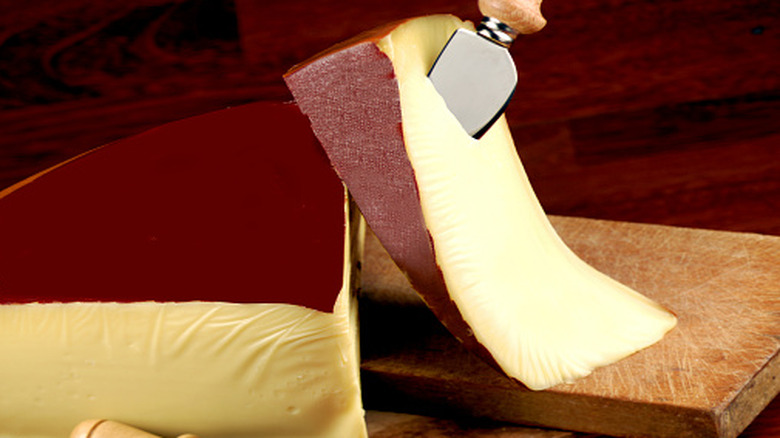
Fontina comes right from the footsteps of northern Italy's Alps, specifically the France-adjacent Aosta Valley region. Like the snow coating its birthplace's mountains, this cheese — made with the milk of three breeds of local cows — melts like butter and helps make perfectly creamy pasta dishes.
While mac and cheese may be North American comfort food, Italy is no stranger to rich, decadent sauces, and fontina is the closest thing you'll find in the Bel Paese that will get you a creamy, cheesy pasta dish — especially with pizzoccheri, ribbon-like, limestone-colored buckwheat noodles from the Valtellina region. It's not hard to see why it's a popular pick: it has a creamy, gooey, almost fondue-like consistency, although with a less funky and considerably more delicate flavor that makes it more universally appealing, especially for picky eaters. With fontina, you don't really need to do much — just add a few slices to your pasta and let it envelop the noodles in all its cheesy glory. It complements vegetables and meats well, too, from mushrooms and greens to crumbled sausage.
Gorgonzola is a flavor-packed blue cheese delight
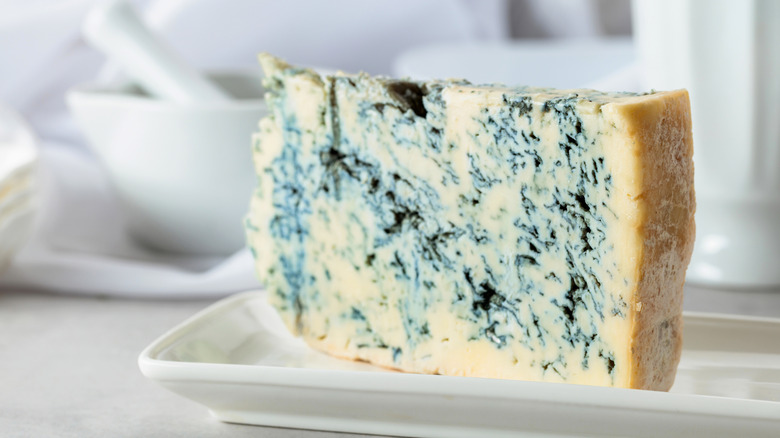
Gorgonzola may be the polarizing option here, but it certainly deserves its place on this list. The blue cheese is named after a small town 37 miles from Milan and is known for its acidic yet velvety and creamy texture, especially the "dolce" (sweet) variety. Its vibrant contrast of flavors has already made it a popular choice on cheese boards and with charcuterie, especially paired with Parma ham, walnuts, jams, apples, pears, figs, and salads.
But it's also a great addition to pastas, melting perfectly and coating the noodles with its rich creaminess. It has enough flavor and savoriness to stand on its own, though you can also enhance it with nuts, other cheeses, heavy cream, bitter greens, mushrooms, or even fruits like caramelized pears. The key with Gorgonzola is knowing how to use it deftly, and usually in moderation.
It can definitely be an acquired taste, especially for people with more delicate palates, so it might not be the most universally appealing choice. Because of its pungency and richness, you can avoid overpowering the pasta by generally adding small amounts and using the pasta water's starches to thicken and emulsify the sauce into the perfect level of creaminess. Gorgonzola pairs perfectly with gnocchi, since the potato-based dumplings have exactly the right consistency and shape to cling to this umami-packed delicacy.