

Not Soy Or Worcestershire: Bobby Flay Says This Sauce Is Underrated

Umami is one of the most important flavors you can incorporate into just about any dish, but when Bobby Flay is looking for an upgrade, he doesn't reach for soy or Worcestershire sauce. The Iron Chef believes that fish sauce is a criminally underrated ingredient, one that can do the same job with a subtlety that keeps it versatile.
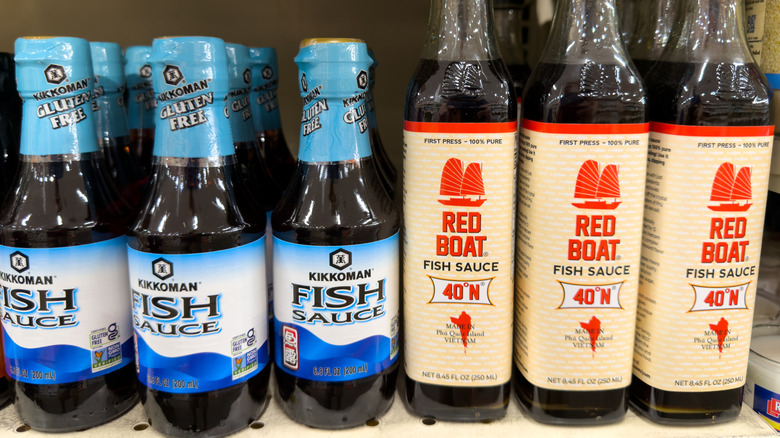
Much like tinned anchovies — another ingredient Flay loves to keep on hand — fish sauce is almost like liquid MSG. Made from fermented anchovies and salt, it's essentially pure umami and a common ingredient in a wide variety of savory Asian dishes. While this may be its most familiar use, varieties of fish sauce have appeared around the world, including in ancient Rome. The biggest thing that makes it so versatile is its surprisingly unobtrusive taste. Despite its ocean-like smell, it tends to slip into the background of more potent ingredients, and even small doses can produce serious results.
Don't be afraid of buying one of the larger bottles, either. While it may seem strange to purchase a liter of something that recipes measure in teaspoons, fish sauce keeps for a long time in the fridge. Treat it like a pantry staple, and use it just as regularly as Flay does, whether that's to upgrade a sauce or add an extra savory layer to meatloaf.
Fish sauce adds instant, rich umami to everyday recipes
In most cases, you can treat fish sauce like an extra-flavorful salt to bring new depth to cooking liquids. It does its best work when you allow it to permeate a dish, but exactly when you add it depends on your recipe.
Dishes with long simmering times, such as chili, can benefit from fish sauce added at the beginning. It can even provide a major flavor boost to mac and cheese. Adding it early helps soften the sharp, fermented aroma and lets it meld with the other ingredients and flavors.
Fast dishes like stir-fries need careful moisture control for the right texture, and high heat can reduce fish sauce without completely compromising its taste. Adding it at the end also preserves some of its aroma, so it's especially important to use carefully controlled amounts with this method. Still, you don't have to cook fish sauce at all: It's great in a cold dipping sauce, salad dressing, or as a way to elevate mediocre watermelon. It can add a remarkable element of savoriness to just about anything with very little effort, and its salt brings out the greatness of other ingredients at the same time.