

The Budget-Friendly Pesto Ingredient Massimo Bottura Recommends Over Pine Nuts

Massimo Bottura is an Italian chef who is most famous for his restaurant, Osteria Francescana, located in Modena, Italy, one of the homes of real Balsamic vinegar. His flagship restaurant has three Michelin Stars, the highest rating that this French-based review system gives out. Besides Francescana, he has opened up several other establishments throughout the world and has started his own non-profit called Food for Soul that helps reduce food waste. Along the way, he has become something of a go-to source for all things related to Italian cuisine beyond fine dining. As such, when he makes an amendment to an established Italian recipe, we're all ears.
In an interview with Food & Wine, he shared his secrets to making pesto, a dish that many throughout the world equate with the Genoese version made with basil, garlic, pine nuts, and cheese. While delicious, the problem with pesto alla genovese is that one of its vital ingredients, pine nuts, tends to be pricey and can hinder many home cooks from making this classic recipe. Fortunately, Bottura reveals that he actually doesn't use the expensive nuts in his cooking and opts for something much more affordable. "Instead of using pine nuts," he stated, "I use breadcrumbs. It just makes it lighter and creamier. It's just wonderful."
This is actually a genius tip since the real purpose of the pine nuts, or any nuts, is that they break down, combine with the other ingredients, and bind them, helping to create a creamy emulsion that dresses pasta beautifully. Bread and breadcrumbs are used in numerous recipes throughout the world to thicken and give luscious, velvety textures to sauces. Additionally, breadcrumbs don't compete with the flavor of the star ingredient in a herbaceous pesto, and considering how the celebrated chef likes to include a variety of herbs in his recipe, employing his tip in your own preparation will really make your choice of herbs shine.
Pesto can be a canvas for your creative culinary expression
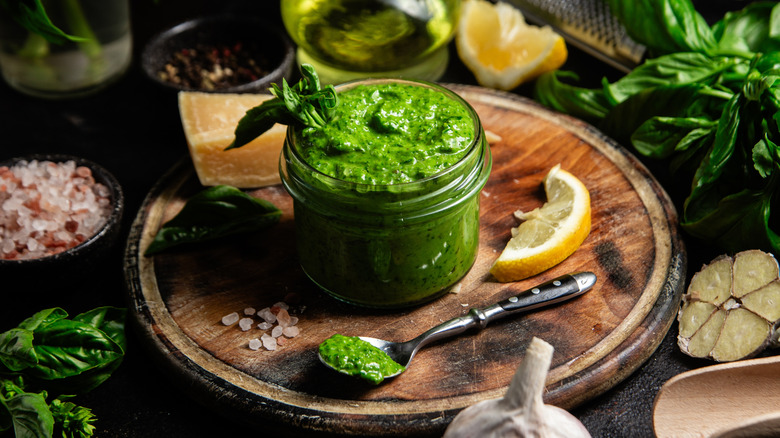
The word pesto comes from the Italian word pestare, which means to crush and hints at how this sauce is traditionally made — in a mortar and pestle. As such, almost any combination of ingredients can work in making a pesto. If you visit Sicily, for instance, you may encounter pesto alla trapanese, which is made with tomatoes and blanched almonds. And in Southern France, there is a version called pistou, which is made without nuts or cheese.
You can also use cilantro or its more aromatic cousin culantro, aka sawtooth coriander, which both have a refreshing quality whose aromas mellow once the herbs are warmed with freshly boiled pasta. Other greens also work well in pesto, including fresh spinach, arugula, and watercress. Instead of nuts, you can use pumpkin seeds or sesame seeds to lend your recipe a creamy texture. And if you'd like to use bread crumbs but don't have any on hand, a few crackers can do just the trick. If you're adding a bunch of savory elements, especially a strong cheese, a bit of sweetness from a judicious amount of biscuits or wafers can give your pesto added dimension.
When it comes to cheese, you have a lot of options to play around with, and they don't all have to be Italian, either. Crumbly Mexican cotija cheese works fabulously well in a cilantro and pumpkin seed pesto, and feta will add a tangy creaminess to any combination of herbs and seasonings. If you want to go even creamier, blend some brie into your recipe, which will help bind the other ingredients without you having to grate anything. And if you don't want the cheese but desire that creamy mouthfeel, you can even substitute the dairy for avocado.