

How Reese's Peanut Butter Cups Get Their Signature Texture
We may receive a commission on purchases made from links.
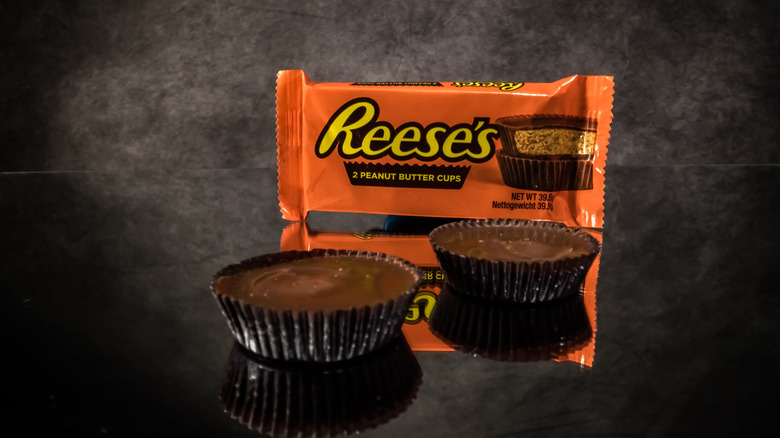
First released in 1928, Reese's peanut butter cups became a nearly instant hit, delighting consumers with a classic combination of peanut butter and chocolate flavors. Yet just as distinctive as the flavor is the candy's texture — a smooth exterior chocolate encasing a sweet, crumbly peanut interior. Intriguingly, this consistency wasn't always central to Reese's peanut butter cups.
Instead, this distinct grittiness reportedly emerged from a factory mistake, when peanuts were accidentally over-roasted. In today's production process, Reese's roasts the nuts at 289 degrees Fahrenheit for 35 minutes, a lengthy roasting process that helps give the peanut butter its signature dry, granular texture. The preparation method also emphasizes the peanut's nuttiness, enhancing the sweet's character.
Following the roasting, the peanuts go through more processing, including blanching to remove skins and grinding. The star ingredient is then combined with oil, salt, and sugar, creating Reese's All-Natural Peanut Butter, which you can even buy in jars. However, most of the peanut butter is churned and sweetened one more time to make the candy's filling. Encased between two layers of smooth, tempered chocolate, the filling becomes Reese's signature snack.
Reese's utilizes peanuts in a wide-ranging lineup
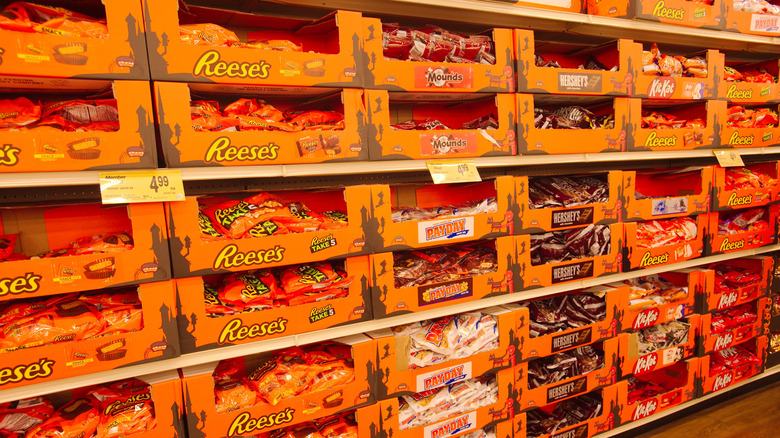
Reese's peanut butter cup production process is meticulously streamlined, with both automation and manual labor used to make the sweet. Such precision is combined with impressive scale; the company makes several million peanut butter cups daily. It's a successful template that has inspired plenty of imitators — sweets like Aldi Peanut Butter Cups and Justin's Peanut Butter Cups use a similar formula. Reese's has also expanded far beyond the classic peanut butter and chocolate pairing.
The nutty filling is used in a range of variations, from holiday-themed peanut butter sugar cookie cups to peanut butter cups flavored with caramel and a chocolate lava rendition that bursts with gooey chocolate. Reese's candies now extend past the standard-sized cup, too, with miniatures, eggs, and clusters available.
Reese's no longer uses the same peanut butter consistency across all candies. Some varieties — like the seasonal Easter eggs and bunnies — now feature a smoother peanut butter texture. Nevertheless, the coarse peanut butter consistency remains one of Reese's most distinctive characteristics.