

What Pringles Looked Like In The '60s Vs 2026
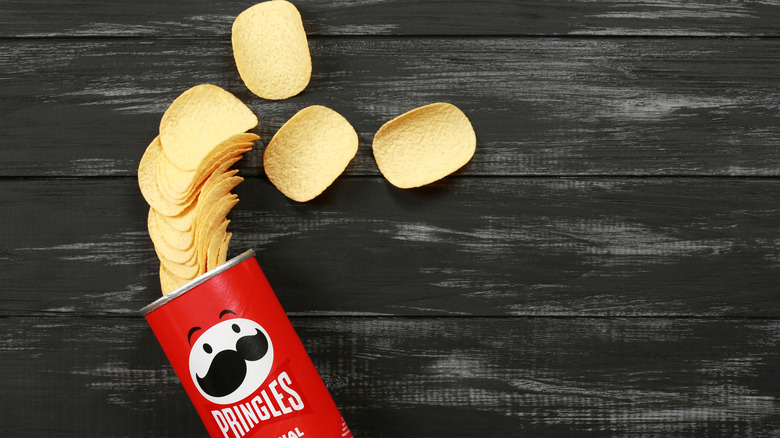
Peruse classic chip offerings, and it can be hard to imagine a time before their availability. One such brand is Pringles: The saddle-shaped crisp has seemingly always been around. Whether a can of salty originals or tangy-savory sour cream and onion, a bite of the crisps transports you back in time.
Yet like every other food product, the chip had to start at some point. In this case, it was the 1960s, an influential decade in American food and drink. Pringles was released around the same time as still-popular items like Gatorade and diet soda. Several of the snack's famed qualities appeared right upon release, like the iconic shape and influential packaging.
Still, there was much more evolution to come, with the process for making the product only gaining an official patent in the 1970s. New flavors, packaging, and wider distribution were all on the horizon, meaning Pringles transformed drastically from the 1960s to 2026. The chip has had a fascinating development over the decades; while the crisps themselves look the same, there has been some update to the packaging in particular.
Innovative Pringles debuted in the 1960s
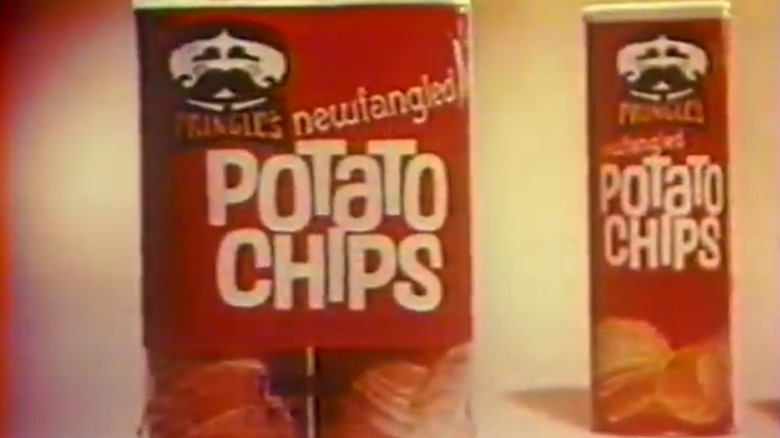
Today, Pringles is a ubiquitous snack, manufactured in several factories worldwide. Flashback to the 1960s, though, and the crisp was only a newly debuted bite. Released at the tail end of the decade, the chip came out after years of research and development. Procter & Gamble sought to make a snack that wouldn't disintegrate in a bag, all while maintaining an extra-long shelf-stable crunch.
Several years of tinkering resulted in the unique hyperbolic paraboloid shape, both aesthetic to look at and sturdy in composition. Made of a dehydrated potato and flour mixture — rather than exclusively potatoes — Pringles were among the first chips of their kind. Signature to the brand was the tennis can shape, a sturdy and airtight container capped off with a can hook. Sold exclusively in North America, the red cans came labeled "Pringles Newfangled Potato Chips," making them easy to distinguish on grocery store shelves.
Despite such eye-catching qualities, Pringles did not sell well in the 1960s. To further add to the troubles, the U.S. Food and Drug Administration took issue with the can's "potato chip" label in 1969, as the snack didn't employ a pure tuber composition. The brand later changed the name to "potato crisp," accompanied by the phrase "made from dried potatoes" for clarity. However, it would be decades before the brand became a worldwide giant, with Pringles occupying shelves as an obscure newcomer.
In 2026, Pringles are a worldwide favorite
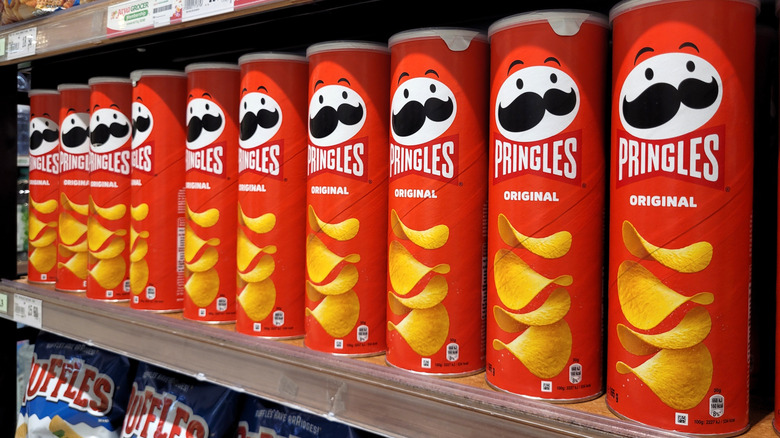
Skip through the decades to 2026, and Pringles is now a global phenomenon, available in nearly 150 countries. Procter & Gamble no longer owns the brand: Pringles was sold to Kellogg in 2012, before its later acquisition by the conglomerate Mars Incorporated in 2025. Now, long gone are the days of only the classic seasoning in a red can; Pringles now sells dozens and dozens of flavors.
From disliked sweet holiday Pringles to beloved pizza crisps, you can find the snack in just about any formulation imaginable. There's a wide breadth of regional distinction, too. You can find flavors like Salt and Seaweed in Thailand as well as an entire spicy sour cream lineup in South America and the U.K. In the U.S., Pringles rolls out some unique brand crossovers, too – Buffalo Wild Wings-flavored crisps are just one 2026 release. Every once in a while, the brand will even revive a flavor like honey mustard.
In addition to seasonings, Pringles' packaging has changed. The same tall can is now colored in a huge array of hues and details, although still generally with the same white Pringles font. Julius Pringles — the brand's mustachioed mascot – continues to appear on containers. There are even convenient smaller 1.3-ounce and 2.3-ounce containers as well as plastic cup vessels. And no longer do the sturdy containers define the brand; a spin-off called Pringles Mingles now comes distributed in a bag. Over nearly 60 years, a lot has changed with Pringles, although the crisp's appealing foundation remains the same.