

Avoid These 11 Mistakes When Storing Dairy Products

Whatever your kitchen endeavor, there's probably a dairy product waiting to make itself useful, from butter to saute your veggies and yogurt for a protein-packed breakfast tp plain old milk to lend a little creaminess to your soup — or even to clean your silverware once it turns sour. But dairy has had one persistent problem for most of human history: It's annoyingly perishable. We've devised all sorts of schemes to keep it from going bad, from the archaic and rudimentary — like lowering milk into wells to keep it cool — to decidedly more sophisticated modern methods, such as refrigeration.
But having the right equipment for the job can only get you so far. Keeping dairy fresh takes a little more finesse than simply chucking it in the fridge. To get some insight into the mistakes that folks make when storing dairy and how to avoid making them, we spoke to the experts: professional chef and food safety expert Mark McShane of Level 3 Food Safety and Hygiene Certificate; Shannon McCracken, cheesemonger and general manager at Montrose Cheese & Wine; and applicance expert Mike Langan of Pinnacle Sales Group.
Opening the fridge door too often or for too long

Your fridge is the most powerful tool in your arsenal for keeping dairy fresh. Still, there are some important things to keep in mind when doing so. One mistake you really want to avoid with your fridge is leaving the door open, since highly perishable dairy products require strict temperature control to keep them fresh and maintain their quality.
Flapping the refrigerator door open every five minutes or leaving it open for long stretches can cause cold air to rush out, leaving your fridge above the recommended temperature threshold. According to appliance expert Mike Langan, your fridge can lose anywhere between 50% and 75% of its internal air volume in as little as 30 seconds.
Your refrigerator will eventually climb back down to its proper temperature, but recovery times can be surprisingly protracted, with some fridges taking as long as 30 hours before temperatures stabilize again. To keep from lingering, know what you need before you even touch the fridge handle, and keep everyday essentials within arm's reach so you can get in and get out quickly.
Overpacking the fridge shelves
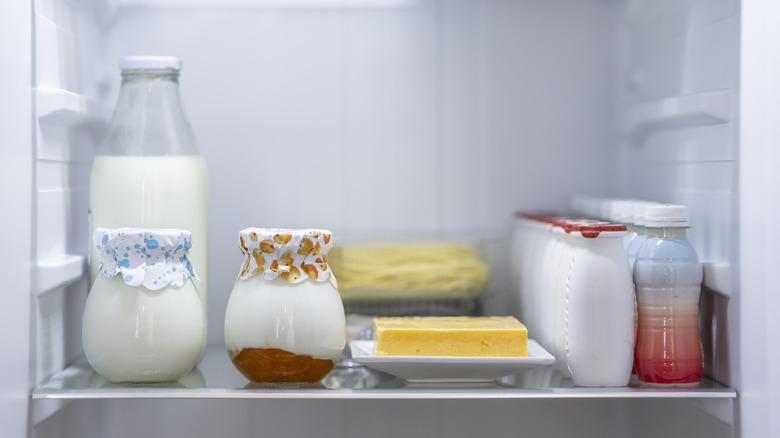
If you're really serious about your dairy, you've probably realized what a nuisance it is to keep buying small portions of it. Buying in bulk can save time and money, but it can become counterproductive if you don't have enough space to accommodate it, as cramming items into your fridge is another food storage mistake you need to avoid making.
Your fridge relies on forced convection to circulate dry, cold air throughout the refrigerator cavity. "Jamming shelves edge-to-edge prevents convective loop formation," says Mike Langan. "Blocking the rear multi-flow vents creates localized hot spots in the front and center zones." Without that steady flow of chilled air, temperatures in these areas can climb into the food safety danger zone of 40 to 140 degrees Fahrenheit, accelerating the growth of bacteria that can spoil your dairy products or make you sick.
Wrapping cheese tightly in plastic wrap
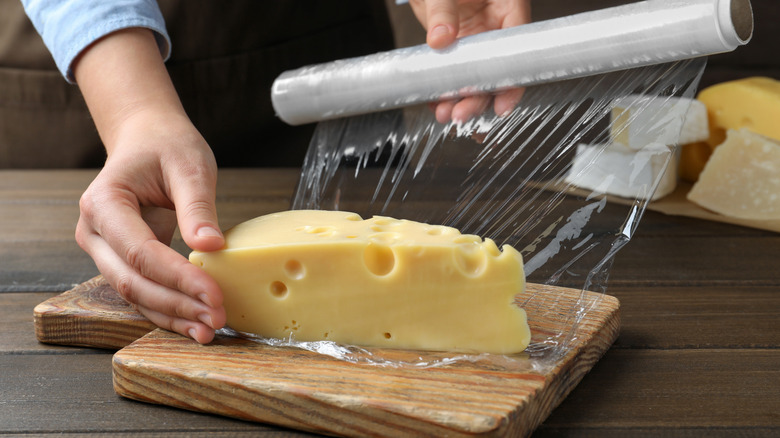
Perishable dairy, like milk, should always be stored in airtight containers to slow deterioration. Cheese — especially aged cheeses with active bacteria, yeast, and mold — plays by an entirely different set of rules. "Certain types of aged cheese require specific levels of controlled humidity/airflow to allow continued maturation; thus, complete enclosure ([aka] vacuum sealing) is not always necessary," says professional chef and food safety expert Mark McShane.
Cheese bought from a reputable cheesemonger will typically come snugly wrapped in specialty cheese paper, which protects it while still allowing it to breathe. Whatever you do, don't trade that cheese paper for plastic wrap. "Non-porous plastic wrap traps moisture and ammonia vapors released by living cheeses (Brie, Camembert, washed rinds), turning them sour, slimy, or overly pungent," Mike Langan says. Cheesemonger Shannon McCracken concurs, adding that plastic wrap does not protect cheese from its other big enemy: light. "Cheeses don't like being exposed to bright lights for too long. It bleaches them out and changes the flavor in a bad way," she says.
Now, cheese paper isn't what you'll typically find your cheese wrapped in. Grocery-store cheese, for instance, often comes vacuum-sealed in plastic. But just because it came from the store that way doesn't mean it should be stored as is. Go the extra mile and rewrap it yourself in parchment paper. This lets the cheese breathe while absorbing condensation.
Freezing cheese
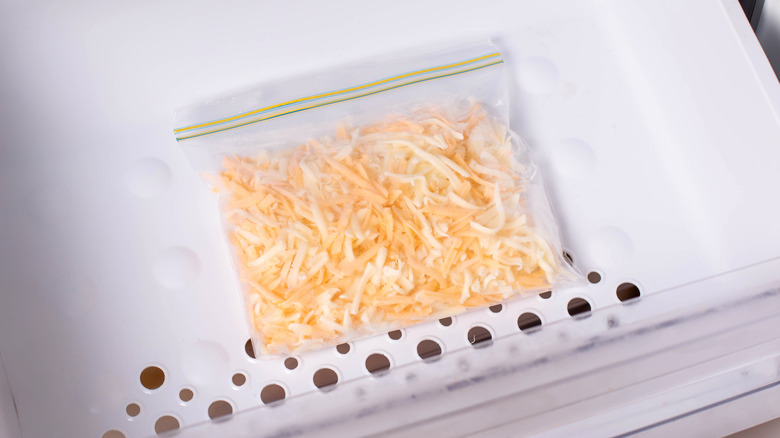
Freezing is an excellent way to get more out of some types of dairy products, especially if you're buying in bulk. But not every dairy product belongs in the freezer. It's an especially terrible place to store cheese. This isn't so much a safety issue as it is a quality one. Mark McShane tells us that high-moisture cheeses like cottage cheese can tolerate freezing fairly well. "However, they can lose considerable amounts of texture once thawed," he says, recommending that you only use frozen dairy products when you plan to add them to a recipe rather than eat them as is.
Shannon McCracken is firmly in the anti-freezing camp. "Is it worth trying to extend the life of your cheese only to be left with something that isn't a true representation of how the cheese should actually be? I think not," she says. "Freezing cheese not only changes the flavor but also changes the composition altogether. Just don't!"
It's not alarmist advice. When cheese freezes, the water inside it forms ice crystals, which can alter its texture. Once the cheese thaws, that displaced water escapes, leaving you with a drier, mealier shadow of what you started with. The more water in the cheese, the more drastic the deterioration, so definitely keep your ricotta and queso fresco well away from the freezer, especially if you're fond of eating them straight out of the pack.
Relying too heavily on expiration and use-by dates

Considering how quickly dairy can turn, it's understandable to want a hard cutoff that tells you when it's time to throw it away. Expiration and use-by dates are a great starting point, but only relying on them would be a mistake, as a product can be ahead of its expiration date but still be bad.
"Dates provide us with general guidelines regarding the optimal consumption window for a particular dairy product based upon several factors (such as proper refrigeration/handling/packaging)," says Mark McShane, who notes that each product has to be considered individually. A carton of milk left sitting at room temperature for an hour, for instance, can deteriorate rapidly, regardless of what's printed on the package. The same can't necessarily be said for aged hard cheeses like Parmesan, which can tolerate longer stretches at room temperature without turning.
Instead, McShane recommends giving your senses a little more say. Look out for signs of spoilage, such as discoloration, swollen packaging, or unusual odors. Just remember that spoilage indicators also don't apply universally. A spot of mold on aged Parmesan, for instance, isn't necessarily cause for panic. "If you see a spot of mold on your chunk of cheddar, marvel at how cool it is that cheese is alive and then simply scrape it off and enjoy!" says Shannon McCracken. Mold on fresh cheeses like mozzarella, on the other hand, tells a very different story. "Fresh cheeses like mozzarella, ricotta, and chèvre are meant to be consumed shortly after they are made, so if yours are moldy, you waited too long," McCracken says.
Storing your dairy in the wrong location in your fridge
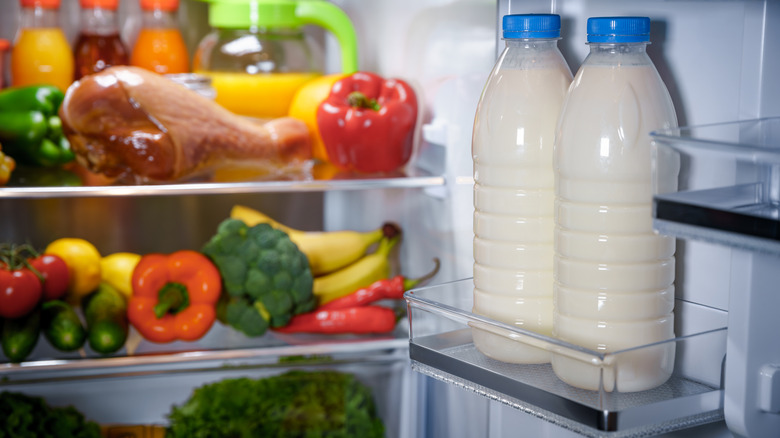
Refrigeration can help keep dairy products safe and fresh, but not every part of your fridge is ideal for storing it. The door, for instance, is one of the worst places to store your milk. It's exposed to air every time the door opens and closes, meaning temperatures swing drastically. This can accelerate quality loss and potentially make it unsafe for consumption.
Mike Langan recommends storing milk, along with highly perishable dairy like cottage cheese, mozzarella, and heavy cream, in the coldest, most temperature-stable part of your fridge. Exactly where that is depends on your fridge model. In a typical top-freezer refrigerator, that usually means the middle or upper-back shelves. In a French-door model, however, cold air is discharged from the bottom, which, according to Langan, makes the lowest shelves the coldest and most temperature-stable spots.
Of course, frequent door openings can still throw temperatures off in these zones. This is where a dedicated dairy drawer can come in handy. "Enclosed drawers create a micro-environment protected by an air pocket," says Langan. "When the main doors open, the dense cold air inside the drawer remains trapped, shielding cheeses from cyclic thermal degradation."
Not all your dairy will demand this kind of vigilance, though. Fermented dairy like yogurt and sour cream can tolerate some degree of temperature instability, according to Langan. That means they can safely occupy places in your fridge that are exposed to moderate fluctuations, such as the upper shelves of a typical top-freezer model.
Storing all dairy products the same
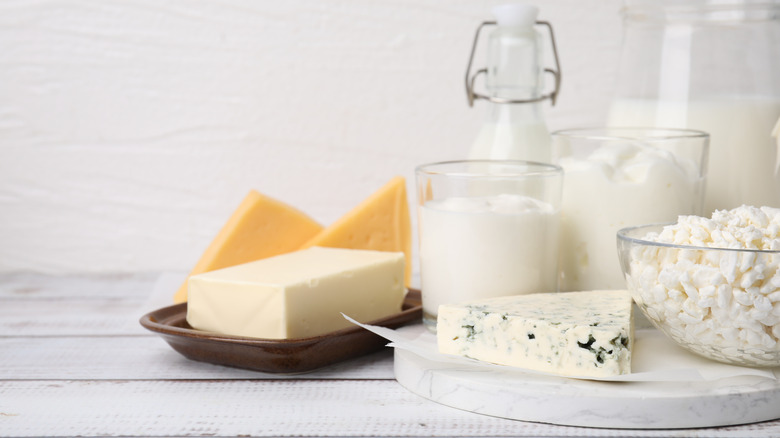
Dairy products may come from the same ingredient, but that doesn't mean they have the same storage needs. Milk's biggest enemy, for instance, is microbial growth, so maintaining a strict cold chain is imperative. Butter, on the other hand, is far more vulnerable to lipid oxidation from light and ambient air, making packaging arguably more important than temperature stability.
Aged cheese, meanwhile, doesn't demand quite the same cold-chain vigilance as fluid milk. According to Mike Langan, hard cheeses can tolerate some temperature variance. Many types of hard cheese don't even need refrigeration and will fare just as well in your pantry. They are, however, particularly sensitive to humidity and moisture loss. Accounting for these individual needs will allow you to get the most out of your dairy products as possible.
Double-dipping utensils
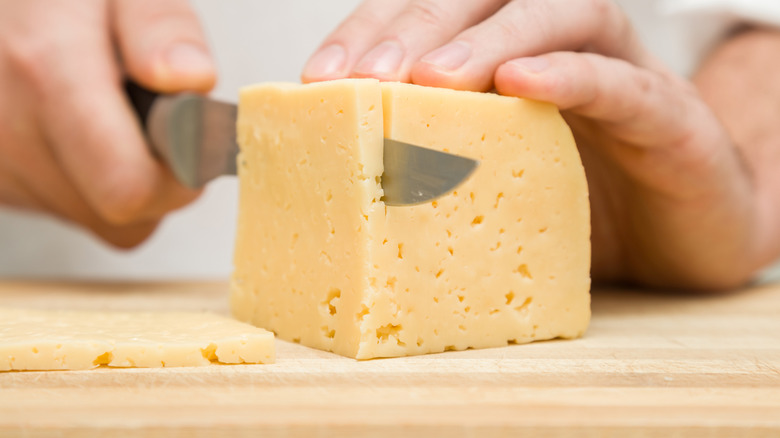
Your refrigerator might be excellent at keeping your dairy out of the 40 to 140 degrees Fahrenheit food safety danger zone, but it certainly can't protect it from bad habits. One surefire way to sabotage all that careful packaging and refrigeration is to repeatedly plunge used utensils back into your tub of yogurt, cottage cheese, or sour cream.
It's not that every illicit dip of the spoon will instantly make your dairy products go bad; it's that each repeated use raises the chance of microorganism exposure. And while you might get away with a few missteps with low-moisture dairy like aged cheese, a tub of cottage cheese or fresh mozzarella won't let you off quite so easily. Alongside their nutrient-rich profile — plenty of protein, fat, and sugars — the high water activity of these dairy products gives microorganisms an inviting environment in which to spread.
"The act of transferring dairy can influence both longevity and safety because the new container could potentially introduce microorganisms/oxygen/moisture/odors that did not exist within the original packaging," says Mark McShane. Mike Langan concurs, adding that double-dipping utensils can introduce active enzymes such as salivary amylase. This enzyme can break down some of the abundant carbohydrates in these products and accelerate quality deterioration. The fix is simple: Use a clean utensil every time you dip into a dairy container, and don't switch utensils between products without giving them a proper scrub first.
Storing dairy in a dirty refrigerator

When you think about dairy contamination, your mind probably goes straight to a forgotten carton on the counter or an unreliable refrigerator. But as Mark McShane tells us, the refrigerator itself can become a hotspot for cross-contamination if you don't keep things nice and tidy. "Spills, uncleaned/dirty refrigerator shelves, drawers containing contaminants, and containers that have been left opened for too long can facilitate transfer of microorganisms onto adjacent dairy products," he says.
And it's not just contamination you need to worry about. Leaving food behind can invite unwanted odors into your fridge, which can then get sponged up by high-fat, porous dairy products like cheese. This doesn't mean you need to sanitize your fridge multiple times a day, as there are plenty of simple tricks to keep your fridge clean. Wiping up spills the moment they happen and organizing your fridge to keep raw meat and poultry drips at bay are among the biggest.
That said, don't let the deep clean become a once-in-a-blue-moon affair. How often you need to give your fridge a proper scrub depends largely on how vigilant you are day to day. If you're keeping a hawk eye on spills and drips, you can probably get away with a thorough cleaning every four to six months. If you're constantly falling behind on the daily cleanup, though, don't make your fridge wait that long for a reset, and don't forget to clean any spots where your dairy sits to avoid cross-contamination.
Leaving dairy on the counter too long

One of the biggest mistakes that you can make when storing dairy is leaving it out for too long. After all, there's a reason experts recommend picking up your dairy last at the grocery store. Milk and high-moisture cheeses like mozzarella and cottage cheese tend to deteriorate rapidly. Preservation techniques like pasteurization knock out the vast majority of spoilage microorganisms, but not all of them. The worst part is that contamination isn't usually readily perceptible. Your milk can appear, smell, and taste perfectly fine even as microorganisms are multiplying beneath the surface. That's why the United States Department of Agriculture (USDA) cautions against leaving food out at room temperature for more than two hours.
"One of the most common errors I witness involves individuals allowing dairy products to remain at room temperature during meal preparation and assume a brief duration at room temperature poses no risk; however, cumulative time at ambient temperature can result in significant risk," says Mark Shane. It's not just the temperature flux that's worth worrying about, either. "Oxygen contributes to the acceleration of oxidative/rancid processes in dairy products, whereas exposure to light causes nutrient loss/fat degradation and development of off flavors in some dairy products, especially milk," he says. To get around this, he recommends rewrapping or resealing perishable dairy and returning it to the refrigerator once you're done with it.
Not checking the fridge temperature before storing dairy in it
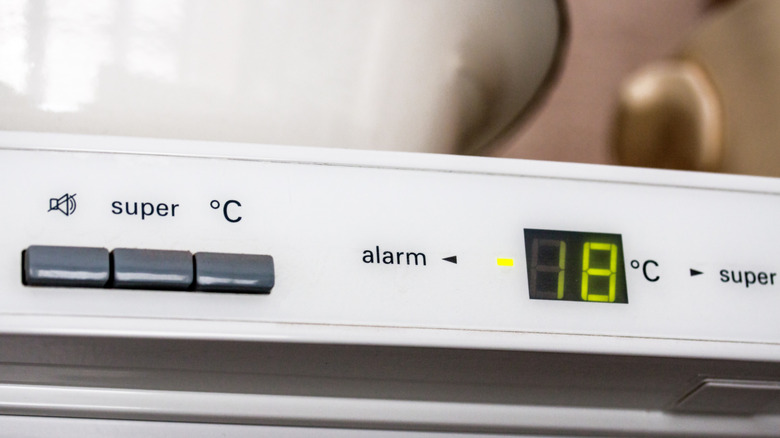
Once you get your dairy home from the grocery store, it's really up to you to maintain the cold chain, which means making sure your fridge is set to a suitable temperature. And once you've punched that temperature into the user interface, don't stop there. Go in with an independent liquid-bulb or digital thermometer, checking multiple locations inside the cavity to make sure temperatures are actually uniform.
Why? Well, your fridge relies on steady airflow to keep everything properly chilled. If you've packed your refrigerator too heavily or your evaporator fan is on the fritz, cold air won't flow properly between items, creating potentially dramatic temperature variation throughout the cavity. Warm spots can still crop up in a well-organized refrigerator and can potentially put your dairy products at risk.
Sadly, the display may not show any of this. According to Mike Langan, the "internal air frequently runs [2 to 4 degrees Fahrenheit] warmer than the user interface setpoint." Independent temperature checks allow you to confirm what's actually happening inside, so you're not unwittingly keeping your dairy in the danger zone.