

Whiskey Vs Bourbon: Which One Makes A Better Old Fashioned Cocktail?
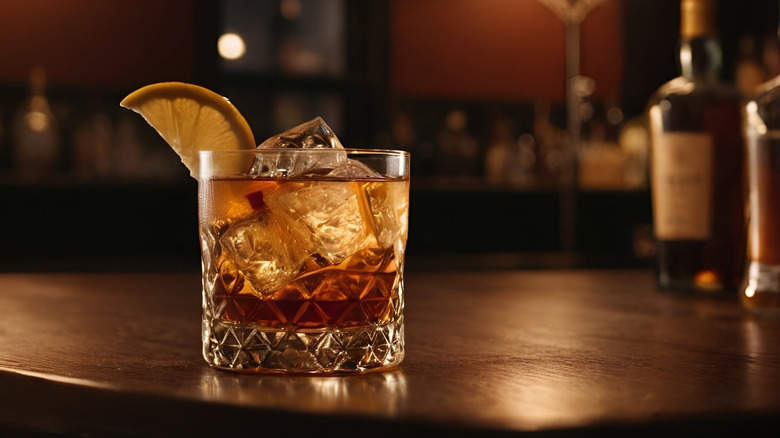
True to its name, the old fashioned has been around — many credit it as the first cocktail altogether. Consisting of a malleable composition of liquor mixed with bitters and sugar, then cut with water, it's a drink that's easy to put together. However, perfecting a rendition is not as simple — every drop of liquid impacts the resultant taste. So with so many ways to mix an old fashioned, simply choosing the base spirit already poses a challenge: Should it be whiskey or bourbon?
You can't go wrong with either. Both whiskey — specifically rye — as well as bourbon have been mixed into an old fashioned since the 19th century. The flavor difference between whiskey and bourbon creates two very different drinks, each with a distinct appeal. Bourbon's corn-heavy mash bill makes a sweeter cocktail flavor, with a syrupy consistency lending the cocktail a thicker mouthfeel. Smooth and well-rounded, bourbon is the more popular old fashioned liquor choice; the spirit melds easily well with sugar and bitters.
Whiskey can shine just as easily an old fashioned. The broader spirit category — which technically includes bourbon — can spin the cocktail into versatile directions. Grain-forward rye whiskey is favored by bartenders, producing a dry cocktail that boasts flavors ranging from earthy, to spiced and vegetal. And although not a widespread choice, even a smoky Scotch makes a tasty old fashioned. No single whiskey produces the best cocktail; it's a matter of tailoring based on the bottle.
Build an old fashioned around your preferred whiskey flavor
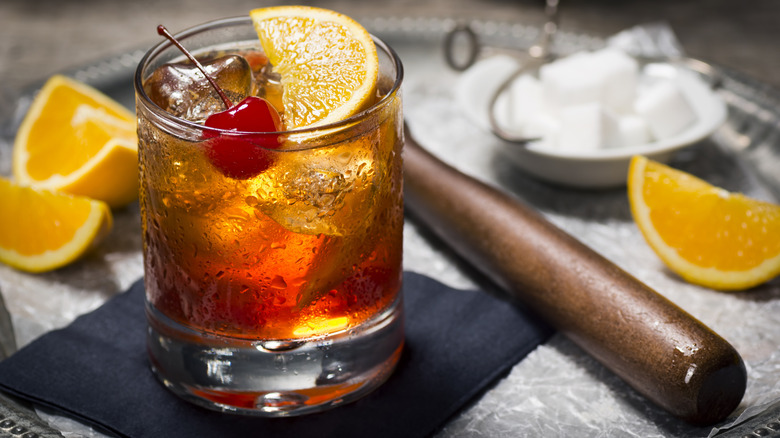
In addition to the many broad types of whiskeys and whiskies, the spirit's flavors vary drastically even among one style. With bourbon for example, it's regulated that 51% of the bill is corn, but further ingredients can vary. A rye-heavy bourbon can resemble a rye whiskey while a wheat bottle might taste especially smooth and sweet. By way of its oak barrel aging, bourbon often leans sweeter, which is a touch more forgiving for old fashioned mixing. However, some drinkers prefer more bite in their drink. To really make the cocktail shine, you'll want to first sample the spirit on a bottle to bottle basis. The possibilities are enormous.
Whether using a whiskey or bourbon, start by reaching for a higher proof expression, ideally around the 50% ABV mark. The boozier composition holds up well to dilution, ensuring the whiskey tastes good even after mixing with water and ice. Go stiffer though, and the spirit will either taste too sharp or lose depth. Aside from the alcoholic strength, few old fashioned whiskey constraints exist — it comes down to the spirit's individual character.
American bourbon and rye whiskeys are an especially common choice due to their often bolder nature, as well as long-running heritage in old fashioned recipes. Trusty and traditional, you can expect such spirits to yield complex flavors of various fruits, caramel or vanilla, and some heat in the drink. However, with some adjustments — like a different bitter blend or a gentle pour of liqueur — spirits like Irish and Canadian whiskey shine in the cocktail, too. Really, there's no best bottle, making the old fashioned among the most versatile drinks around.