

Sweet Potatoes Are 10x Better With This Korean Topping
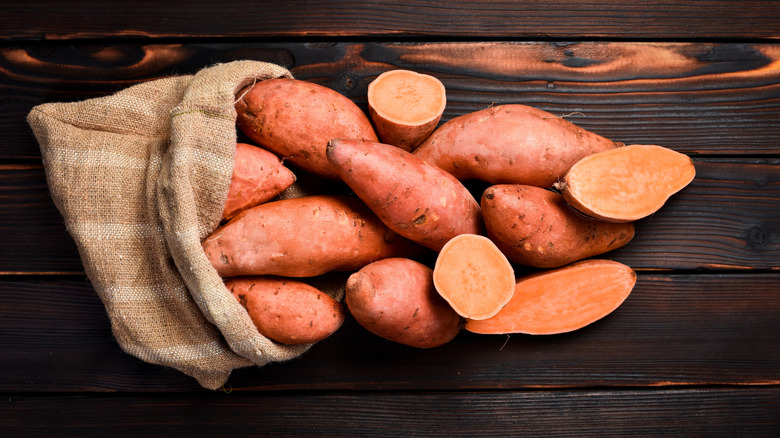
Sweet potatoes are creamy and sugary, but they often get overshadowed by regular potatoes because some believe their unique flavor profiles can clash with classic seasonings, like woody herbs, cheese, and onions. But those same tastes make them pair beautifully with tons of other options, few more so than Korea's classic fermented cabbage dish: kimchi.
Kimchi is salted cabbage fermented with a fiery pepper paste until it's as complex and lively an ingredient as any cheese or wine. Combined with the natural sugars in sweet potatoes, it covers all five basic tastes quite comprehensively with no more effort than spooning some on top once the potato has cooked. The crunch of the cabbage contrasts with the smooth softness of the root vegetable to deliver a range of textures, too, so you end up with quite a dynamic food.
Even if you don't have access to good-quality kimchi, gochujang is also an ultra-flavorful Korean cabbage condiment that can produce similar flavors. So long as you can achieve a good balance between the heat of the peppers and the sugars in the sweet potato, you'll get something that has the quintessential spicy-sweet deliciousness that's so emblematic of Korean cuisine. Sweet potatoes can even help reduce the perceived heat of particularly spicy kimchi, so just about anyone can enjoy this flavor combination in whatever way they prefer to get their fix of the root vegetable.
Different ways to add kimchi to sweet potatoes
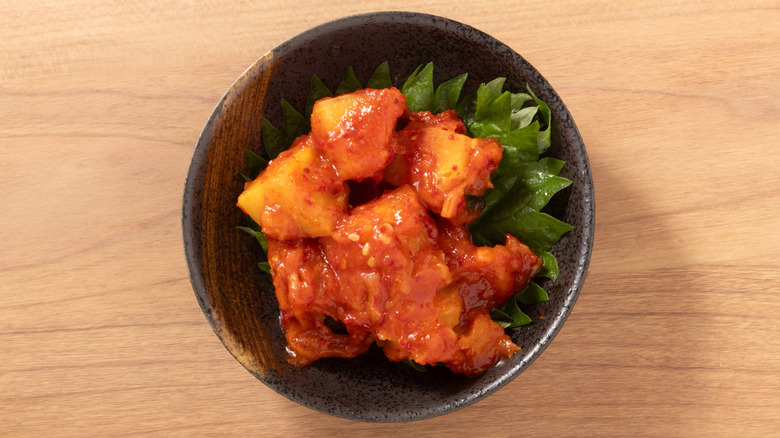
Since it's fermented, kimchi has a lot of multi-dimensional flavors that can change with heat. Still, Korea has no shortage of cooked kimchi recipes, so whether you keep it as a topping or cook it right alongside your sweet potatoes, there's no wrong answer so long as you know how the flavors might end up.
If you just want to use your kimchi as a topping, look for ways to maximize the texture differences. Using it fresh out of the fridge ensures everything stays nice and crunchy, especially if you save your watermelon rinds and use them as a substitute for cabbage. This is especially good for baked sweet potatoes, since the cold kimchi also helps cool them down and makes them immediately consumable. Still, ensuring the freshest flavors and textures is also a great way to contrast with other tastes, like the smokiness from sweet potatoes cooked on the grill or the heartiness of ones roasted in the oven with caramelized sugars.
If you want to cook your sweet potatoes with kimchi, the biggest thing to look out for is added moisture. Kimchi is pretty wet, and squeezing out or wiping off too much of the pepper paste may compromise its flavor. You might want to let the kimchi evaporate some of its moisture first or add it toward the end of cooking once the sweet potatoes develop a good texture. The sweetness and heat will help mellow the kimchi's intensity, helping the two ingredients meld together.