

The Difference Between McDonald's And Burger King's Beef
Fast food giants McDonald's and Burger King have been trading blows for decades. Through ad campaigns and menus, the chains strive to win over consumers through their burger offerings. In the '90s, McDonald's tried and failed to compete with Burger King's Whopper with the Big 'N Tasty. Then, into the 2000s, Golden Arches bounced back with extra-large builds like a Double Quarter Pounder, and more recently, the Big Arch. Burger King reaffirmed its success with the meaty Bacon King, which debuted in 2016.
Amidst all the new toppings and condiments, it's easy to forget a burger's core: beef. Affordable patties have laid down the foundation of the two largest burger chains since opening. And the way each business handles its beef includes both surprising overlap as well as a few noted differences.
Both chains craft patties in distribution facilities, using a medley of beef cuts to create a standardized composition. Despite popular misconception, no fillers go into the beef; only simple seasonings flavor both McDonald's and Burger King patties. And for the majority of burgers, the meat arrives in frozen form, ready for swift cooking. Still, noted differences in preparation and handling result in unique-tasting burgers, each with its own appeal.
McDonald's prepares both frozen and fresh beef using a signature grill
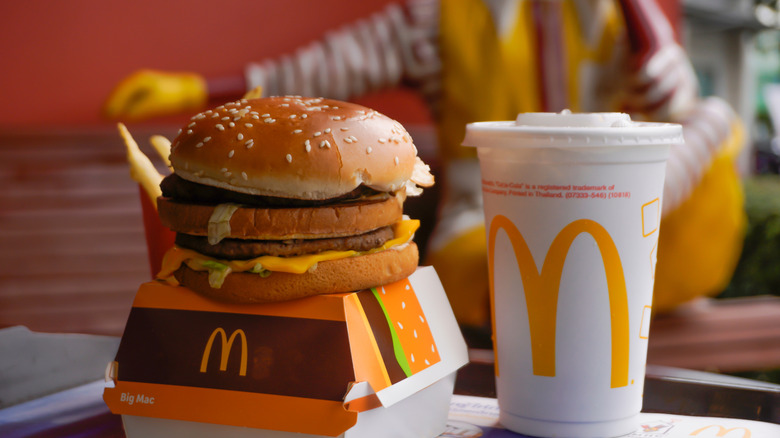
Stop by a McDonald's in the U.S., and you're biting into patties composed of 100% beef. The meat consists of trimmings from cuts like round, chuck, and sirloin, assembled into a composition of 80% lean meat. The beef is seasoned with a basic mix of salt and pepper, and is free of any artificial preservatives or flavorings. Most patties are distributed flash-frozen, save for quarter pounders, which come fresh; hence, they are unavailable outside of the 48 contiguous states. At Burger King, only frozen burger options are available.
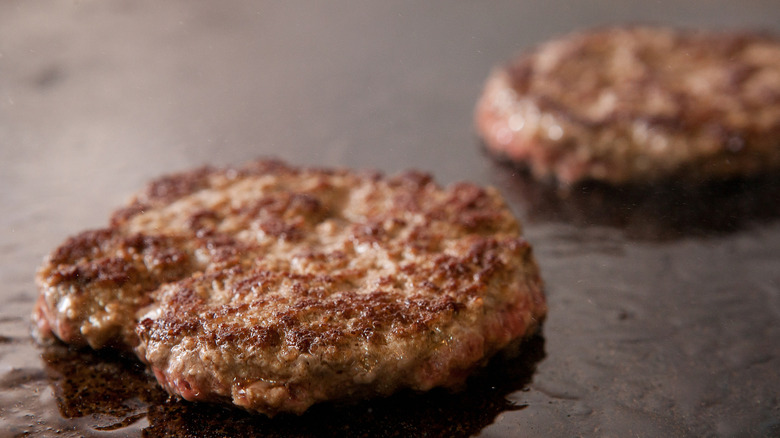
McDonald's prepares its beef using a Garland clamshell grill, which clamps down onto the patty, simultaneously searing the top and bottom. The process requires only 40 seconds — without the need for flipping – resulting in a thin and consistently cooked patty. Exclusively, Quarter Pounders are prepared to order, while other patties are stored heated in a specialized universal holding cabinet.
In contrast to Burger King's signature broiler method, McDonald's method bears more semblance to a griddle, which influences the beef's taste. "Just a little salt and pepper. Definitively tastes like grilled ground meat," wrote a Reddit user about a McDonald's patty. Many customers prefer the never-frozen quarter pounder — the two patties with cheese is Food Republic's best ranked McDonald's burger. Whichever option you order, though, expect a more mild tasting patty than from Burger King.
Burger King flame broils frozen beef patties
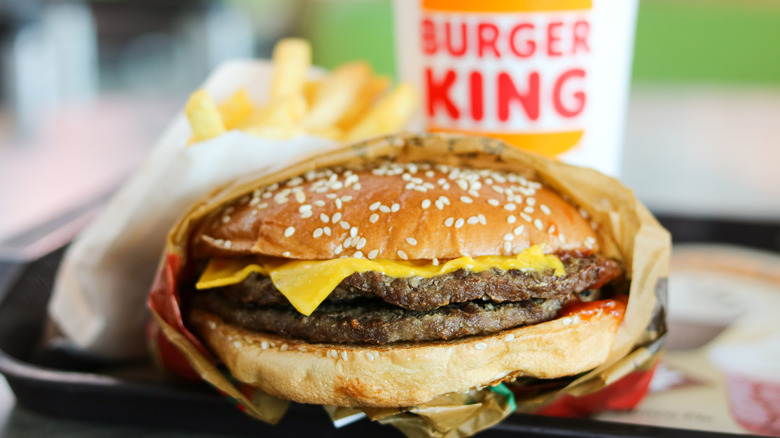
In terms of composition, Burger King's meat resembles McDonald's. The chain also utilizes 100% beef, without any additives and preservatives. A similar blend of beef cuts like chuck, round, and shoulder go into each patty, with the beef swiftly formed into patties and then frozen. Burger King follows a distribution strategy akin to McDonalds, shipping beef to outlets in frozen form.
Once the patties arrive at location, the handling is different. Burger King cooks dozens of flame-broiled patties at once using a signature conveyor belt system. Over two to three minutes, patties roll off a flame, with fat drippings smoking up, enhancing the dish's flavor. Like McDonald's, the beef isn't flipped. And for added aesthetics, Burger King adds scorch marks at the meat processing facility, not the restaurant. Still, the famed flame-grilled preparation process does produce a smokier beef, no liquid smoke involved.
Some customers report Burger King's beef tastes leaner. "BK tastes much more like meat and McD's [tastes] much more like fat," claimed one Reddit user. Really though, it's the cooking method that distinguishes the chain. "[I like] the taste of the flame [broiled]. Big difference from the [others]," stated a commenter in different Burger King Reddit thread. Ultimately, both chains treat their beef differently, resulting in distinct fast food experiences.