

The Difference Between A French And New Orleans Roux
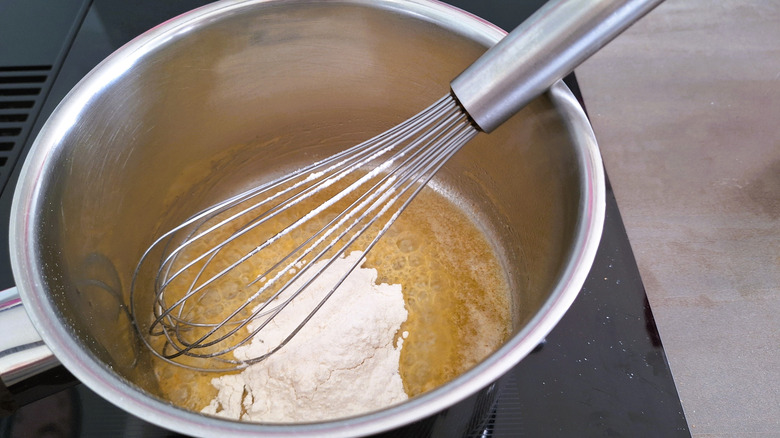
Of all the French techniques passed on to other cuisines, there are few as widely used or as diverse as a roux. Made of equal parts cooking fat and starch, most people stick with a classic butter and flour combination, but it can be so much more than that. This is especially true once you delve into the world of New Orleans cuisine, which may be a child of French cooking but puts its own spin on this classic ingredient.
While roux certainly can impart plenty of flavor, its main job is as a thickener. Once the two ingredients cook together, fat disperses through the starch and prevents it from clumping in a liquid matrix. Plus, cooking removes the flavor of raw flour, transforming its taste into something neutral enough to go unnoticed in just about any recipe. Still, occasionally you may come across a recipe calling for beurre manie, an uncooked roux made by folding flour into softened butter, though this is typically added at the end of making a sauce, rather than the beginning.
When this French technique collided with the melting pot that later became New Orleans, it underwent an evolution where it was cooked longer (and with more spices). Both still classically use butter and flour more often than not, and you'll usually see them added at the beginning of making a sauce rather than at the end, but Creole cooking does things its own way, and that applies doubly for a roux.
French roux are as versatile as they are delicious
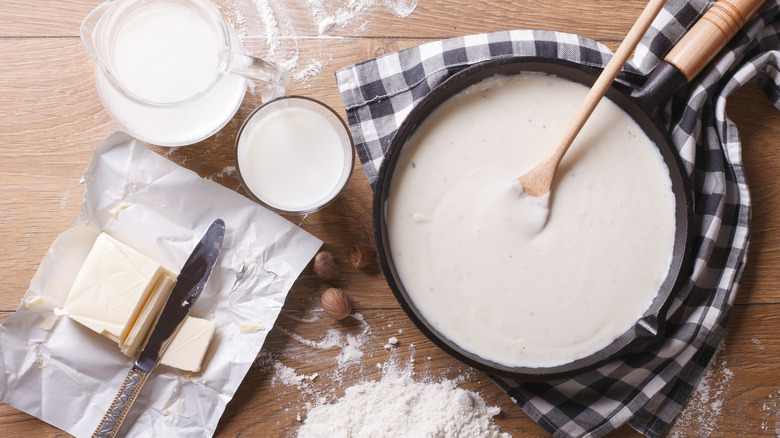
The most common way you'll see roux used in French cuisine is through the five mother sauces: hollandaise, sauce tomate, béchamel, espagnole, and velouté. So named for being the foundation many other sauces are built on, each put their own twist on roux, some of which are more apparent in New Orleans' food than others.
Even if you didn't know the name, you're probably familiar with béchamel. Ultra-smooth homemade sauces use warmed milk to help the roux disperse and are the foundation of many mac and cheese recipes. They get their characteristic pale coloring from a "white" roux, one that's only been cooked for 30 seconds. This is in contrast to a "blond" roux, cooked for only a minute or so, in a velouté. Espagnole uses a dark roux, cooked for a minute or more, which browns the butter fat and darkens the flour to deliver a toasted flavor that's far stronger and more homey.
Espagnole has the most in common with New Orleans cooking, which also relies heavily on dark roux to deliver a powerfully unforgettable taste. This harkens to New Orleans distinctly Southern love for soul food, comforting, homey dishes that rely on strong flavors. While French cooking makes more frequent use of other colors depending on the heartiness of the dish in question, you'll rarely find a white roux used in New Orleans outside of mac and cheese or other dairy-based dishes.
New Orleans roux is bold and powerful
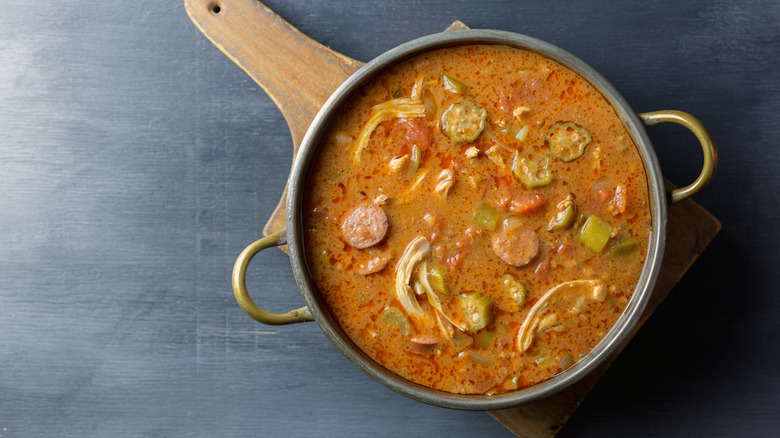
Even the names of New Orleans' most famous dishes show off its French ancestry. It's hard to say things like shrimp étouffée, beignets, and remoulade without hearing the Parisian ring. But the city is Creole first, American second, and French third, so it takes some liberties with the techniques it adopted.
Many New Orleans dishes are quite dark and colorful. But even accounting for the textural differences between things like étouffée and gumbo, they both start with a deeply toasted roux. The flavors of darkened flour and butter complement the herbs and peppers of Creole cooking far better than a blonde or white roux, especially when you account for added butter or Maillard-encrusted proteins. This is especially obvious in chicken espagnole, something that's classically French aside from the added Creole seasoning — and one of the city's best dishes.
Southern cities may love butter, but they make great use of other, less common, cooking fats as well. It's not terribly uncommon to find a New Orleans roux made from lard, bacon grease, or fat rendered from ducks and chickens. Much like cooking the mixture for longer, these often impart a deeply satisfying flavor that contributes to the homey qualities of Creole cooking. Combined with toasting spices in the roux itself, rather than simmering them in the liquid, you get something that's more rusty in color than you'd ever find in France.