

Blueberries, Raspberries, Or Strawberries: The Fruit With The Least Amount Of Sugar
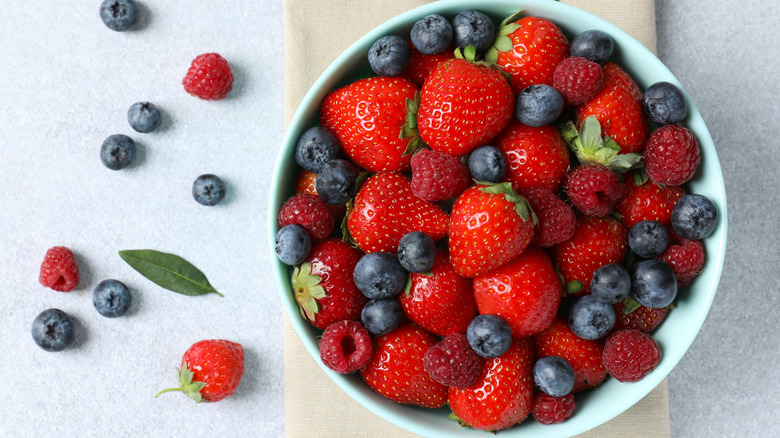
Whether you enjoy them atop your oatmeal, baked into a delicious cobbler, as a way to sweeten up plain Greek yogurt, or raw and juicy the way nature delivered them, berries are a multibillion-dollar product and the top sellers in the U.S. fresh fruit category. Considered superfoods, berries are chockful of vitamins, minerals, fiber, and antioxidants — and they also pack plenty of natural sugar.
Fresh fruits don't contain sugar in the sense of the gritty sweetener you add to coffee and dessert recipes, but they do contain natural sugars, including fructose, glucose, and sucrose. Berries are no exception. Three of the most commonly eaten berries are blueberries, raspberries, and strawberries — all popular fruits in season during the summer. Between them, delicious raspberries stand out as the juicy morsels with the lowest sugar content, serving up 5 grams of sugar per cup, or 2.68 grams of sugar per 100-gram portion.
Strawberries come in second with 7 grams of sugar per cup, or 4.89 grams per 100-gram serving. In third place, with the highest sugar content, blueberries deliver 15 grams of sugar per cup, or 9.36 grams per 100-gram serving.
One key difference between processed sugar and natural sugars is that those naturally occurring in foods, such as berries, contain nutrients, while processed sugars lose important nutrients in the extraction process. So, whichever you prefer — raspberries, strawberries, blueberries, or a blend of the three — you can rest easy that you're getting plenty of natural goodness and nutrition as you enjoy the plump, sweet fruits.
Raspberries don't sell as well as blueberries and strawberries
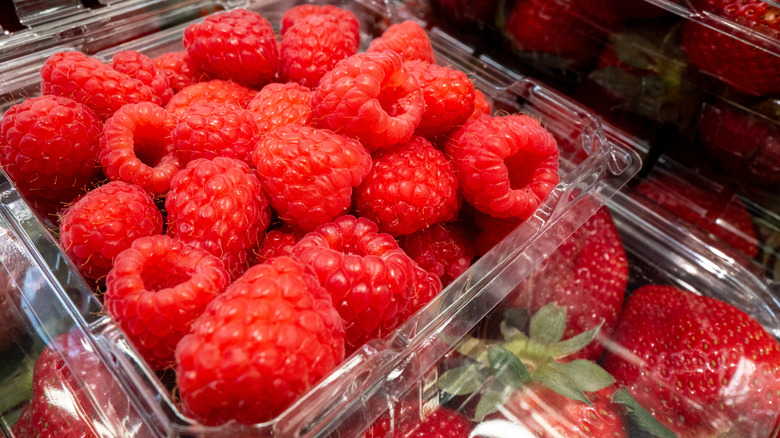
Because they're lower on the natural sugar scale, raspberries are less sweet and have more tartness than blueberries and strawberries. They serve up a unique flavor profile that is at once floral, tart, and mildly sweet, making them deliciously unique in the world of fruit.
They say good things come in small packages — and raspberries literally do, being sold in tinier packaging than their berry compatriots. This is because raspberries are very delicate and have to be carefully packed to prevent being smooshed by their berry bunkmates — too much pressure can easily damage the fragile fruit. Unlike denser blueberries and strawberries, raspberries are actually hollow and made of tiny components called drupelets (the teeny, juicy bits that break apart into little morsels when you eat a raspberry). This hollowness makes them more susceptible to being crushed.
Between raspberries, strawberries, and blueberries, raspberries are the least purchased type of berry. Whether that's due to their lighter sweetness, their smaller packaging, or other reasons is hard to say. Some additional factors that could sour consumers include the fact that raspberries are generally pricier than blueberries and strawberries. That higher cost coupled with the smaller number of berries per carton might have shoppers passing on the rosy fruits more often than not. Raspberries also tend to spoil very quickly. While properly stored strawberries will last up to a week in the fridge, and refrigerated blueberries can stay good for 10 days or longer, pricey raspberries only average one to three days of fridge time before spoiling — another reality that may make their higher price tag a bit cringe-worthy for budget-conscious consumers.