

Filtered Vs Tap Water: Which Is Better For Your Coffee Maker And Morning Cup?
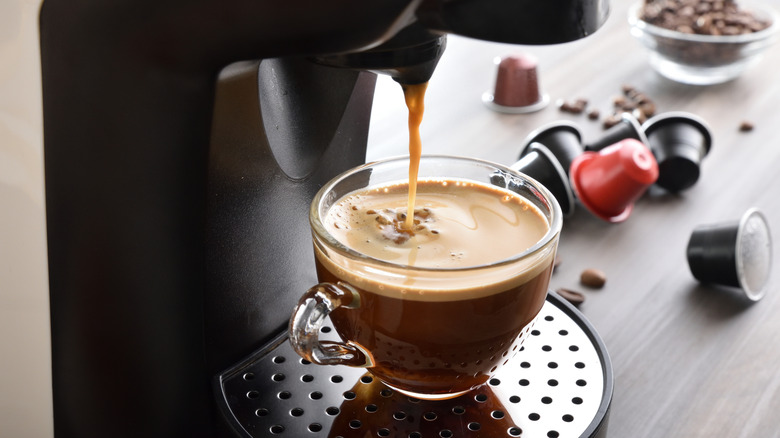
There are plenty of reasons to buy a coffee machine. Maybe you want to hone your espresso-making skills, outdo your local barista, or simply save money by making your morning latte or cappuccino at home. But while there's plenty of fun to be had, whether you've got a mass-produced standard model or a pricey investment piece, properly maintaining your machine is a must if you want it to stand the test of time. There are the essential chores, like cleaning your machine after each use, backflushing the group heads, and regularly descaling the internal parts to prevent mineral buildup. These are all important, but one factor people give less thought to is whether to use filtered or tap water.
You're probably thinking, water is water, so what difference does it really make? The answer could surprise you. A cup of coffee is made up of about 98% water, so its chemical makeup and mineral balance can directly affect the flavor of your fresh brew. Speaking of minerals, filtered and tap water carry varying levels of calcium and magnesium, which both affect how much limescale builds up in your machine over time.
There are plenty of reasons why you don't want limescale lingering around your coffee machine. Left unchecked, it can throw your entire machine off balance, completely ruining the taste and quality of your coffee. Unlike tap water, filtered water contains fewer of these limescale-causing minerals and foul-tasting chemicals like chlorine, so ask any coffee connoisseur which they'd choose, and the answer will almost certainly be filtered.
Tap water can spell trouble for the texture and flavor of your coffee
Using unfiltered tap water in your machine is perfectly safe, but it's considered to be among the major coffee brewing sins by seasoned java lovers. It might be a cheaper, more convenient alternative to filtered water, especially if you're in a pinch, but the chemicals used by water suppliers to purify tap water can ruin your brew's quality. The main culprit is chlorine, which reacts with organic matter in the water to produce trace amounts of chlorinated chemical byproducts that can interact with your coffee grounds.
During brewing, hot water acts as a solvent that extracts soluble chemical compounds, such as organic acids, sugars, lipids, and aromatic volatiles, that were all previously locked inside the bean. The amounts of these chemicals can vary dramatically from bean to bean, and they are responsible for the brew's subtle tasting notes and aroma. To die-hard coffee lovers, these flavors are the heart and soul of the entire brewing experience. But add chlorine (or chloramine, another commonly used disinfectant) and their resulting byproducts into the mix, and you're putting all those delicate compounds at serious risk.
Chlorine acts as an oxidizer, breaking down flavor compounds and driving up the bitterness while simultaneously leaving behind a chemical aftertaste more reminiscent of a swimming pool than a complex, balanced blend of delicate flavors. It can also affect the crema — the golden, creamy foam that forms on top of a freshly pulled espresso shot. It'll still be drinkable, but you won't be getting the most out of what your coffee grounds have to offer.
Filtered water protects your coffee's flavor and your machine
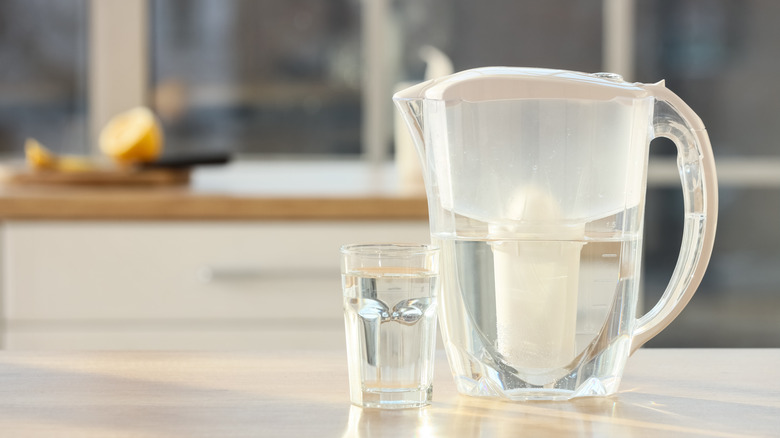
When we talk about filtered water, we're referring to water that's most often been passed through a carbon filter to remove residual impurities. This process doesn't just remove oxidizing chemicals like chlorine; depending on the type of filter, it can also reduce hard-water minerals like calcium and magnesium, each of which can spell big trouble for your coffee machine.
Hard-water minerals interact strongly with your coffee's flavor compounds. High levels of these minerals, like those found in hard water, can alter extraction and result in a harsher taste that masks the bean's more delicate notes. But beyond taste, it's the scale left behind in the machine that's the real problem. Limescale — the white, chalky deposits you'll often find lingering in kettles or around your shower — forms when hard water is heated or left to evaporate. This unwanted scale can build up on essential components inside your machine, including pipes, heating elements, and group heads.
These elements all work together to produce a delicious cup of coffee: The pipes carry cold water from the main tank to the heating area, the heating elements warm the water to the ideal brewing temperature, and the group heads channel high-pressure water to pull the espresso. But when limescale is left to accumulate, water flow gets disrupted, heating is thrown off, and the pressure behind the espresso extraction can drop. All of this can throw off the taste and quality of your brew and, in the long run, even permanently damage your machine. That's why anyone serious about coffee tends to favor properly filtered water. You can either buy bottled, filtered water from the grocery store or invest in a home filter.