

Why Does Tofu Turn Blue And Is It Safe To Eat?
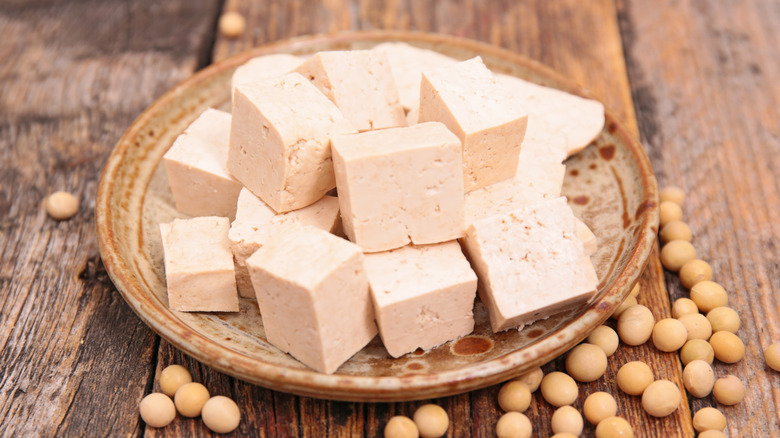
Whether you like it or hate it, you've gotta respect tofu. Not only is it the holy grail for vegetarians and those looking to reduce their environmental footprint, it also packs a nutritional punch. Filled with proteins, fibers, and antioxidants, this soybean-based staple has long since broken into the mainstream. With its gleaming reputation, the last thing shoppers would expect is a fresh block turning blue. But this peculiar phenomenon has been well documented. As expected, this has left the internet rife with speculation, but you'll be relieved to know it's an entirely natural occurrence. We get it, though: it's not exactly something that gets the appetite stirring. So to make sure you're tofu doesn't fall victim to this transformation, simply avoid putting it next to red or purple onions.
On Reddit, one individual shared their own experience with this phenomenon: "So I just came home from work and when I wanted to take some soup my partner made earlier I saw the tofu has some grayish (purple) blue stains. I'm a bit paranoid about food safety and the only thing that could have stained it is the onion ... " They hit the nail on the head here. Red and purple onions have anthocyanins — pigments that turn blue or purple in alkaline environments, like with tofu. Other everyday foods rich in anthocyanins are red cabbage, purple sweet potato, and eggplant, to name just a few. Understandably, the first instinct when your foods' color changes is, and should be, alarm, but in this case, anthocyanins are entirely harmless and totally safe to eat. In fact, according to Healthline, they may also reduce inflammation and reduce the risk of certain cancers.
How to store tofu and tell when it has actually gone off
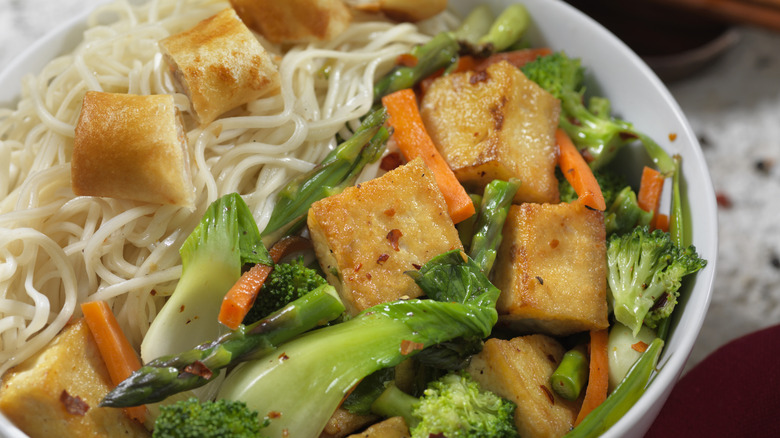
Tofu is sold in several different kinds of packaging, but for the most shelf-stable option, look no further than aseptic tofu. This refers to tofu sealed using aseptic packaging, a process created in the late '70s by Tetra Pak that protects the contents from the detrimental effects of light, air, and bacteria, per Mori-Nu. Mori-Nu is perhaps the best-known brand to use it, and Satonoyuki uses it as well. Tofu packaged this way doesn't require refrigeration and can last upward of several months unopened. In contrast, many other brands of tofu are packaged in water (that you should repurpose instead of throwing away), which gives them a shorter shelf-life and means they have to be refrigerated from the get-go. If you've purchased a refrigerated tofu but have no plans to use it in the near future, you could always extend its shelf-life by freezing it (though freezing usually works best for firm tofu varieties).
Once opened, however, the packaging no longer matters — you'll be racing against the clock either way. The best way to keep opened tofu fresh is to store it in a water bath and change the water daily. That said, this isn't a permanent solution. It's good practice to use up opened tofu within five days, max. Pay attention to how your tofu changes over time. Fresh tofu should be white, odorless, and smooth to the touch. If you notice a darker brown or yellow color, a foul smell, or a slimy texture, these are all telling signs your tofu is well beyond its prime.