

How Long Your Yeti Cooler Will Keep Ice Frozen
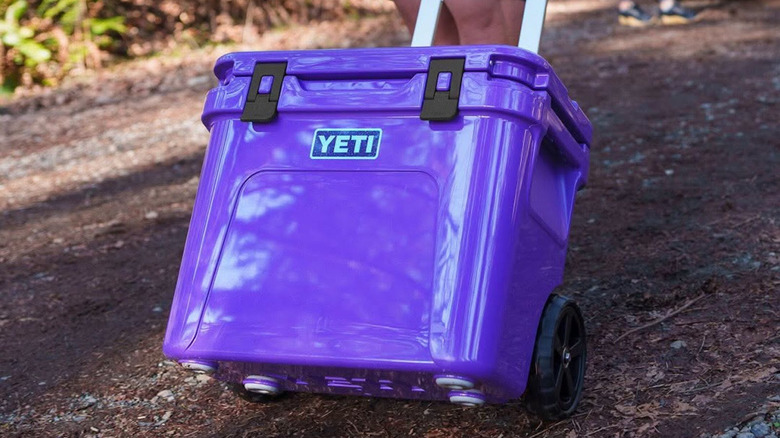
Whether you're going camping, heading to the beach, or just hosting a backyard barbecue using your new luxury high-end grill splurge, it's important that your drinks and other perishables stay cold. A hard Yeti cooler represents a fairly significant financial investment, but it's a popular brand for a reason. Customers appreciate the thoughtful designs, beautiful, eye-catching colors, and variety of sizes to suit any task. They also value how well the coolers do their most important job: Keeping ice from melting, so that your Diet Cokes and 16-ounce canned craft beers are chilled for a long while. But how long can you reliably count on your Yeti cooler to keep the ice frozen? It depends on a number of factors, but in general, it should last for up to a week.
Those factors mentioned can play an important role in whether the ice in your Yeti cooler lasts for a few days or the entire week, or even beyond. Once you reach your destination (or if it's just going in your backyard, once it's filled), help your Yeti stay cold by sticking it in the shade if possible. Under some trees, under a tent, or even inside in the air conditioning is much better than in the full sun. Also, try to limit the number of times you open it. If it's a social event, we get that that's going to be nearly impossible, but if it's just you and your sweetie on a getaway camping trip, it's a lot more doable.
Prepping your Yeti to keep ice frozen solid
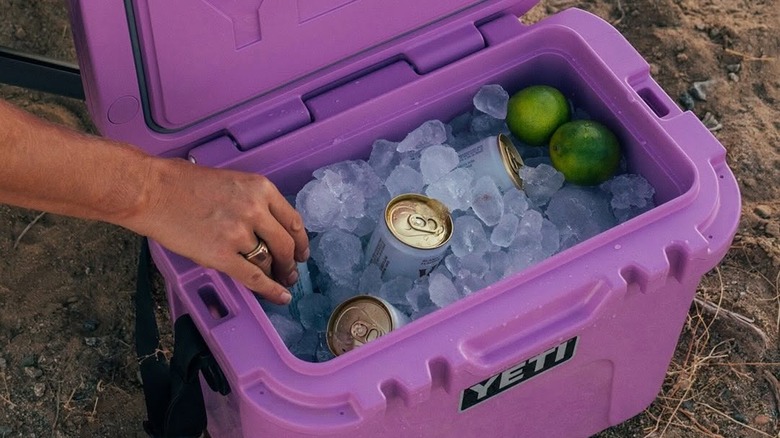
Once you've reached the site where you're going to park your Yeti, as you can see above, there is only so much you can do to help keep the ice frozen. However, there is a whole list of tasks you can undertake before you even pack it up that can prove beneficial to the status of the ice within. For example, up to a day before you even need to start putting things in the Yeti, fill it with ice or keep it somewhere cool, like your basement (if you have a basement fridge that will fit it, by all means, stick it in there). Starting with a cold cooler gives the ice a "head start."
The type of ice you use can factor in, too. We know it's easiest to hit up a gas station for a bag of cubes, but blocks will hold up much better. You can even make your own by filling and freezing water in milk jugs of various sizes. Mix in dry ice, too, found in some grocery stores, which is a lot colder than regular ice. And just like you can use salt to keep ice cream frozen in a cooler, adding rock salt to your ice will, yes, melt it just a little bit, but also lower the overall temperature.