

Is Canned Soup Ultra-Processed? Here's What To Know
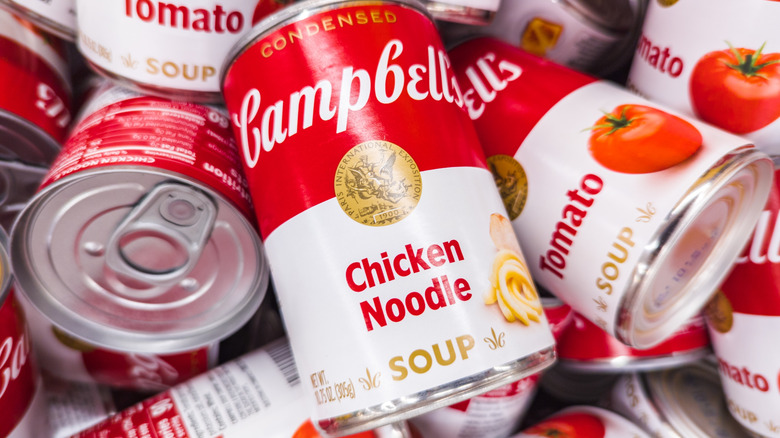
Canned soup is arguably one of humanity's greatest innovations in convenience. It's budget-friendly, tastes great, and can be whipped up in a matter of minutes. But while there's no shortage of fans singing its praises, some skeptics have questioned its nutritional value. While homemade soups are often loaded with vitamins, minerals, and antioxidants, canned soup can tell a very different story. It's often classified as ultra-processed, putting it in the same category as sugary soft drinks, hot dog wieners, and potato chips. In fact, according to a 2023 study published in Nature Communications, around 73% of the U.S. food supply would be classified as ultra-processed.
The reason canned soup can earn this designation comes down to the less obvious ingredients inside. Ultra-processed foods can have many meanings, but in the case of canned soup, the designation usually refers to ingredients such as flavorings and other additives that aren't typically used in home cooking. Let's compare a homemade tomato soup to a can of, let's say, Campbell's historic tomato soup. A very simple homemade version might consist of blended roasted tomatoes simmered in chicken broth until it reaches the desired texture, then seasoned with salt and pepper to taste.
A can of Campbell's Tomato Soup, on the other hand, is host to a variety of ultra-processed ingredients, like natural flavoring and high-fructose corn syrup, along with additives like citric acid and potassium phosphate. Citric acid helps control acidity and enhance flavor, while phosphates can serve various functions in processed foods, including helping maintain texture and stability. They serve their purposes well, but at the same time, they make the soup's ingredient list quite different from anything you'd find in a simple homemade version.
How to boost the nutritional profile of canned soup
Interestingly, unlike other ultra-processed foods, like bacon or certain brands of white bread, most mainstream canned soup brands don't rely on artificial preservatives at all. That's because the canning process itself has that issue covered. The soup gets sealed inside, then heated to a high enough temperature to destroy harmful microorganisms and spores, while the airtight seal keeps new contaminants from getting in. When unopened, a can of soup can last upward of several years. Nevertheless, if you're looking to balance out ultra-processed ingredients with something more nutritionally beneficial, it doesn't take much effort to give canned soup a homemade taste.
The best place to start is with condensed soups. Instead of just thinning it out with water or milk, try stirring in some cooked lentils or a handful of oats along with the liquid. Both soak up liquid while adding fiber, protein, and a heartier texture. Best of all, neither one really alters the flavor of the soup, so you get the nutritional benefits without significantly changing the taste.
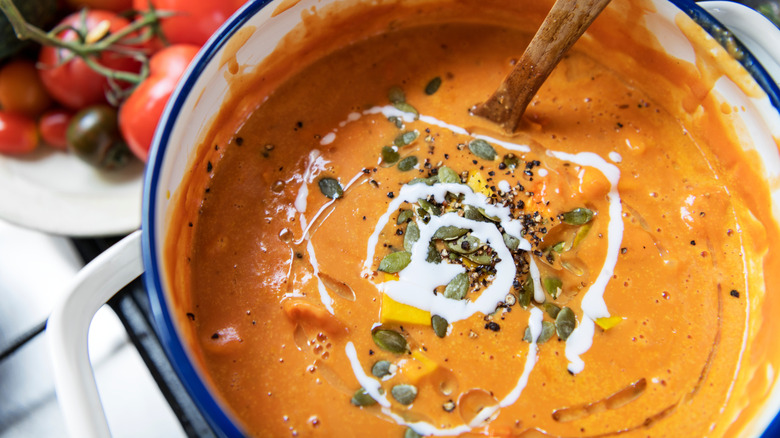
There are also plenty of ways to bulk up the nutritional profile of your soup with vegetable add-ins. Broccoli, beans, and seeds all fall under the fancy-sounding category of "superfoods." Saute some broccoli and stir it in, pour in a can of chickpeas, or sprinkle on some pepitas or pumpkin seeds at the end for a bit of added fiber and crunch. Not only will these additions make your canned soup more nutritious, but they'll also improve the flavor enough that you might forget it ever came from a can.