

What Type Of Dishes Pair Best With Pomegranate Molasses?
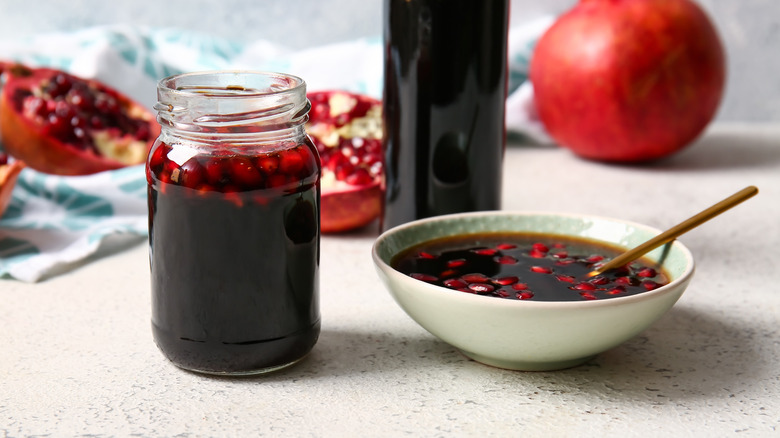
Pomegranates are a pretty versatile fruit thanks to their unique balance of sweet and sour notes. While the most commonly used forms of the fruit are its arils or juice here in the USA, pomegranate molasses is a particularly flavorful ingredient that's incredibly well-suited for other fresh, light flavors and is quite popular globally.
Pomegranate molasses is essentially just the fruit juice reduced in a pan with a sweetener. Since it's the main flavor of grenadine, the two ingredients are quite similar. However, it's full of far more sour, sweet, and fruity nuances that make it a surprisingly complex ingredient for how easy it is to make. Dishes with a great emphasis on acidity, creaminess, or simple vegetal flavor profiles are particularly good matches for this ingredient. You don't want to overwhelm the molasses, but you also don't want it to be the only flavor, so bright dishes that aren't too heavy are the perfect balance.
Adding the fruit's seeds to salads is a great complement to leafy greens, but incorporating a bit of pomegranate molasses into a dressing is an easier way to get the same flavor with more control over how strong you want it to come through in each bite. It also diffuses particularly well in soups like a vegetarian pozole. Though its sugar content may throw off your ratios in baked goods, it's a high-quality topping that you can always treat like any other sauce or glaze. It also balances bitterness quite well, making it a great mixer for gin and vodka cocktails.
How to cook with pomegranate molasses

Pomegranate molasses is a delicate ingredient. To make a full glass of pomegranate juice, you'll need about two fruits, but you'll need even more to make a similar amount of syrup. As such, it has concentrated sugars and highly nuanced flavors that tend to get lost when exposed to too much heat, so treat it like miso and add it towards the end of a cook.
Just like honey, pomegranate molasses is a perfectly viable way to add extra taste to light proteins and vegetables, particularly ones cooked with radiant heat, like on a grill or in the oven. Also like honey, its sugars will burn and turn bitter if kept above 350 degrees Fahrenheit for too long. If you plan on giving meat or vegetables a basting of this ingredient, you should only give it about a minute or two of heat exposure. When done correctly, you'll end up with a sticky sweet-tart coating.
If you plan on incorporating it into a soup or sauce, you may be better off either making your own at home or using a brand with no added sugar. It's easy to oversweeten an entire pot, ruining your whole dish — and you can always add sugar to taste later. Since it's such a potent ingredient, you may want to wait until your soup is almost done before mixing it in. This lets you understand your pot's final flavor profile, so you don't accidentally add too much and override other flavors.