

Why Avocado Toast Always Tastes Better At A Cafe Or Restaurant
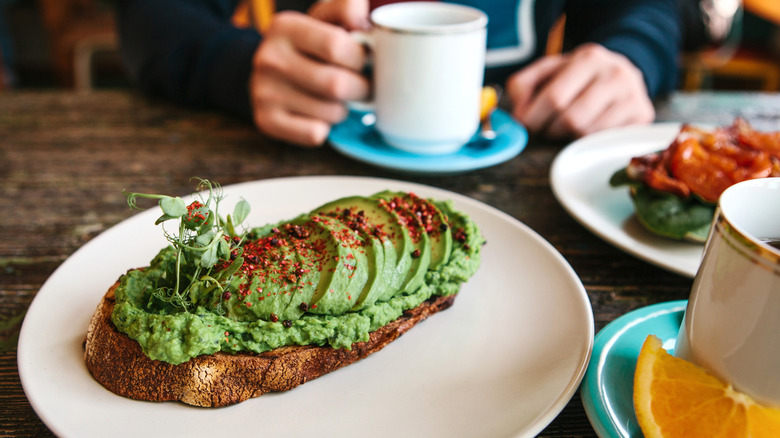
Avocado toast is synonymous with the joys of a weekend brunch: The mint-hued, buttery delight served with a cup of coffee — or a fresh mimosa for a boozier occasion — to accompany our late-morning gossip sessions. But somehow, as with many dishes prepared by others, it just seems to hit differently when enjoyed at a restaurant. The reality is, whenever we go out to eat, the avocado and toast are rarely doing all the work themselves.
Professional cooks tend to be more generous with seasonings and garnishes, and even something as basic as avocado toast is no exception. Salt, seasonings, oil, and butter (as well as unique additions, like Worcestershire sauce or Tabasco); all this is hidden behind the bread and green fruit. A common restaurant version might add lemon, chili flakes, and an abundant drizzle of extra-virgin olive oil -– essentially the formula behind our expert seasoning tip for restaurant-quality avocado toast. The heat from the chili flakes and the acid from the citrus will brighten the avocado, elevating what might otherwise be a flavor so delicate it verges on dull.
The secret is usually what you don't see –- the fats. Avocados are already a solid source of heart-healthy unsaturated fats (roughly 20 grams of fat per fruit, or ¼ to ½ the recommended daily intake for the average adult), but that doesn't mean they can't benefit from an extra boost. Many restaurants griddle the toast with butter to give it golden crispiness before pouring oil onto the finished product. Eateries rarely skimp on fats, especially with the risk of an avocado that is a little less ripe or creamy than desired.
The bread does more work than you think
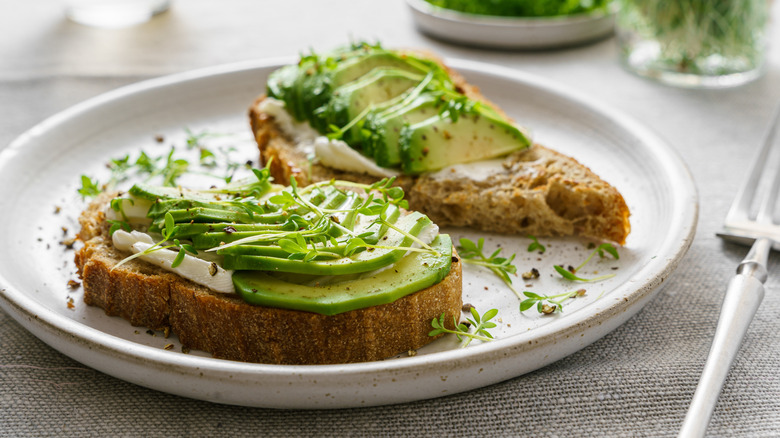
We often treat bread as an afterthought when we make avo toast at home, but it's far more than a simple vehicle for the topping; it's the part that holds everything together. A sad, pre-cut slice of store-bought white bread gives the fruit very little to work with and often results in a mushy texture –- especially if you skip the toasting or grilling. Cafes and restaurants like to go for high-quality, premium breads like sourdough or brioche cut thick enough to provide a sturdy foundation and develop a crisp exterior without losing the chewy center.
The choice of bread changes the mechanics of how you savor the dish. An open crumb catches mashed avocado rather than letting it slide off, while a crunchy crust can provide some necessary resistance to support any additional ingredients like eggs, cheese, tomato, or seeds. Sourdough fermentation also builds flavor and character which results in the bread's recognizable tang. Chefs recommend it as the best bread for the dish thanks to how well it complements avocado's more mild profile.
The toasting process shouldn't be overlooked either. Restaurants are generally more deliberate about it by adjusting the heat to provide the ideal texture. Applying intense, direct heat from a grill or broiler creates a perfectly crisp result, which is why it's the quickest way to toast bread for a satisfying crunch. Ultimately, the mysteriously upgraded restaurant quality of a simple avo toast isn't so mysterious after all; it just takes being more intentional with your choices, giving each ingredient its worth, and not being afraid to dish out the EVO.